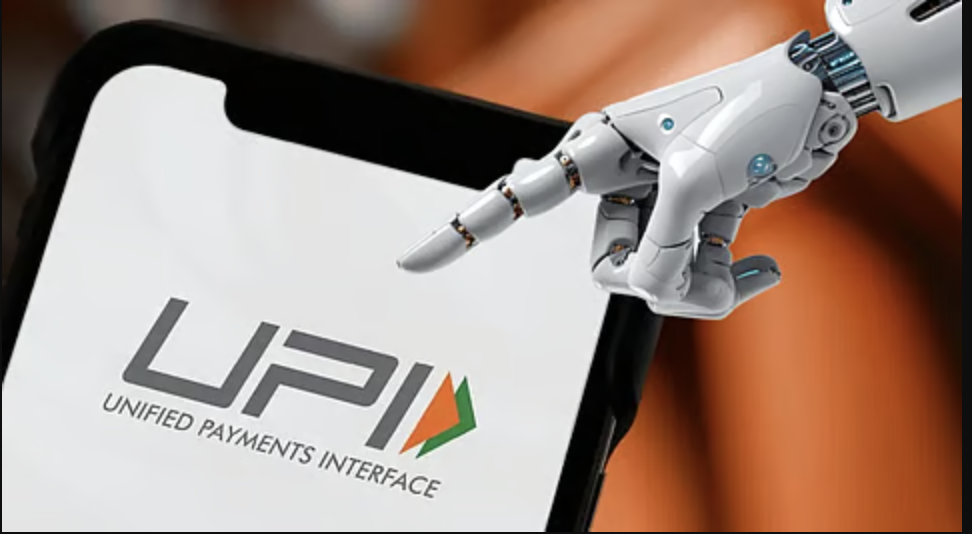
India is preparing to introduce a new framework that could allow artificial intelligence agents to make UPI payments on behalf of users without requiring approval for every individual transaction.
The proposed system, being developed around a new Unified Agent Protocolcould make UPI one of the world’s first major national payment infrastructures designed to support AI-driven transactions.
How Agentic Payments Could Work
Under the proposed framework, users would be able to give an AI agent permission to make payments according to predefined instructions.
Instead of manually approving every payment, a user could establish rules covering factors such as how much an agent can spend, when it can make a payment and what type of purchase it is authorised to complete.
For example, an AI assistant could potentially purchase groceries when prices fall below a specified threshold or complete routine purchases without repeatedly asking the user to authorise each transaction.
Small Payments Likely to Come First
The initial applications are expected to focus on low-value and frequent transactionssuch as grocery purchases and other routine online shopping.
E-commerce platforms could become some of the earliest adopters because AI agents could compare products, identify discounts and complete purchases based on instructions provided by consumers.
Over time, the system could potentially support more sophisticated activities, including investments made according to predetermined price limits or other financial rules.
UPI Already Has Building Blocks
The proposed system is expected to build on existing UPI mechanisms such as UPI Circle and Reserve Pay.
UPI Circle allows a primary account holder to delegate payment authority to another user, while Reserve Pay enables customers to block funds for multiple future debits.
For agentic payments, these mechanisms could be combined with spending limits, identity verification, audit trails and rule-based instructions.
The existing Reserve Pay limit of ₹10,000 for up to 90 days could also be reconsidered for AI-agent use.
Safety and Liability Will Be Critical
Allowing software agents to spend money without individual approval creates new risks. An AI agent could potentially make an incorrect purchase, misunderstand an instruction or be manipulated by malicious content.
The proposed framework is therefore expected to include identity checks, spending controls and a liability framework to determine responsibility when something goes wrong.
These safeguards will be crucial if agentic payments expand beyond small routine purchases.
India Enters a Global Race
The move comes as payment companies worldwide develop systems that allow AI agents to participate in digital commerce.
Mastercard and Visa are separately working on agentic-payment capabilities in India, while fintech company Pine Labs has already introduced an agentic protocol designed to enable UPI payments after a single upfront authorisation.
If India’s framework is successfully deployed at national scale, it could turn UPI into an important foundation for the emerging agent-to-agent and AI-driven commerce economy.
Summary
India is preparing a new Unified Agent Protocol that could allow AI agents to make UPI payments without requiring user approval for every transaction. The initial focus is expected to be on low-value purchases such as groceries, with spending limits, identity checks and audit trails built into the system. If implemented successfully, the framework could make UPI one of the world’s largest national infrastructures supporting agentic payments.
Image Source