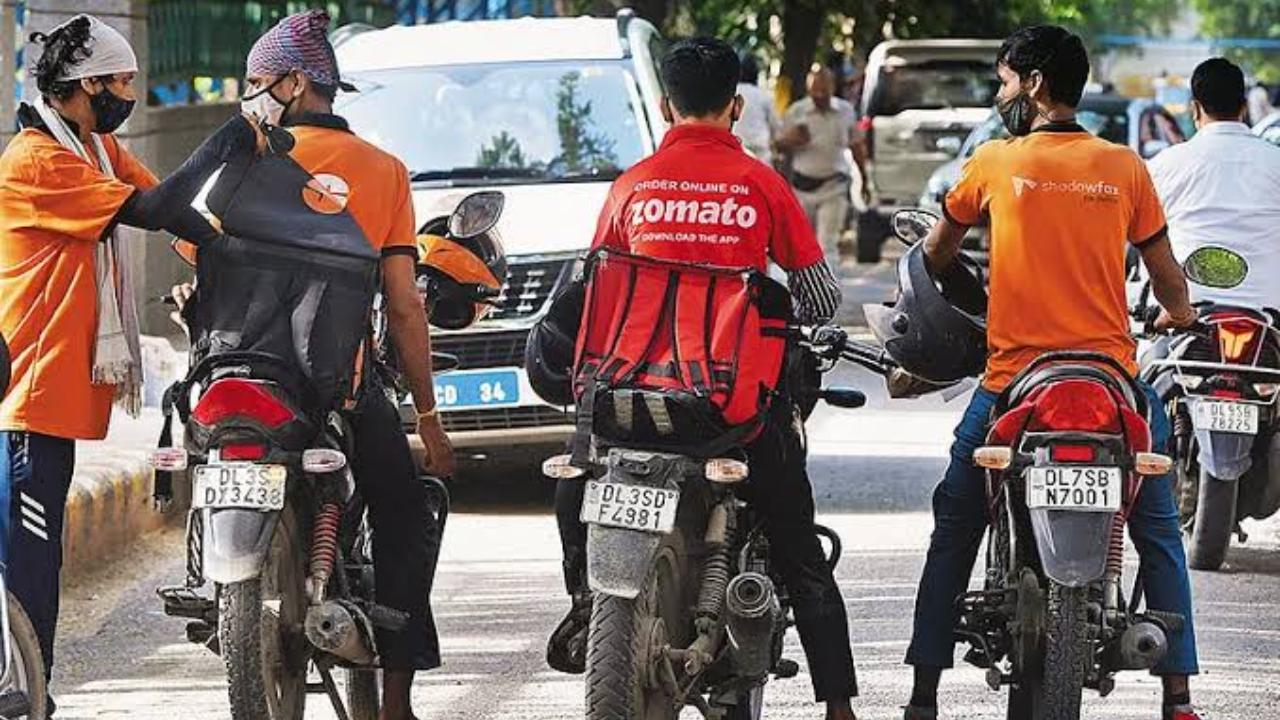
- Government protection for delivery boys, drivers?
- Benefit of PF, Insurance and Pension
- What exactly is the plan?
Social Security Fund: Be it Ola, Uber or the delivery boys of Swiggy, Zomato and Blinkit who provide day and night services, all will now come under the ambit of formal social security. Under the Central Government's Social Security Code, India is gearing up to introduce social security contributions for employees working on gigs and online platforms. A social security fund is being raised for them. Therefore, a technical option related to regulations can be important for various sectors of the platform economy. In this option, the contribution from the aggregator companies is levied based on their annual turnover. It depends on the percentage of remuneration paid to the workers. What exactly is the scheme “text-align: justify;”> Cheap Onion Price : Common people will get cheap onion! The central government brought 4000 tons of onion in the market
What do analysts think?
According to analysts and industry sources, tying contributions to each transaction or worker's wages, rather than to companies' annual turnover, could place a highly disproportionate financial burden on the platform-related economy. This will have the most severe impact on business sectors that are highly transactional but low value-based.
As per Social Security Code, 2020, to aggregator companies Why gigs and online platformsIt is compulsory to contribute to the social security fund established for Magars. As per the rules, a gig worker is eligible for benefits under the scheme after working for 90 days with a single aggregator or a total of 120 days with multiple aggregator companies in a financial year.
Annual Deposit Rule
Aggregator companies are required to calculate their annual contribution and deposit it annually. The Ministry of Labor and Employment is considering standardizing the per-transaction or payment-based contribution system. The choice of this method is important because the impact on different platform companies will vary greatly depending on the number of transactions, value of services, business model and overall turnover. According to analysts, a comparison of the two systems clearly shows that a payment-based system can significantly burden highly mobile businesses like ride-hailing such as cab, auto and bike services.
One to two percent contribution
Under Section 114(4) of the Code, aggregators are required to contribute one to two percent of their annual turnover. But this amount cannot exceed five percent of the total payments made to gig and platform workers. As an alternative to this, the ministry is also considering a formula based on direct labor payments.
Big earning opportunity! 6 in a day and 11 IPOs in a week; Where is it profitable to invest money?