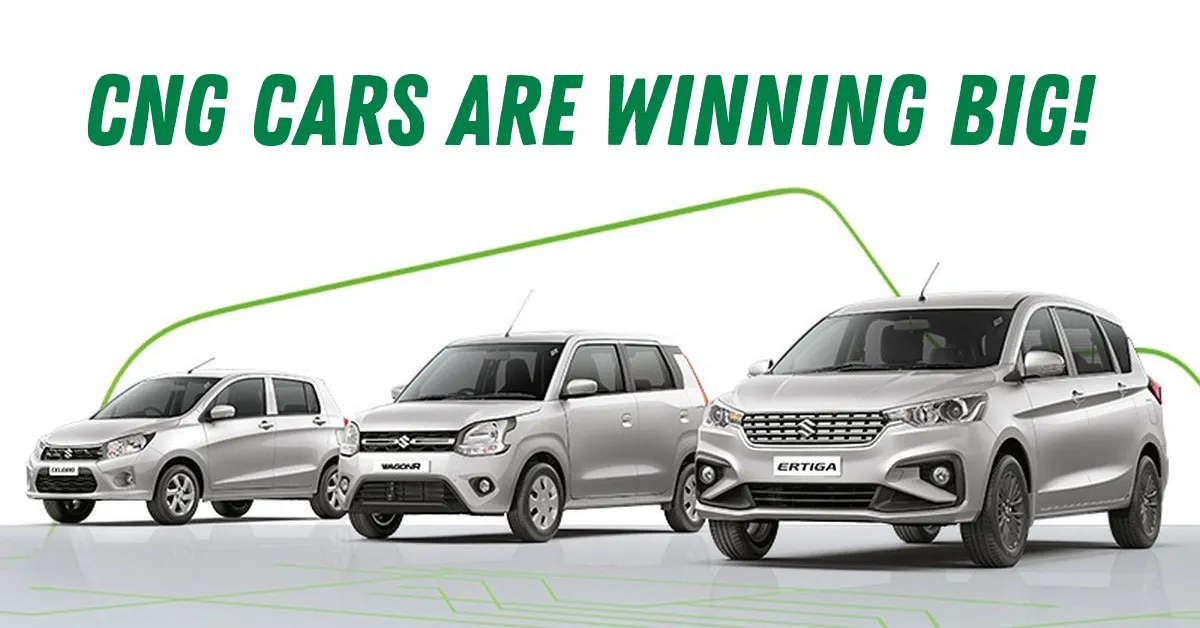
CNG has reached a milestone that would have sounded improbable when it was largely associated with taxis and a handful of small hatchbacks.
In August 2026, CNG accounted for 25 percent of passenger-vehicle retail sales. That means roughly one in every four new cars registered during the month was CNG powered. Petrol’s share, meanwhile, fell to a record-low 41 percent from 46 percent a year earlier. CNG had been at 21 percent in August 2025.
Passenger-vehicle retail sales totalled about 4.01 lakh units during August, up 16 percent year on year. At a 25 percent share, CNG therefore represents roughly one lakh registrations in a single month.
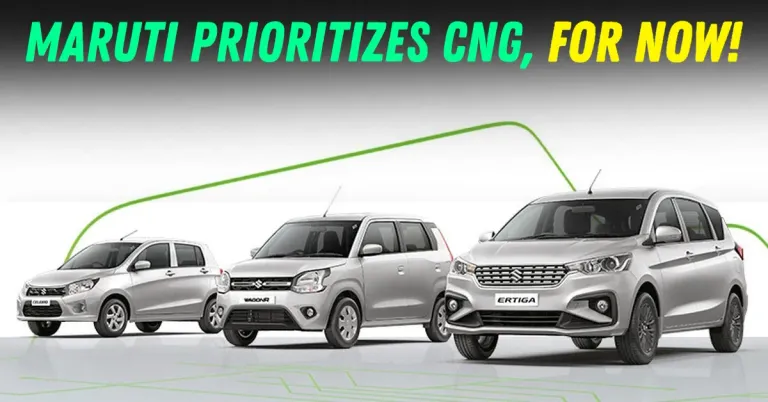
The CNG story is overwhelmingly a Maruti Suzuki story. Maruti accounted for roughly 71 percent of CNG passenger-vehicle sales in August. Tata Motors held about 17 percent and Hyundai around 9 percent.
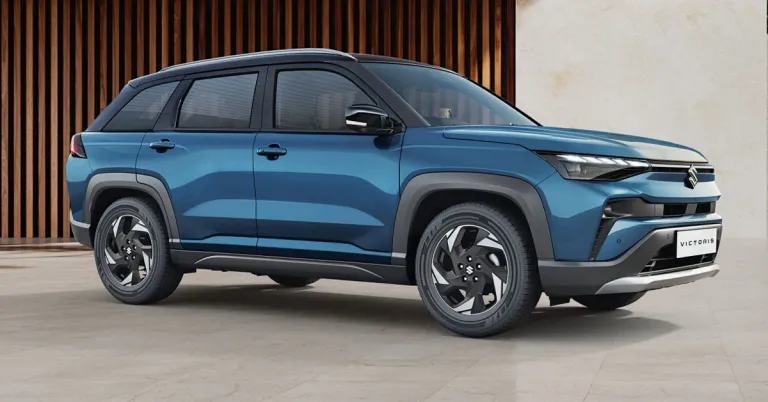
CNG is no longer limited to cars such as the Alto, Wagon R and Celerio. Maruti offers the fuel in models including the Swift, Dzire, Baleno, Fronx, Brezza, Ertiga and Grand Vitara, depending on variant and current line-up.
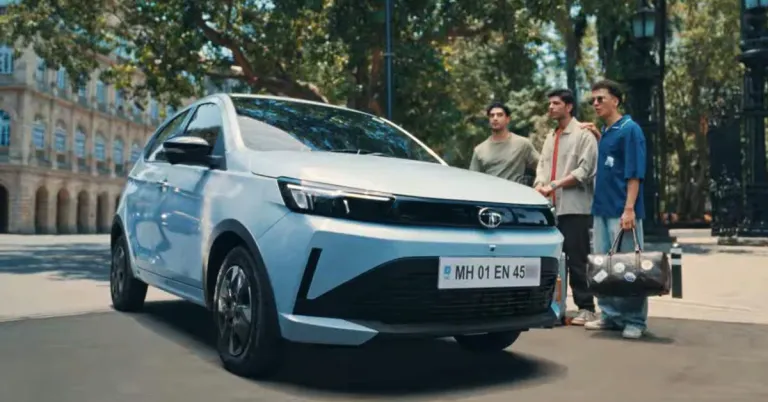
Tata has also expanded CNG aggressively and helped solve one traditional problem with its twin-cylinder layout, which places two smaller cylinders beneath the boot floor to preserve more luggage space. Hyundai has followed a similar twin-cylinder approach on selected models.
Running cost remains the main attraction. A factory CNG car generally costs more to buy than the equivalent petrol version, but its lower fuel cost per kilometre can recover that premium for owners who drive enough.
CNG filling stations are far more common than they once were but are still not as universally available as petrol pumps. Refuelling can take longer, and queues can be an issue in some cities.
CNG versions also usually make less power than when running on petrol. The fuel tank and associated equipment add weight, while boot-space loss remains a consideration on cars without space-efficient cylinder packaging.
The larger shift is visible when all alternative powertrains are combined. CNG, hybrids and electric vehicles together accounted for 42 percent of passenger-vehicle retail sales in August, overtaking petrol’s 41 percent share for the first time. Diesel stood at around 17 percent.
Electric cars reached 7.7 percent penetration, with roughly 30,700 sales, while mild hybrids accounted for 7 percent and strong hybrids around 2 percent. The important point is that the traditional standalone petrol car no longer commands more than half the market.
Just a year ago, petrol was 12 percentage points ahead of the combined CNG, hybrid and EV grouping.
CNG is now the biggest alternative to petrol. It still uses an internal-combustion engine and it’s appeal comes from fuel cost and a familiar ownership pattern, without requiring home charging. EVs are growing quickly, but CNG has reached mass adoption using existing engine technology and a rapidly expanded filling network.
The trend is also regional. CNG penetration reached about 44 percent in Haryana, 41 percent in Gujarat, 40 percent in Uttar Pradesh and 39 percent in Maharashtra. Availability clearly matters.