Saharanpur Mosque: Pakistan Reacts Strongly to Demolition, War of Words With India Erupts Again
The demolition of a mosque inside Uttar Pradesh’s Saharanpur Collectorate has triggered a fresh diplomatic exchange between India and Pakistan, with Islamabad strongly condemning the action and Indian authorities maintaining that the structure was unauthorised and the legal process had been followed.
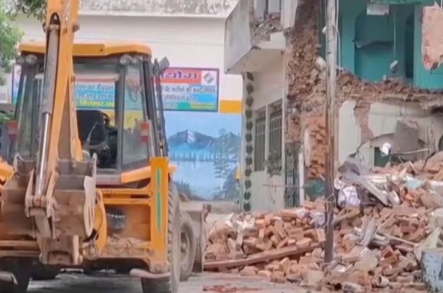
A mosque located inside the Saharanpur Collectorate complex was demolished early on September 5 amid heavy police deployment. The action came three days after a district court dismissed an appeal against an earlier order declaring the structure unauthorised and directing its eviction from government land.
The demolition has since become the latest flashpoint in the already tense India-Pakistan discourse over religious places and minority rights.
Pakistan Condemns the Demolition
Pakistan’s Foreign Office reacted sharply on September 6.
Foreign Office spokesperson Sajjad Haider Khan described the demolition as a “reprehensible” action against a historic Islamic place of worship and alleged that it was part of a broader campaign to erase Islamic heritage in India.
Pakistan also called on the international community to take note of what it described as systematic persecution of Muslims and urged accountability for actions affecting religious freedom and minority heritage.
The statement also invoked the 1992 demolition of the Babri Masjid, calling it an enduring symbol of religious intolerance.
Why Was the Saharanpur Mosque Demolished?
According to the district administration, the dispute was primarily about land ownership and unauthorised occupation, rather than a decision to target a religious community.
The City Magistrate’s July 16 order reportedly held that the mosque occupied around 315 square metres of government land and ordered eviction under the Uttar Pradesh Public Premises (Eviction of Unauthorised Occupants) Act.
The mosque management challenged that decision, but the district judge’s court dismissed the appeal on September 2. Officials subsequently proceeded with the demolition.
Saharanpur officials have said that all required legal procedures were followed and that extensive security arrangements were made to prevent any disturbance.
Mosque Management Disputes the Process
The mosque’s management has presented a different account.
Tanveer Ahmed, described as the mosque’s mutawalli or custodian, claimed that the July order was an eviction order rather than a specific demolition order.
He also disputed the administration’s position regarding the age and status of the mosque and said the management intended to challenge the demolition in the High Court.
The conflicting claims over the legal process have become an important part of the controversy.
Opposition Parties Also Question the Action
The demolition has drawn criticism from opposition leaders and Muslim organisations in India.
Samajwadi Party president Akhilesh Yadav, BSP chief Mayawati and Congress leaders questioned the timing and manner of the action.
AIMIM chief Asaduddin Owaisi also condemned the demolition and questioned whether constitutional protections relating to religious freedom are being applied equally.
Samajwadi Party MP Iqra Hasan separately alleged that she was placed under house arrest before she could travel from Kairana to Saharanpur to meet officials over the issue. Police deployment around her residence was reported amid concerns about law and order.
Fresh India-Pakistan War of Words
The controversy has now moved beyond India’s domestic political debate.
Pakistan’s intervention has once again brought religious-place disputes into the India-Pakistan diplomatic conversation. Islamabad’s statement specifically linked the Saharanpur incident with its broader criticism of India’s treatment of Muslim religious heritage.
However, India’s official response to Pakistan’s latest statement was not immediately reflected in the sources reviewed for this report.
The competing narratives are therefore clear: Indian authorities describe the demolition as enforcement following a court-backed land and eviction dispute, while Pakistan portrays it as an attack on a historic Islamic place of worship.
A Sensitive Issue Between the Two Countries
Religious sites have repeatedly become sensitive subjects in India-Pakistan relations. Any dispute involving a mosque, temple or other place of worship can quickly acquire a diplomatic dimension, particularly when political parties or governments across the border comment on the matter.
The Saharanpur case is therefore being watched not only as a local legal dispute but also as another potential source of friction between the two neighbouring countries.
For now, the central legal question remains whether the authorities followed the applicable eviction and demolition procedures, while the political question is whether the episode will lead to another prolonged exchange between New Delhi and Islamabad.
As the controversy grows, the next major development could come from the courts or from the official responses of the two governments.