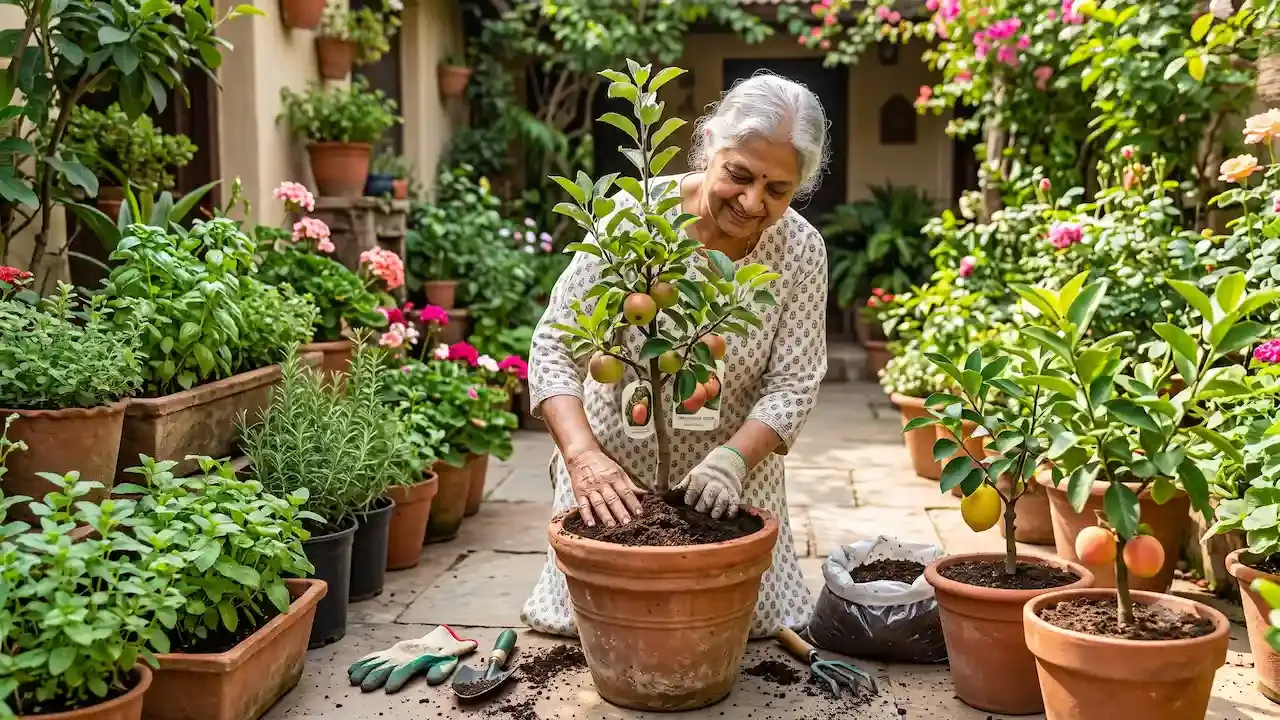
Dwarf Fruit Plants: If you think that fruit trees like mango, guava or pomegranate can be planted only in big gardens, then now this thinking has changed. Today dwarf fruit plants have become the biggest trend in urban gardening. Despite flat culture and limited space, people are now growing fruits in their balconies, terraces and small courtyards. These plants, prepared with special rootstock and grafting techniques, are small in size, but their fruits are no less than normal trees in terms of taste, quality and production.
dwarf fruit plants Why are they so special?
Dwarf fruit plants are not a separate species, but specially developed varieties of normal fruit trees. Their size remains controlled, hence they can be easily grown in pots instead of a big garden. Their biggest feature is that they occupy less space, start bearing fruits early and care is also relatively easy. This is the reason why today they have become the pride of balconies and terrace gardens.
Which fruit plants are best for balcony and terrace?
If you are a first-time beginner, dwarf lemon, guava, pomegranate, fig, orange, mosambi, sapota, dragon fruit and banana are great choices. Nowadays, many improved varieties of grafted mango are also available in nurseries, which many people know as “perennial mango”. They start bearing fruits much earlier than normal mango trees, i.e. in about 2–3 years.
Why is the right pot and soil most important?
For good growth of fruit plants, choose a pot at least 18 to 24 inches deep, with adequate drainage holes for water to drain out. For the best potting mix, mix 40% normal soil, 30% vermicompost or cowdung manure, 20% cocopeat and 10% sand or perlite. This mixture maintains the balance of air and moisture to the roots and prevents problems like fungus and waterlogging.
Right balance of sunlight, water and fertilizer
Most dwarf fruit plants require 6 to 8 hours of direct sunlight per day. When sufficient sunlight is available, plants produce more flowers and fruits are of good quality. Water only when the top layer of soil feels dry. Excessive watering can cause the roots to rot. Giving vermicompost, cow dung manure, organic liquid fertilizer or seaweed fertilizer every 20–30 days accelerates the growth of plants and produces more fruits.
What care is necessary to get more fruits?
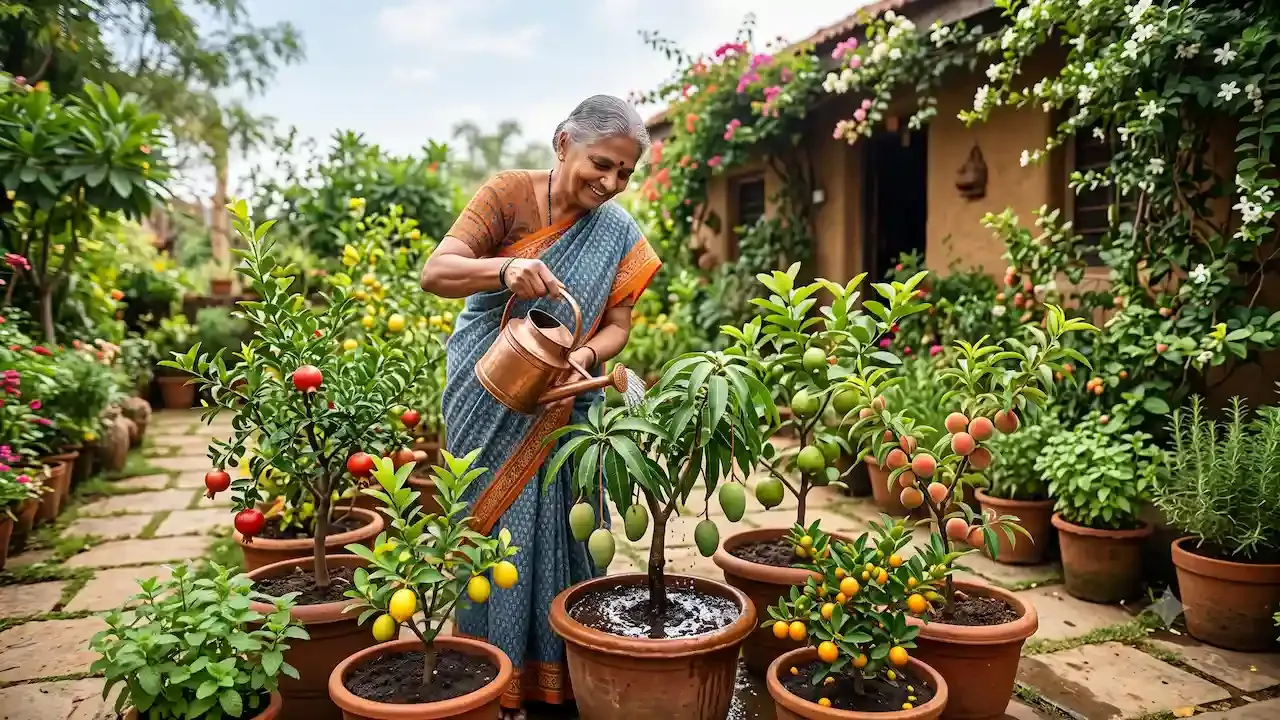
It is very important to do light pruning from time to time. Due to this, new branches emerge, the plant becomes dense and fruit production increases. Dry, weak or diseased shoots should be removed immediately. It is beneficial to give organic fertilizers containing potash and phosphorus at the time of flowering. Spraying Neem oil every 15 days is considered a safe and effective solution to protect against insects and white flies.
Why is their craze increasing in urban homes?
Today people want to plant not only ornamental plants but also useful plants. Dwarf fruit plants enhance the beauty of the home and provide fresh, chemical-free and nutritious fruits to the family. They also become a great medium for children to learn about nature, plant care and organic farming. Apart from this, these plants make the environment of the house more green and refreshing. Fruit plants planted on the terrace, balcony and small courtyard give a feeling of self-reliant gardening along with the beauty of the house.
Useful Tips for New Gardeners
Always buy grafted plants from certified nurseries. Do not change the location of the plants frequently and do repotting every 2–3 years. Irrigate according to the season, give regular organic fertilizers and keep inspecting the plants from time to time.
FAQ
Do potted dwarf mango trees really bear fruit?
Yes, grafted or hybrid variety mango plants (like All Time Mango or Amrapali) start bearing fruits within 2 to 3 years when planted in a 18-24 inch pot.
How big a pot do Dwarf Fruit Plants need?
Initially you can plant them in a 12 to 14 inch pot, but for better growth and good yield, a larger pot or grow bag of 18 to 24 inches is considered best.
Can these plants be kept indoors?
No, fruit plants require 6-8 hours of direct sunlight daily to form fruits and flowers. Therefore, keep them near the balcony, terrace or open window where there is good sunlight.
Flowers appear on plants but they fall, fruits do not form, what to do?
The main reason for flower fall is over-watering or lack of nutrition. After flowering, reduce watering and add some potash or bonemeal/rock phosphate to the soil.
Which medicine should be used to protect against insects?
For domestic or balcony gardening, instead of chemical pesticides, mix 5ml neem oil and a few drops of liquid soap in 1 liter of water and spray it every 15 days.