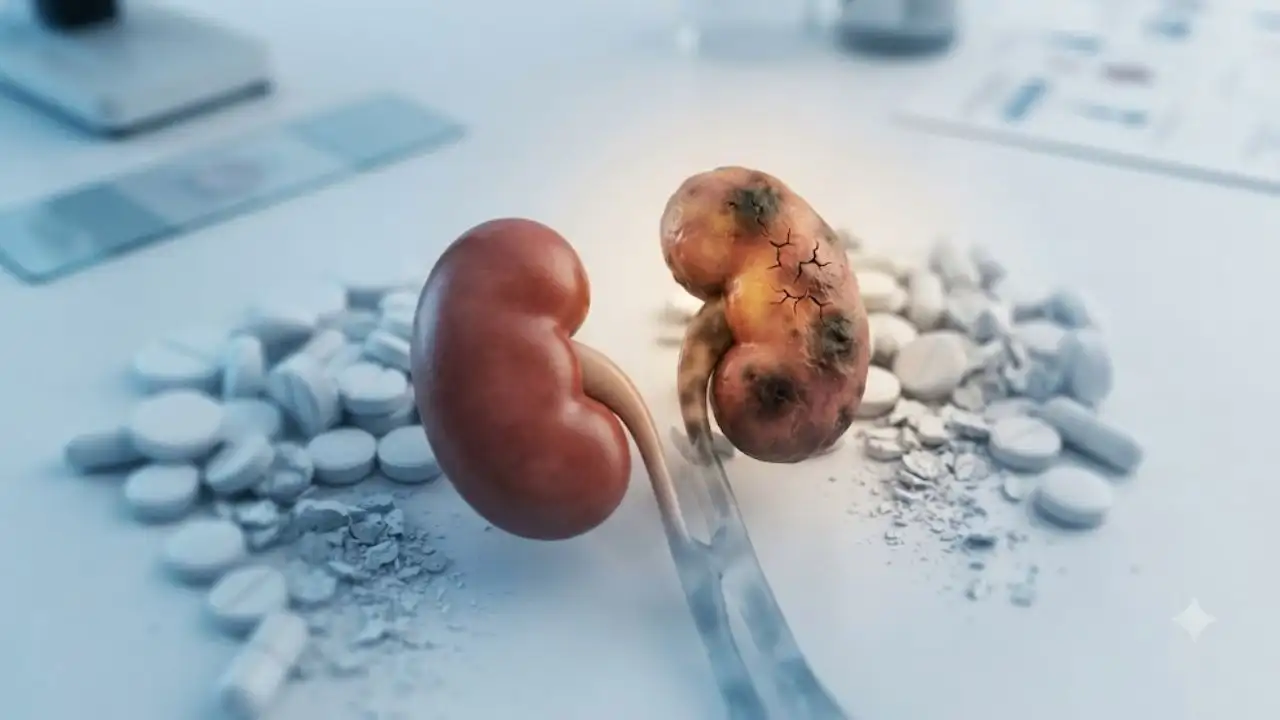
Story of Nandram of Indore
Nandram, 31, living in Indore, suffered fever and pain in his hands and legs. He bought painkillers from the medical store, which gave him some relief, but the pain returned again. He consumed painkillers about 13 times in a month, after which he suffered severe stomach pain and tests revealed kidney failure.
Effect of painkillers on kidneys
Painkillers are medicines that reduce pain and also control some inflammation. These include NSAIDs and opioids. NSAIDs may reduce blood flow to the kidneys in some people, affecting their function. However, it is not common to cause kidney failure after taking the medicine for only 13 days. The amount of medication, type, dehydration, and pre-existing health problems can increase the risk.
Other organs also at risk
Excessive or prolonged consumption of painkillers can be harmful not only for the kidneys but also for other organs. This can increase the risk of stomach ulcers and bleeding, and can also have negative effects on the liver. In some cases, it may also increase the risk of blood pressure and heart problems. Taking the wrong medicine for a long time can also increase the risks associated with blood vessels and the brain. Therefore, it is not advisable to take medicine on your own again and again for headache, back pain, muscle pain or period pain.
Who should take precautions
Taking painkillers without doctor's advice can be risky for every person, but some people need to take special precautions. People who already have kidney disease, lack of water in the body, or other health problems should pay special attention. Taking painkillers with some other medicines can cause side effects and increased pressure on the kidneys. Therefore the medicine should be selected according to the health condition of the person and in combination with other medicines.
Painkillers should not be used for every pain.
It is not necessary to take medicine every time for mild and moderate pain. Adequate water, rest, and good sleep can help with headaches. Rest, gentle stretching, and warm compresses may be helpful for muscle pain. Rest and cold compresses may provide relief in the initial stages of a sprain or injury. Light activity and stretching may be better than staying in bed for long periods of time in case of back pain. Hot water bag and light exercise can help in period pain. Gargling with lukewarm salt water can provide temporary relief from toothache, but it is necessary to consult a dentist to find out the cause.