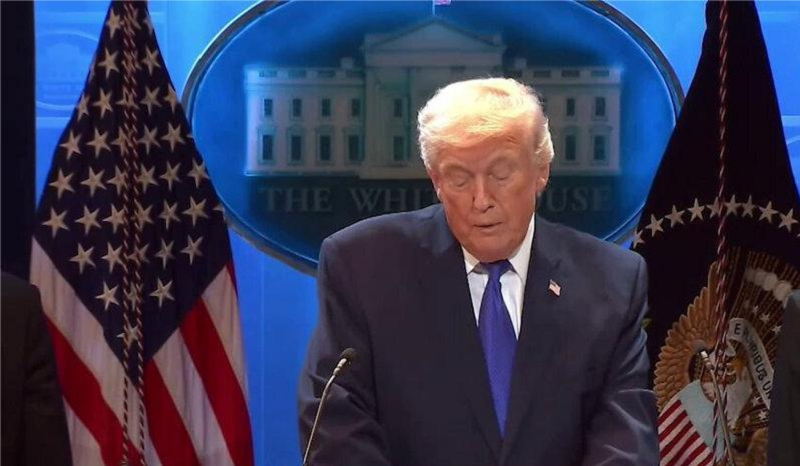
New Delhi . A picture of the moon was shared on the media, on which it was written that the moon is ours and the American flag was also placed in the picture. Along with this, the claims of buying land on the moon and gifting it again raised the question as to who has the ownership on the moon.
People claim to buy moon land and gift it to each other on birthdays, weddings or other occasions. Many companies also sell certificates and documents in the name of moon land. But according to international law, these documents do not provide actual legal ownership rights on the lunar land.
The basic rules regarding the Moon and other celestial bodies are set in the 1967 Space Treaty. The treaty was discussed in the Legal Subcommittee in 1966 and agreed to in the General Assembly the same year. It was opened for signature in January 1967 and came into force in October 1967. 114 countries including India and America are parties to it.
According to the treaty, the exploration and use of space should be for the benefit and interest of all countries. Outer space is open to all nations and there is freedom of access and use on an equal basis to all areas of the Moon and other celestial bodies. Freedom for scientific research has also been given.
Article 2 of the treaty is the most important. According to this, outer space, which includes the Moon and other celestial bodies, cannot be made a part of the national jurisdiction of any country. No country can declare any part of the Moon as its national territory through sovereignty, occupation or use. Therefore, the claim that the moon is ours raises questions in the context of this rule of the treaty.
Although no country can have national rights over the Moon, going there and carrying out scientific activities is not prohibited. Space is open for exploration and use by all nations. Such activities should be in accordance with international law and aimed at promoting international peace, security, cooperation and mutual understanding.
According to Article 8, a space object registered in a country retains the right and control of that country, even if it is located in space or on any celestial body. Ownership of spacecraft, equipment and parts landed or built on the Moon does not end with their arrival there. That is, the vehicle or equipment sent to the Moon may remain the property of the concerned country, but this does not establish its right over the lunar land.
Article 7 deals with responsibility for damage caused by space objects. Any object launched by a country or launched by its organization causing harm to another country, its citizens or legal entities on the Earth, in the air, in space or on any celestial body, including the Moon, may give rise to international responsibility of the country concerned.
Article 9 calls on countries to observe cooperation and mutual assistance and to avoid harmful pollution. If any activity is likely to harm other countries' peaceful uses of space, appropriate international consultation must first take place.
There are also rules regarding stations, equipment and spacecraft present on the moon. These should be open to representatives of other Party countries on the basis of reciprocity, although proper notice is required before travelling.
The same international framework applies to private companies as well. According to Article 6, space activities of non-governmental organizations require the permission and constant monitoring of the country concerned.
Claims of selling lunar land have been coming to the fore for a long time. Germany's Martin Jurgens had described the moon as his family's property. Later, American businessman Dennis Hope started an organization named Lunar Embassy and claimed to sell lunar land for about $25 per acre. He acknowledged the scope for private claims based on the interpretation of the Space Treaty.
Such land certificates still attract people. Some people buy them for fun or as gifts, while others consider them an investment. Talks about a plot on the moon in the name of Sushant Singh Rajput and Shahrukh Khan have also come to light. At present, some companies are selling such certificates for about $37.50 i.e. about Rs 3,100 per acre, but they do not provide legal ownership rights.
Moon missions from different countries have definitely paved the way to reach the moon. Many missions have reached the Moon, from the Soviet Union's Luna missions to America's Apollo program, Japan's Hiten, Europe's Smart-1, India's Chandrayaan, China's Chang'e missions and the private Blue Ghost-1. In 2026, Artemis-2 transported four astronauts around the Moon and after about 10 days all returned safely to Earth. Despite these achievements, no country gets national ownership rights on the lunar surface.