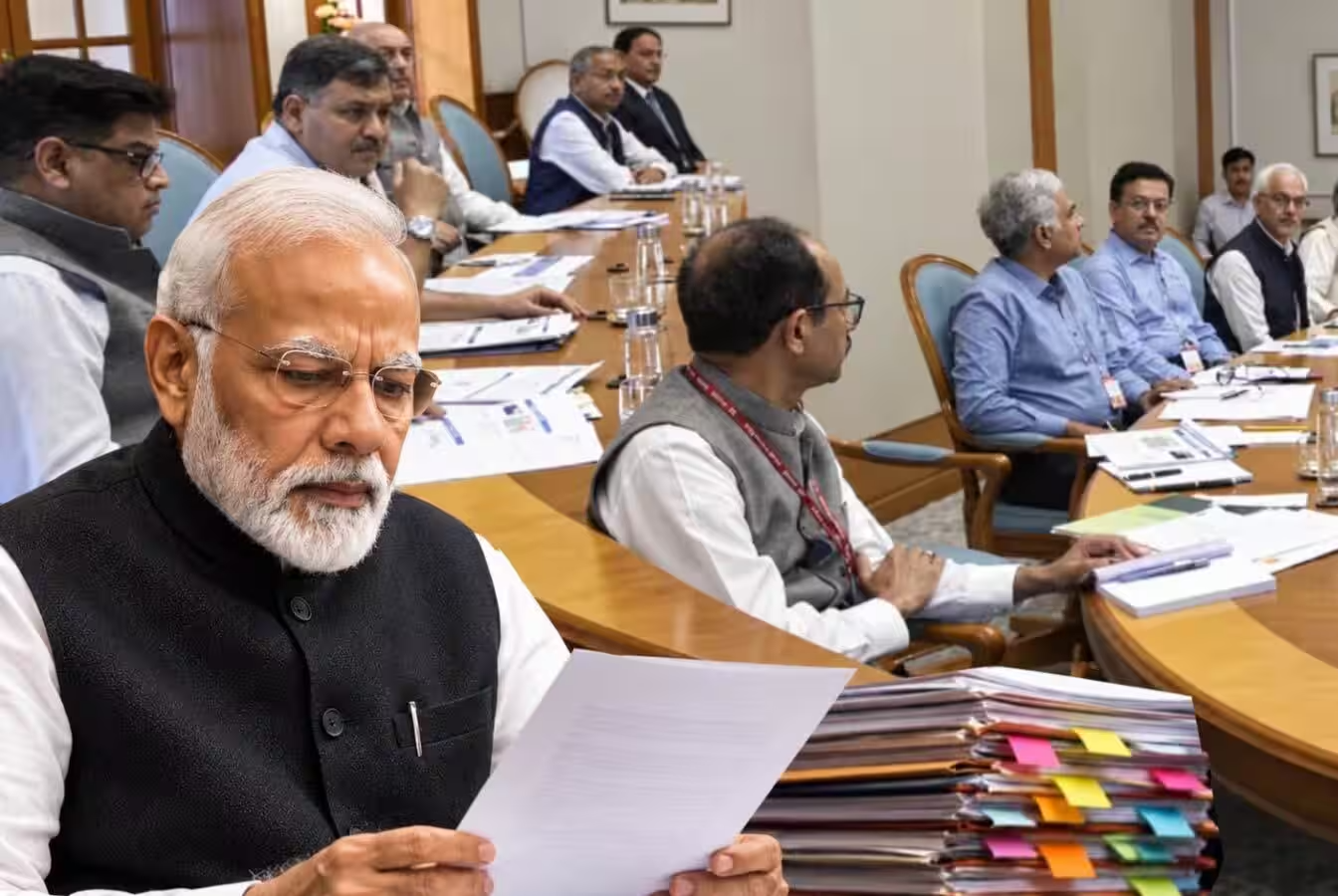
These days, the stir in the corridors of Indian politics suddenly intensified when Prime Minister Narendra Modi called a very secret and high-level meeting of 20 key ministers of his cabinet. The special thing is that in this important meeting, no senior IAS secretary or bureaucrat of any department was included, rather PM Modi completely alone and directly reviewed the functioning of the ministries of these ministers. After this unique and surprise move in the political circles of Delhi, the market of speculations about cabinet reshuffle, report cards of ministers and major changes in the working style has become heated. When the top leadership of the country communicates directly with ministers without any administrative intermediary, it has deep diplomatic and political implications, and this latest development has once again proved that the Prime Minister's Office (PMO) is going to adopt an altogether more aggressive and result-oriented approach to the functioning of the government. Political significance of this secret meeting of ministers held without IAS officers: Generally, whenever there are review meetings of central government ministries, secretaries of the concerned departments, joint secretaries and dozens of IAS officers are present with their respective presentations and files. But this time, this huge army of bureaucrats was completely kept out of the meeting called by Prime Minister Narendra Modi, which sent a clear message that this meeting was not administrative but completely political and performance-based. PM Modi directly asked the ministers for an account of the schemes running in their departments, the speed with which they reached the public and their performance so far. Experts say that when the ministers are asked direct questions and answers without the shield of bureaucracy, then the real assessment of the administrative capacity of every minister and his ground hold comes to the fore, and this is also considered to be the main objective of this meeting. Speculation intensified regarding cabinet reshuffle and report cards of ministers. For some time, there was a strong discussion in the political circles that the government may soon reshuffle its cabinet and some inefficient or lazy ministers may be dismissed. This direct and blunt review meeting of PM Modi with 20 key ministers has given more fuel to these speculations, because the performance report card of every minister has now directly reached the Prime Minister's table. Ministers who have done excellent work in their departments and have given a positive message among the public may get bigger responsibilities in this reshuffle, while those whose performance has been average or weak may be shown the way out of the cabinet or their departments may be changed. After this high-level brainstorming, there is a state of panic among the ministers and their offices, because everyone wants to know who has passed and who has failed in this direct test of the Prime Minister. Prime Minister Modi's working style and new model of transparency in governance Prime Minister Narendra Modi's working style from the very beginning has been out of the box and emphasizing on administrative tightness, and this latest meeting is another strong part of that strategy. By bypassing the bureaucracy and seeking answers directly from the political leadership, it shows that the government is now completely focusing on accountability and transparent governance system. In today's era of digital and generative AI, where people want instant results for every task, traditional and slow administrative methods can no longer work. Ministers have to understand that their direct commitment towards the public will decide their political future, and if they do not live up to the expectations, the top leadership will not hesitate at all in taking tough decisions. The far-reaching consequences of this high-profile meeting will be clearly visible on the country's politics, implementation of policies and administrative reforms in the coming days. Ministers have now understood well that mere statements or paper reports will not suffice, rather results will have to be shown on the ground. The opposition may be making its political speculations regarding this meeting, but a clear message has been sent in the corridors of power that only those who work will get a place in the government. As the next political session and elections approach, the internal strife of the government will determine how effective the model of governance proves to be among the public, with Prime Minister Modi himself at the center of the process.