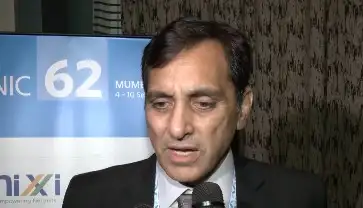
Mumbai, September 8 (IANS). Industry and policy makers have expressed positive confidence about India's digital infrastructure, internet security and rapidly growing digital economy. During the 62nd meeting of the Asia Pacific Network Information Center (APNIC) held in Mumbai on Tuesday, experts said that India has not only become one of the largest countries in the world in terms of Internet users, but is also moving towards global leadership in the field of digital innovation, Artificial Intelligence (AI) and Internet security.
Sushil Pal, Joint Secretary, Ministry of Electronics and Information Technology, while talking to the media, said that the Internet is no longer just a medium of communication, but has become a basic and strategic infrastructure on the basis of which most of the government services operate. He said that the role of Internet is continuously increasing in national security and defense system.
Sushil Pal further said that as more people are connecting to the Internet and new technologies like AI and Quantum are expanding, the challenges of cyber security are also increasing. He said that cyber criminals are also trying to carry out new types of cyber attacks and frauds using advanced technologies.
He said that the government is continuously working with technical experts to strengthen cyber security. Special emphasis is being laid on strengthening Internet routing security, so that the possibility of any kind of route hijacking or network disruption can be prevented. He said that the government is actively cooperating with APNIC in this direction.
Along with this, Devesh Tyagi, Chief Executive Officer, National Internet Exchange of India (NIXI) said that organizing the 62nd meeting of APNIC in India is an important achievement. He said that after a gap of about 12 years, this conference is being organized again in India and the country is feeling proud about it.
Tyagi said the global Internet community serves as a common platform and such events provide an opportunity for Indian Internet Service Providers (ISPs) to connect with international network operators. He said that this also sends a message globally that India is committed to building a secure, reliable and inclusive internet ecosystem.
Meanwhile, Internet Service Providers Association of India (ISPAI) President Rajesh Chhariya said while talking to the media that in 2012, IRINN (National Internet Registry) was established in India with the help of NIXI, after which Internet expansion in the country got a new momentum.
He said that today internet penetration in India has reached unprecedented levels and companies all over the world are looking at the Indian market as the center of new possibilities. Global companies are looking for investment and partnership opportunities in India due to the huge consumer base and rapidly growing digital economy. Chhariya expressed hope that in future international organizations like APNIC will organize more events in India, which will increase collaboration between global and Indian digital companies.
Along with this, APNIC EC Chairman Kenny Huang, while talking to the media, said that the Asia-Pacific region has become the most active region of global digital development and technological innovation at present. He said technology is rapidly driving economic growth in the region and India is a prime example of this.
Huang said that if we compare India 10 years ago and India today, the change appears remarkable. He praised the Government of India's pro-tech policies, investment in digital infrastructure and efforts to promote Artificial Intelligence.
–IANS
DBP