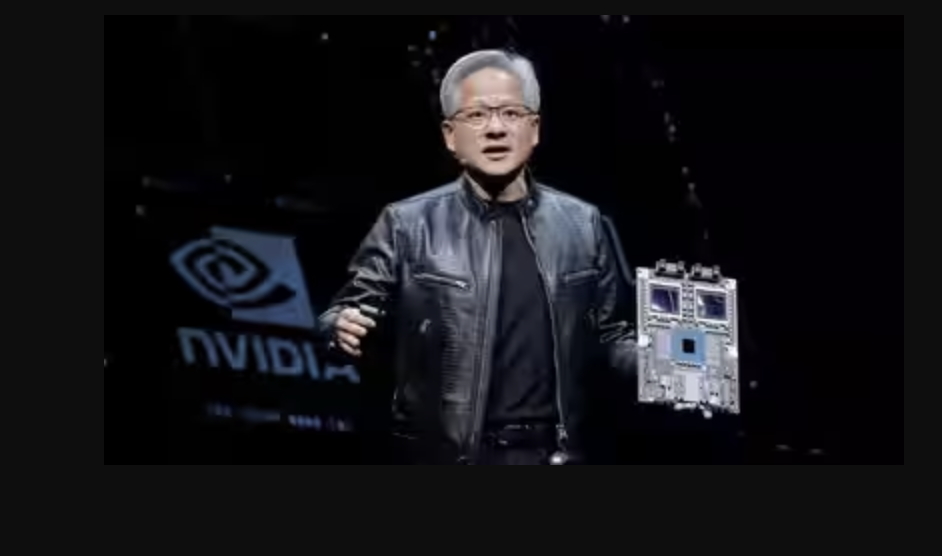
Jensen Huang Declares That AGI Has Arrived
Nvidia CEO Jensen Huang has made a bold claim following the launch of OpenAI’s latest AI model, GPT-6 Astrasaying that artificial general intelligence (AGI) has finally arrived.
Huang congratulated OpenAI after Astra’s launch and wrote that the rapid progression from ChatGPT to o1 and now Astra represented a major technological leap. His declaration effectively places Astra at the centre of the long-running debate over when AI will reach human-level general intelligence.
What Is AGI?
Artificial general intelligence generally refers to AI systems capable of learning, reasoning and performing a broad range of intellectual tasks at or beyond human capability.
However, there is no universally accepted definition of AGI. OpenAI describes it as highly autonomous systems capable of outperforming humans at most economically valuable work.
That makes Huang’s statement controversial. Calling a model AGI depends heavily on which capabilities and benchmarks are considered sufficient.
Astra Marks a Major AI Leap
OpenAI describes Astra as its most intelligent and aligned model so far, with major improvements in computer use, browsing, software engineering, cybersecurity, science and professional work.
The model can perform multiple complex tasks autonomously, including creating software, preparing professional documents and conducting research.
OpenAI President Greg Brockman has also suggested that Astra could eventually be viewed as the point at which the AGI era began, calling the model a generational leap in capability.
Nvidia’s Role Is Central
Huang’s comments also highlight Nvidia’s increasingly important role in the development of frontier AI.
Astra was trained using more than 100,000 Nvidia Grace Blackwell NVLink72 systemsillustrating the enormous computing infrastructure required to develop today’s most advanced AI models.
Huang also said that another 400,000 Nvidia GPUs are coming onlinesignalling that the race to build increasingly capable AI systems will require substantially more computing power.
The relationship is strategically important for both companies: OpenAI depends heavily on Nvidia hardware, while Nvidia’s extraordinary growth is being driven by demand from AI developers.
Not Everyone Agrees That AGI Has Arrived
Despite Huang’s confidence, several researchers and technology experts remain sceptical.
Critics argue that benchmark improvements, even dramatic ones, do not necessarily demonstrate that an AI system possesses general intelligence comparable to humans.
The ARC Prize Foundation, whose benchmarks have been highlighted in connection with Astra, described its results as a major advance but cautioned against treating benchmark performance as definitive proof of AGI.
OpenAI CEO Sam Altman has also previously described AGI as a poorly defined term, underscoring the lack of consensus even within the industry.
The Debate Is Just Beginning
The disagreement over Astra is likely to continue as AI systems become increasingly capable of completing real-world tasks without continuous human intervention.
If AGI is ultimately defined by the ability to perform most economically valuable intellectual work, Astra’s capabilities could represent a significant step toward that threshold.
But whether it has actually crossed the line remains a matter of interpretation rather than an established scientific fact.
Summary: Nvidia CEO Jensen Huang says AGI has arrivedpointing to OpenAI’s new GPT-6 Astra model as evidence of a major breakthrough. Astra has achieved impressive results across reasoning, computer use, coding, cybersecurity and professional tasks, while being trained on more than 100,000 Nvidia systems. However, researchers remain divided because AGI has no universally accepted definition and benchmark success alone does not prove human-level general intelligence.
Image Source