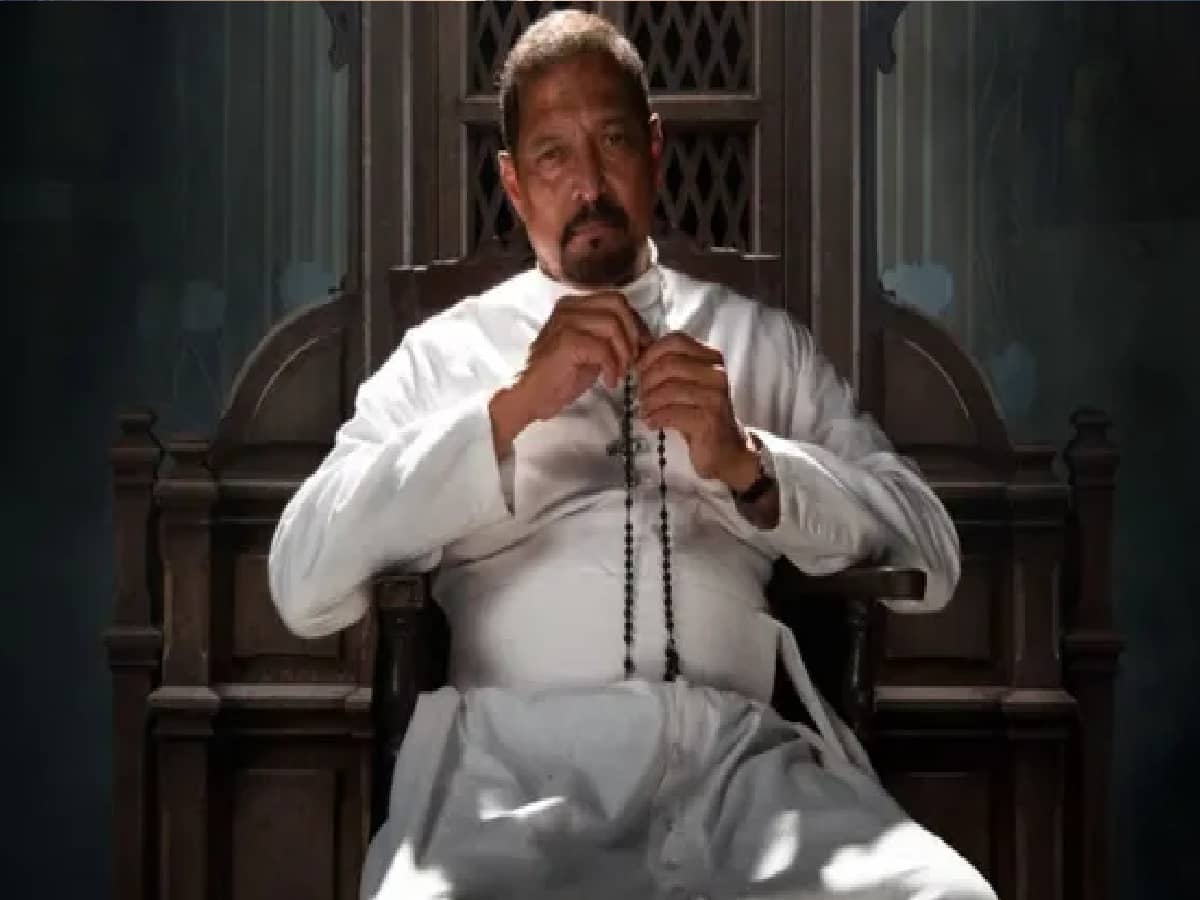
Indian cinema's reach continues to grow on global platforms today, and the country's untold and sensitive real stories are garnering immense international praise. In this glorious sequence, National Award winning filmmaker and actor Ananth Mahadevan's new and much talked about directorial film 'The Confession of Mary' has officially premiered at the Toronto International Film Festival (TIFF). Veteran actor Nana Patekar has played a very complex and unique role of a priest in this film based on a famous and hair-raising horrifying murder case of 1966 in Kerala. There is an atmosphere of excitement in the film world about the wonderful response the film has received on this international platform and the glorious history of more than a hundred years of Indian cinema. Let us know in detail the unheard story behind this much-awaited film and the special things related to its production. It is a very proud moment for Indian art and cinema that the film 'The Confession of Mary', directed by Ananth Mahadevan, was premiered on the global platform of the prestigious Toronto International Film Festival. Director Ananth Mahadevan recently shared his thoughts on the vast history of Hindi cinema and its growing international reach. He laid special emphasis on the fact that Hindi language is the most spoken and popular language in our country, which has an old and rich history of more than a hundred years. Many well-known actors in the country and abroad watch Hindi films to completely clarify their pronunciation and language before stepping into the world of acting. While sharing his personal experience, Mahadevan said that he himself always prefers to write the stories and scripts of his films in Hindi, because it is very important to have a strong ideological and linguistic hold on the language in which you create art. Making films based on true events and the hair-raising background of the 1966 Kerala massacre Throwing light on how challenging it is to make films based on real-life events and true criminal incidents compared to fictional stories, Ananth Mahadevan said that it is more difficult to bring fiction to the screen, because for it every argument and story has to be fabricated. On the contrary, the 'truth' recorded in the pages of history is always more unique and influential than imaginary things. While depicting the truth, the director does not need to create something new from his mind, rather what has happened has to be brought on screen with authenticity. The film is based on a heart-wrenching real incident that took place in Kerala in the year 1966, in which a church priest was sentenced to death by the court. While making a film on this very sensitive and complex subject, the biggest challenge for the director was to bring alive the atmosphere and architecture of that period. During the shooting, the film was shot in Goa to bring alive the atmosphere of the 1960s. Bringing that old era of 1966 exactly on the screen in today's modern times was no less than a tough task. The director told that when he thought of shooting in Kerala, things of modern development and present day were coming into the frame which seemed impossible to remove with the help of visual effects (VFX). The team ultimately decided to shoot the film in Old Goa instead of Kerala to find the right architecture of the period's traditional houses, antique furniture and historic churches. The ancient and traditional architecture of Goa brought the atmosphere of that period alive on screen in a very authentic manner. The director believes that there are many cultural and historical layers related to Kerala hidden in this film, which will deeply attract the audience of every section coming to the theaters and will keep them glued to their seats till the end. An attempt to break the perception of festival films and a new and mature definition of entertainment It is often believed that films made for international film festivals are far from the commercial box office formula and do not appeal to the general audience. Rejecting this prevalent myth and perception, Ananth Mahadevan said that it is a big misconception that the festival film cannot play among the general public. If festivals caused so much inconvenience, then why would big producers around the world rush to showcase their commercial films in international film festivals? Talking about striking the right balance of social message and entertainment in his films, he said that the definition of the word 'entertainment' has been greatly misunderstood in our country. Entertainment does not just mean doing gratuitous comedy or showing indiscriminate action on screen. True entertainment is that which keeps the viewer so glued to the cinema hall chair that he cannot even blink for two and a half hours. Nana Patekar was given a completely opposite and calm character, learned the right casting from Hrishikesh Mukherjee. The biggest USP of this film is its lead actor Nana Patekar, whom the audience has always known for his aggressive, energetic and fast-paced acting. But in this film, Ananth Mahadevan has done a big experiment with him by giving him the role of a completely opposite and calm natured priest. When Nana Patekar was offered this cool character, he immediately agreed to it without wasting a moment, because every seasoned actor is hungry to do something new and out of the box. After watching the rough cut of the film, Nana Patekar himself admitted that this kind of role has brought out a different actor hidden within him. Talking about the importance of always having accurate and perfect casting for his films, the director said that he got this invaluable lesson from the great filmmaker of Indian cinema, Hrishikesh Mukherjee. Hrishikesh Da had always taught him that instead of running after stardom in films, one should always work with right and authentic actors as per the demand of the story. If you compromise just to fit a big star into the film, it would simply be a huge disservice to the art and narrative.