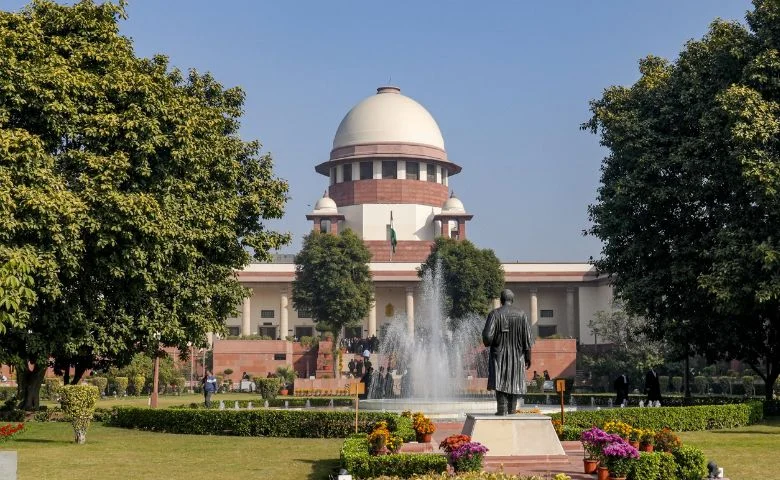
Court News: A landmark hearing has begun in the Supreme Court on the constitutionality of the marital rape exception. The apex court will first look into a case from Karnataka, in which a husband is accused of committing serious sexual violence against his wife. The question raised during the hearing is whether a husband can be prosecuted for raping his wife despite the exception to marital rape in the law.
CJI Suryakant, Justice Joymalya Bagchi and Justice V. The Mohnani bench said that a decision will be taken on the issue after hearing all the parties. The matter has been listed for final hearing after three weeks.
The first hearing will be held on the Karnataka case
The Supreme Court will first consider a case from Karnataka in which a woman was allegedly treated like a ‘sex slave’. Senior advocate Indira Jaisingh, appearing for the wife, told the court that considering the seriousness of the case, the Karnataka High Court allowed the husband to be prosecuted under the Rape Act despite the exception of marital rape. He argued that even without abolishing the exception to marital rape, such a case could be tried by interpreting the existing law.
On this the Supreme Court questioned that when there is a clear exception in the law, can it be interpreted so that the husband can be prosecuted for rape in certain situations.
Two major legal questions before the Supreme Court
-
First: Can the present marital rape exception be narrowly interpreted and prosecuted in certain cases against the husband?
-
Second: Does this exception violate the Constitution and should be completely repealed?
‘Marriage does not abrogate individual autonomy’
During the hearing, Justice Joymalya Bagchi observed that personal autonomy of a person does not come to an end after marriage. However, he added, since the court is considering a criminal law, it has to decide whether the exception provided in the law is unreasonable before allowing the husband to be prosecuted specifically for rape.
Justice Bagchi also clarified that the marital rape exception does not protect the husband from every criminal consequence connected with sexual violence. Other criminal provisions may apply if sexual violence results in serious injury or death.
After a split verdict by the Delhi High Court, the matter reached the Supreme Court
The case reached the Supreme Court after the Delhi High Court’s split verdict on 11 May 2022. In which Justice Rajiv Shakdhar ruled in favor of abolishing this exception, while Justice C. Harishankar supported its reinstatement. On behalf of the central government, Solicitor General Tushar Mehta said that the government will fully cooperate with the Supreme Court on these legal issues.