Kuala Lumpur International Airport recorded a 30% increase in air connectivity in 2025, making it the second strongest improver in the Asia-Pacific region after China’s Shanghai Pudong International Airport.
The 2026 edition of the Air Connectivity Index released by the Airports Council International covers 315 airports, 277 in Asia-Pacific and 38 in the Middle East, ranging from under 1 million to more than 95 million passengers a year.
It combines direct, indirect and hub connectivity, weighing each available seat by the economic weight of the destination served and the quality of the connection.
|
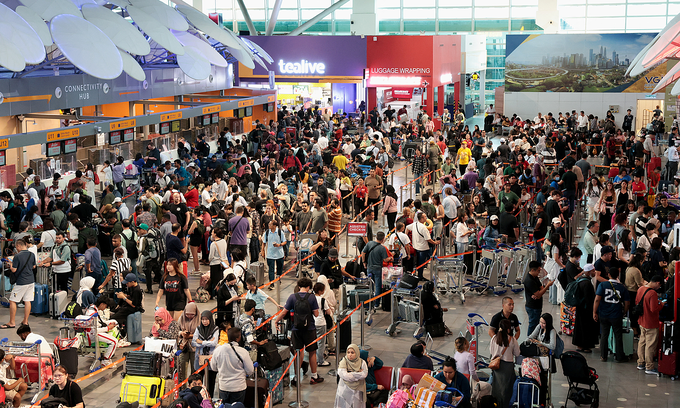
Passengers wait to be checked in manually at Kuala Lumpur International Airport’s Terminal 2 in Sepang, Malaysia, July 19, 2024. Photo by Reuters |
Stefano Baronci, director general of ACI Asia-Pacific & Middle East, said the growth in air connectivity was encouraging. With passenger volumes across Asia-Pacific and the Middle East projected to reach 11 billion over the next three decades, he said it was increasingly important to strengthen connectivity so aviation could offer passengers greater choice and deliver wider economic benefits.
Kuala Lumpur International Airport, Southeast Asia’s largest airport by land area, offers over 36,000 possible connections to 151 destinations.
It handled 36.7 million passengers in the first seven months of this year, up 3.4% year-on-year, driven by summer travel demand from Europe, the Middle East and parts of Asia.