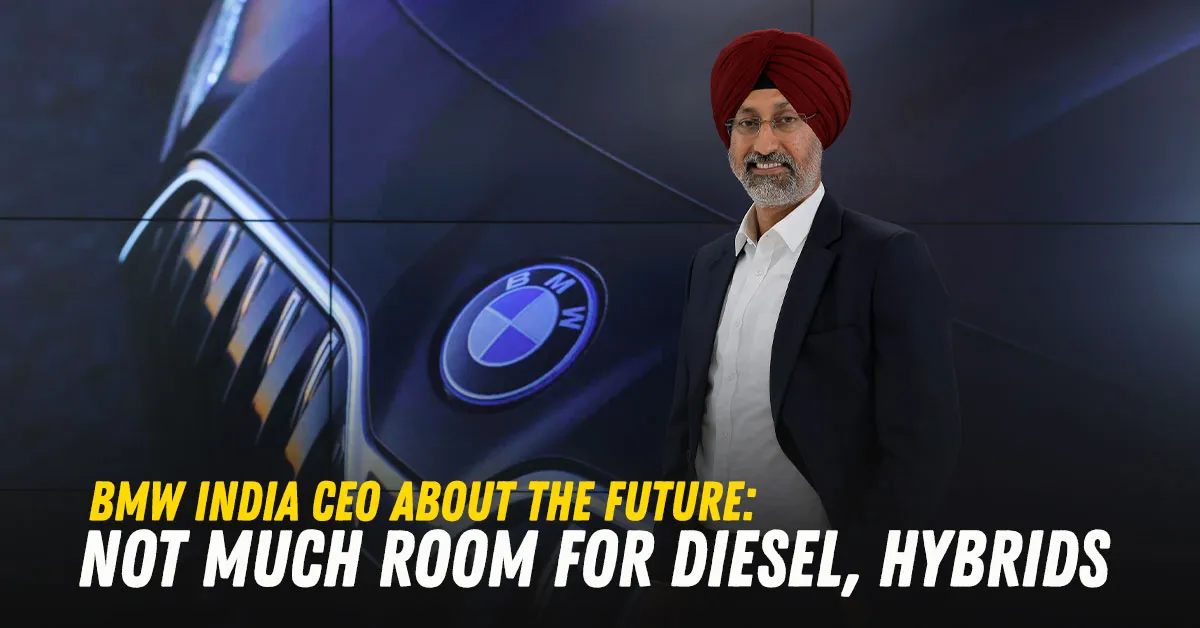
BMW India does not see much room for hybrids in its future line-up and expects diesel cars to steadily lose share as more luxury-car customers move directly to electric vehicles.
BMW Group India President and CEO Hardeep Singh Brar believes the rapid improvement in EV driving range has weakened one of the main arguments for plug-in hybrids. Instead of using a petrol engine and battery together to overcome limited electric range, customers can increasingly buy a pure EV capable of covering long distances on a charge.
BMW currently does not offer a hybrid in its India portfolio. The company’s strategy is increasingly centred on battery-electric models alongside its remaining petrol and diesel cars.
A plug-in hybrid combines an internal-combustion engine, electric motor and battery. In theory, it offers electric driving for shorter journeys while retaining a petrol engine for longer trips.
BMW India, however, sees compromises in that approach.
Brar pointed to the additional weight and packaging requirements created by carrying both an engine and a sizeable battery. The two power systems take up space and can affect the overall packaging of the car.
He also argues that the performance case becomes weaker when modern pure EVs already provide long driving ranges and strong acceleration. BMW’s latest electric models can offer claimed ranges well beyond what earlier-generation EVs managed, reducing the need for a petrol engine as a backup.
That does not mean hybrids are disappearing from the wider Indian car market. Several manufacturers see strong hybrids as an important route to reducing fuel consumption without requiring external charging.
BMW’s view is specific to its own luxury portfolio, where EV adoption is already moving quickly.
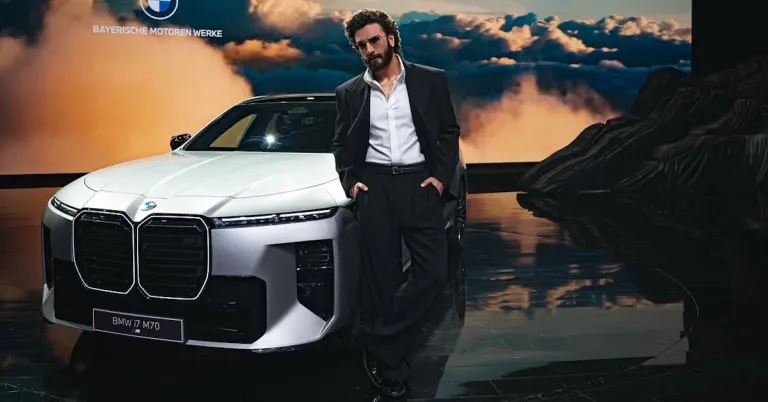
The numbers help explain the company’s confidence in a direct shift towards EVs.
BMW sold 2,359 electric vehicles in India between January and June 2026, up 78 percent year on year. EVs represented 26 percent of BMW Group India’s total sales during the period, compared with 21 percent a year earlier.
The company expects that share to cross 30 percent in the second half of 2026 and believes it could exceed 40 percent in 2027.
BMW says the five-percentage-point increase in EV share over the past year has come at the expense of both petrol and diesel. Diesel’s contribution declined by three percentage points, while petrol fell by two.
The shift is even more pronounced in some individual model lines. Electric versions account for around 60 percent of sales in the 7 Series/i7 family. BMW has also previously said the electric iX1 accounts for a majority of combined X1 and iX1 demand.
Diesel has traditionally been important to luxury-car manufacturers in India, particularly in larger sedans and SUVs where strong torque and long-distance fuel efficiency suited customer usage.
BMW is not immediately abandoning diesel. It can continue to offer diesel models as long as there is sufficient demand and the engines comply with regulations.
The question is how large that demand will remain.
Diesel passenger cars have already become less common in the wider market as emissions regulations have increased complexity and cost. At the luxury end, EVs now add another alternative for customers who want effortless torque and low running noise.
For BMW, that makes electric power a more direct long-term alternative to diesel than hybrid technology.
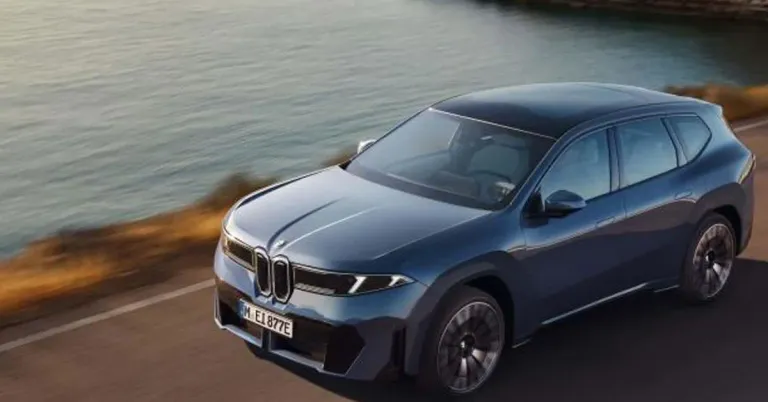
BMW’s product and manufacturing decisions are also following the sales trend. The iX1, i5 and i7 are locally produced in India.
Local production becomes increasingly important as EVs move from a small part of the business to potentially one-third or more of BMW’s sales. It can improve supply and give the company more flexibility over pricing.
BMW’s position is therefore different from manufacturers that see hybrids as a bridge between petrol and full-electric cars. In BMW India’s case, that bridge may be much shorter.
Customers are already moving from petrol and diesel directly to battery-electric models in meaningful numbers. If EV penetration crosses 30 percent in the second half of 2026 and continues towards 40 percent next year, BMW will have even less reason to introduce another powertrain category between ICE and EVs.