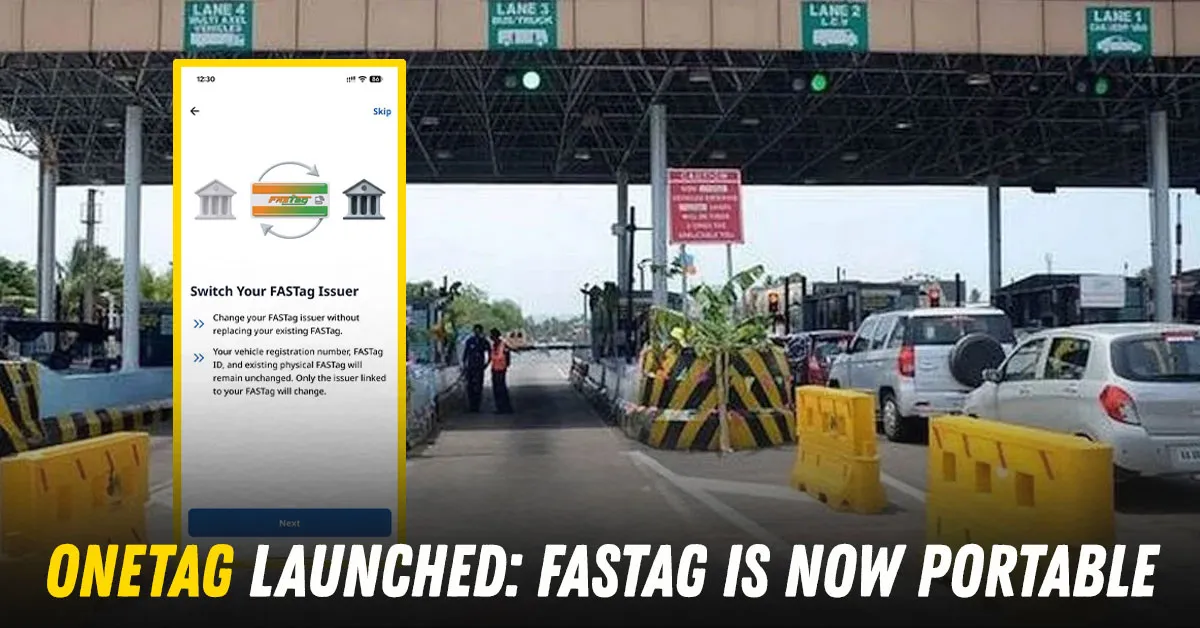
Changing the bank linked to a FASTag will no longer mean peeling the old tag off the windscreen and getting a new one. The government has launched OneTag, a FASTag portability system that allows motorists to move from one issuer bank to another while retaining the physical tag already fitted to the vehicle. This is, in a way, similar to porting your mobile number! You switch to another service provider without losing your number (the identity).
The facility was launched by Union road transport and highways minister Nitin Gadkari at the Global Fintech Fest 2026 in Mumbai. It is designed to work broadly like mobile number portability, giving FASTag users the option of changing their service provider without changing the identity of the tag.
Under the new system, the existing Tag ID and the vehicle registration number remain unchanged after a successful switch. Portability will be offered through NHAI’s Rajmargyatra app.
Until now, changing the issuer bank was a more cumbersome process. A vehicle owner generally had to close the existing FASTag, complete onboarding with another issuer, obtain a fresh physical tag and replace the sticker on the vehicle.
OneTag removes the physical replacement from that process. This can be particularly useful for motorists who want to move because of service issues, app experience, recharge options or other bank-specific reasons.
There is an important distinction, however. OneTag does not simply transfer the balance in the old FASTag wallet to the new bank. The previous issuer remains responsible for the old wallet and associated matters such as refunds, pending transactions and other outstanding obligations. The new issuer completes its own onboarding before taking over FASTag services for the customer.
The initiative has been developed jointly by Indian Highways Management Company Limited, which is promoted by NHAI, and the National Payments Corporation of India.
FASTag is already the standard toll-payment mechanism on India’s national highways. The government says penetration has crossed 98 percent, with around 13 crore FASTags issued. Annual toll collection through FASTag has reached about Rs 82,500 crore.
At that scale, even a relatively small inconvenience affects a very large number of motorists. A physical FASTag is tied to the vehicle and sits on the windscreen for years, so requiring replacement merely because a user wants a different issuing bank adds an unnecessary step.
Portability also introduces more freedom to choose between issuers. A user dissatisfied with one bank’s service no longer has to treat the physical tag as a reason to remain with that issuer.
For banks and other FASTag issuers, this could also increase competition. If switching becomes easier, service quality, digital experience and customer support become more important because retaining a customer is no longer helped by the inconvenience of replacing the tag.
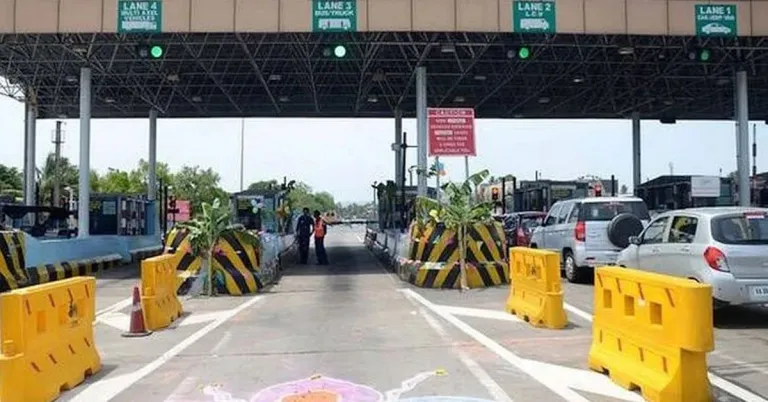
OneTag arrives as the government prepares for another major change in highway tolling. The road transport ministry is moving towards barrier-free toll collection using FASTag together with Automatic Number Plate Recognition cameras.
The proposed Multi-Lane Free Flow system is intended to allow vehicles to pass through tolling points without stopping at conventional barriers. Gadkari has said the aim is zero stoppage and zero waiting time, with nationwide deployment targeted by March 2027.
That makes OneTag more than a small banking convenience. FASTag is becoming part of a broader digital tolling system in which the vehicle, its registration and its toll-payment identity need to work together smoothly even as the underlying service provider changes.
For motorists, the immediate benefit is simpler: if another issuer offers a better FASTag service, changing banks should no longer require changing the tag stuck to the windscreen.