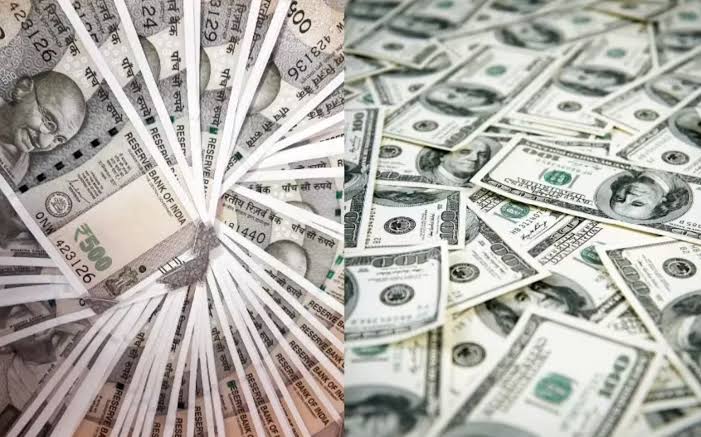
India’s foreign exchange reserves surged by a record $44.90 billion in a single week, reaching an all-time high of $785.71 billion as of September 4, according to data released by the Reserve Bank of India. The sharp increase strengthens India’s external financial buffer and gives the central bank greater room to manage currency volatility.
Largest Weekly Increase on Record
India’s forex reserves stood at $785.706 billion for the week ended September 4, compared with $740.803 billion a week earlier. The latest increase of nearly $45 billion is the largest weekly rise recorded so far.
The reserves have now increased for 10 consecutive weeksadding almost $120 billion during that period. The latest jump also pushed India ahead of Russia to become the world’s fourth-largest holder of foreign exchange reservesbehind China, Japan and Switzerland.
Foreign Currency Assets Lead the Surge
The biggest contributor was foreign currency assets (FCAs), which increased by $47.498 billion to $648.168 billion during the week.
FCAs form the largest component of India’s forex reserves and include assets held in major foreign currencies. Their dollar value can also change because of movements in the exchange rates of currencies such as the euro, pound and yen.
The increase was partly offset by a decline in the value of India’s gold reserves.
Gold Reserves Decline
India’s gold reserves fell by $2.594 billion to $113.816 billion during the week. Despite the weekly decline, gold holdings remained significantly higher than a year earlier.
Special Drawing Rights held with the International Monetary Fund declined marginally by $4 million to $18.806 billion, while India’s reserve position with the IMF increased by $2 million to $4.916 billion.
Overall, reserves were $94.599 billion higher than at the end of March and $87.438 billion above their level a year earlier.
Massive Dollar Inflows Drive Growth
The recent surge has been closely linked to the RBI’s measures introduced to encourage foreign-currency inflows.
The central bank’s concessional dollar-rupee swap facilities attracted more than $136 billion between June and the end of August. Foreign Currency Non-Resident Bank deposits accounted for the overwhelming majority of the inflows.
The strong response led the RBI to close the FCNR(B) deposit window earlier than initially planned.
A Larger Buffer for the RBI
The record reserves give the RBI a significantly larger pool of foreign currency with which to manage periods of pressure on the rupee and respond to external shocks.
However, the recent inflows also increase liquidity in the domestic banking system, requiring the central bank to manage the additional rupee liquidity. Analysts have also noted that some of the inflows associated with swap arrangements represent future liabilities for the RBI.
Summary: India’s forex reserves surged $44.90 billion to a record $785.71 billion in the week ended September 4, marking the largest weekly increase on record. Foreign currency assets drove the rise, while gold holdings declined. Strong inflows through the RBI’s foreign-currency mobilisation schemes have helped rebuild India’s external buffer, making the country the world’s fourth-largest holder of forex reserves.