7
There is a recognition within sections of the BJP that Congress could make the election competitive.
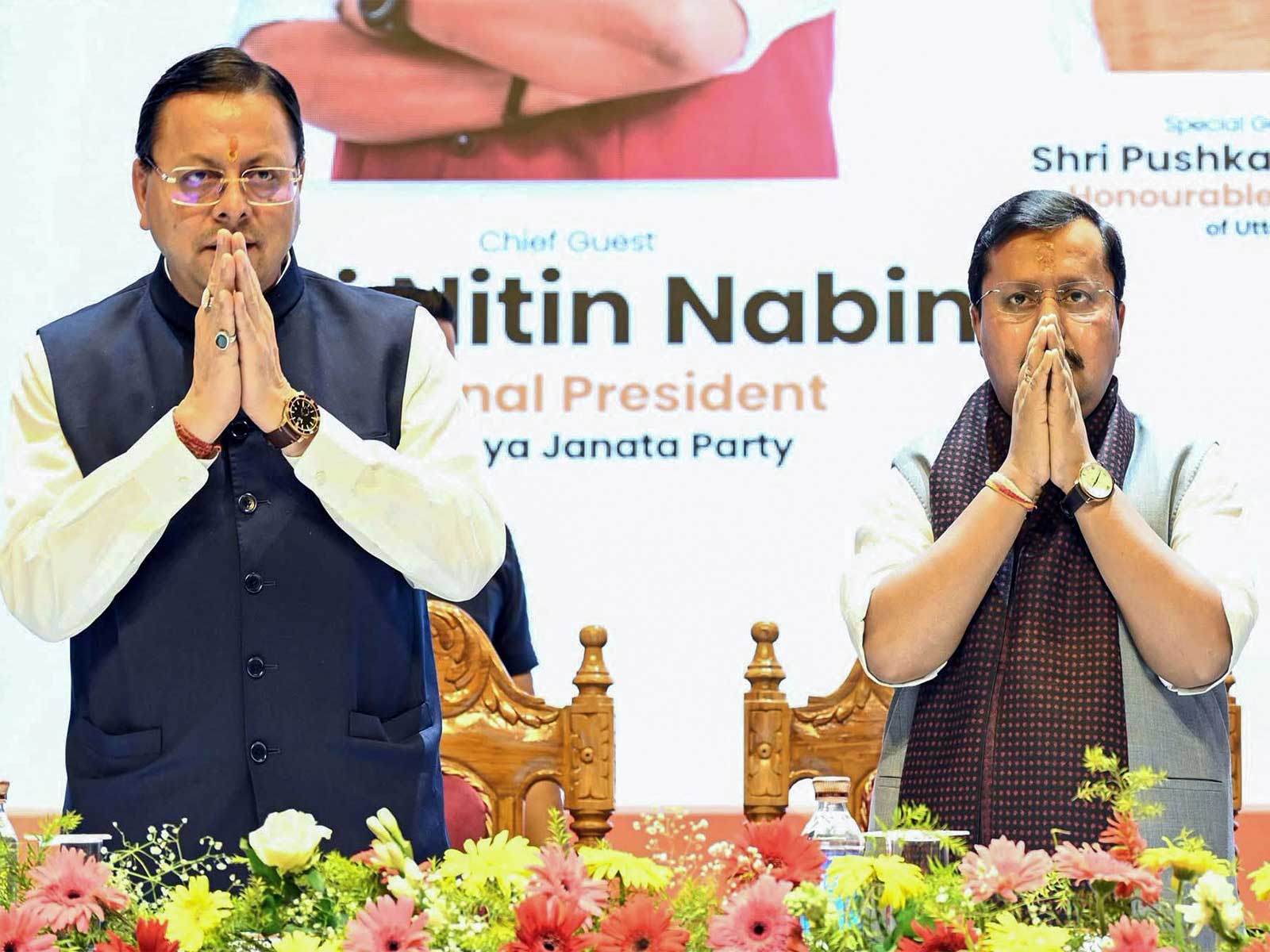
The BJP’s campaign for the March 2027 Uttarakhand Assembly elections has officially begun with national president Nitin Nabin’s two day visit to the state, during which the party’s new election strategy was discussed alongside a series of public and organisational engagements. Nabin met young people, interacted with soldiers, played football with Gen Z youth in Haldwani and held meetings with the state leadership and party workers as the BJP began preparations for its bid to form the government for a third consecutive term. Nabin reached a turf ground on Nainital Road in Haldwani after a series of meetings on Wednesday night, where he changed into a T-shirt and played football with Gen Z youth.
The youth interaction was also used to discuss careers, employment, entrepreneurship and the future of Uttarakhand. The youth raised migration as one of the state’s major problems, pointing out that a lack of employment and better opportunities was forcing large numbers of young people to leave the state. The political significance of the visit, however, lies in what happened alongside the outreach programme. The BJP’s organisational meetings marked the beginning of its Mission 2027 exercise, with the party preparing a constituencywise strategy aimed at retaining its existing seats while making gains in areas where it lost or secured narrow victories in 2022. At its state executive meeting in Haldwani, the BJP discussed development, good governance, social harmony, public welfare and the protection of Uttarakhand’s cultural and spiritual identity as the broad themes for the 2027 campaign. The meeting also passed a proposal for a developed Uttarakhand.
The party’s stated objective is ambitious. BJP wants to win the state for a third consecutive term under Dhami and create a new chapter in Uttarakhand’s political history. But the party enters the election with vulnerabilities that extend beyond the issues being discussed publicly at its organisational meetings. One of the biggest concerns emerging from the ground is the perception of corruption in the functioning of the government machinery. During visits to parts of Uttarakhand last month, people across sections, including local workers, daily-wage workers and shopkeepers, repeatedly spoke about corruption affecting their ability to get government work done. A common complaint was that government work does not move without the payment of a bribe. The perception is that routine work involving the administration can be delayed unless money changes hands. The issue could become particularly damaging for BJP because good governance is one of the central themes with which the party intends to seek another mandate.
The gap between the government’s development narrative and the experience of citizens dealing with the administration could therefore become an important electoral fault line. The second major vulnerability is factionalism within the BJP itself. While Dhami is being projected as the leader under whom the party will seek its third consecutive mandate, there are multiple leaders with political ambitions and interest in the question of who could occupy the chief minister’s post in the future. Some of these figures are senior functionaries who are currently part of the BJP’s national organisation. The leadership question could become more complicated as the party moves towards candidate selection. Competition for tickets, local factionalism and differences among senior leaders could affect the organisation’s ability to present a united campaign if they are not managed early. There is a recognition within sections of the BJP that Congress could make the election considerably more competitive if it manages to put its own house in order. BJP leaders in the state believe that if Congress succeeds in controlling its internal factionalism and presents a coordinated campaign, the ruling party’s task of completing a hat-trick will become difficult. The BJP is therefore working on a seat-by-seat assessment.
In the Kumaon region alone, there are 29 Assembly constituencies. BJP won 18 of these in the 2022 election while Congress won 11. The party is now focusing particularly on seats where it won by narrow margins and those it lost, while also seeking to consolidate its existing strongholds. The strategy discussed at the organisational level is being structured around three categories of seats: those already won and needing to be retained, those where the victory margin was narrow and require additional attention, and seats lost in the previous election where the party wants to mount a stronger challenge. The emphasis on young voters is significant in this strategy. The party’s assessment puts the number of young voters in the Kumaon region at more than 15 lakh. The region also has more than 3.50 lakh serving and retired personnel from the armed forces, making ex-servicemen another important constituency. Women voters are also being identified as a critical component of the BJP’s electoral strategy.
At the same time, BJP is seeking to ensure that the election does not become solely a referendum on governance given the feedback it has received. Cultural and ideological issues are expected to form another part of its campaign. Nabin, who recently referred Leader of Opposition Rahul Gandhi as “Miyan”, has already attacked Congress over the controversy following Congress president Mallikarjun Kharge’s programme in Haldwani, including the issue of alleged ‘purification’ of the venue. The BJP is also expected to raise issues such as land jihad, the Uniform Civil Code and the protection of Uttarakhand’s cultural identity. The party is also highlighting the government’s claim that its efforts have resulted in a reduction of more than 28 per cent in migration, while presenting reverse migration as an indicator of improvement in the state’s development trajectory. The absence of some key organisational functionaries from the first meeting of the newly constituted state executive committee has also generated discussion within the party.
The state in-charge was absent from the meeting, while the appointment of the state organisation general secretary is still pending. The developments come at a time when the BJP is beginning the most important phase of its organisational preparations for the 2027 election. For BJP, the election will therefore be fought on two parallel tracks. The first is the narrative it wants to present to voters: development, good governance, welfare, cultural identity and a self-reliant Uttarakhand under Dhami. The second is the challenge of addressing what voters and sections of its own organisation are saying about the functioning of the government and the party. The corruption perception is particularly significant because it cannot be addressed through an electoral slogan alone. It concerns the credibility of the administration at the point where citizens encounter it.