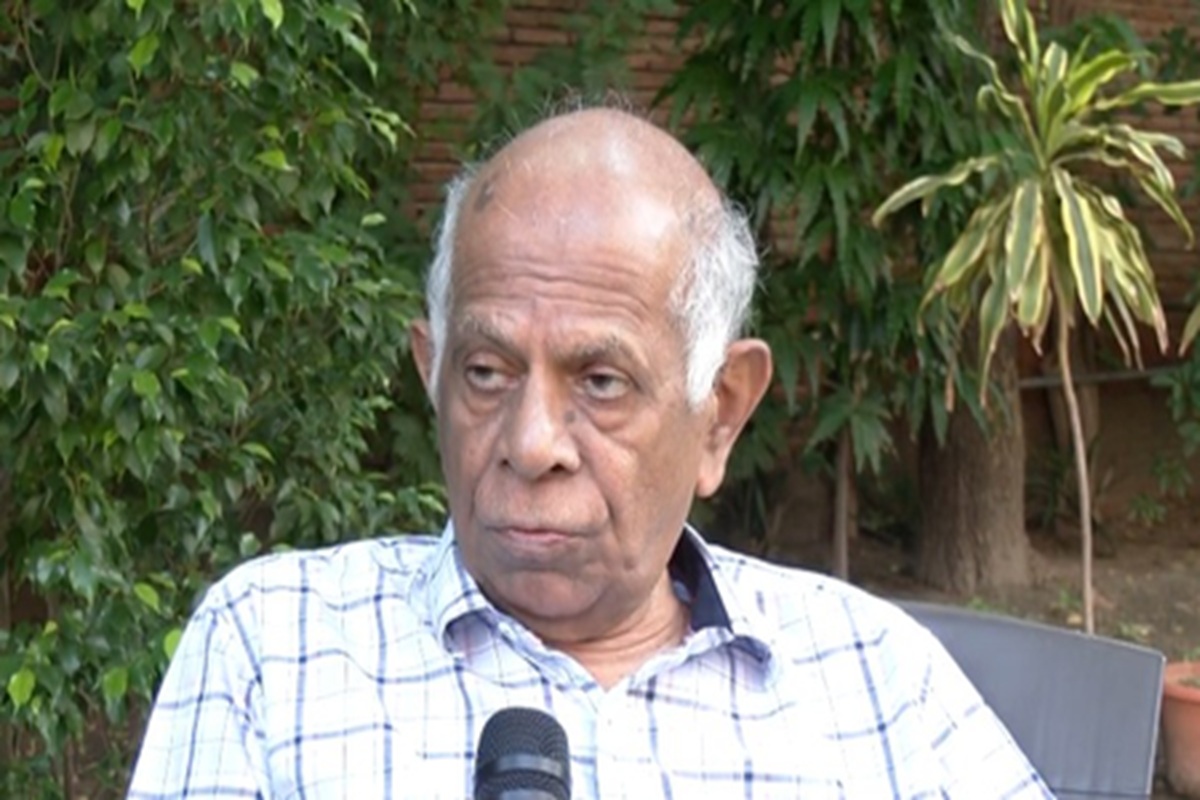
Speaking to IANS, KP Fabian said that 95 percent of trade between India and Russia is already happening in national currencies. In such a situation, there is no need for a 'common currency'. According to Fabian, the creation of a 'common currency' will end the financial sovereignty of the countries and China's dominance over it is certain.
Fabian said that in the Indian media there is often talk of 'de-dollarization' i.e. reducing dependence on the US dollar. According to him, it is not necessary to present the issue in this manner and it is also not diplomatically wise.
He said it would make more sense to talk about greater use of 'national currencies' rather than de-dollarization. He said some media outlets still use language like 'local currency' when the correct term should be 'national currency'.
According to Fabian, China and Russia are already settling their trade in their own currencies. At the same time, about 95 percent of the trade between India and Russia is being settled in national currencies. He said that BRICS countries should not move towards creating a 'common currency'. According to him, hardly any country except China wants such a system.
He explained that if a 'common currency' was created, countries would have less control over their own economic and financial policies. For example, they will not be able to change the interest rates as per their need. That means their financial sovereignty will be affected.
Fabian said that India is not ready for such a system at present. He also said that even if a common currency of BRICS is ever formed in the future, which he finds very unlikely, it will almost certainly be dominated by China.
Explaining the reason for this, he said that now there are 11 member countries in BRICS. The total GDP of all these is about 34 trillion dollars, while the GDP of China alone is about 20 trillion dollars. Therefore India should not support the idea of a 'common currency'.
On the issue of reforming the United Nations Security Council and India getting permanent membership, Fabian said that in his view, no significant progress has been made on this issue yet.
He said that if the wording of the statement is read carefully, Russia and China have only said that they accept or appreciate the aspirations of India and Brazil to play a larger role in the UN and the Security Council.
According to Fabian, this does not mean that Russia and China have clearly supported India and Brazil's claim for permanent membership in the Security Council. Therefore, it would not be right to claim any major progress on this issue right now.
Talking about cross-border terrorism in the BRICS manifesto, former diplomat KP Fabian said that it is a good thing that the BRICS manifesto has strongly condemned cross-border terrorism and used such language which India has been raising for a long time.