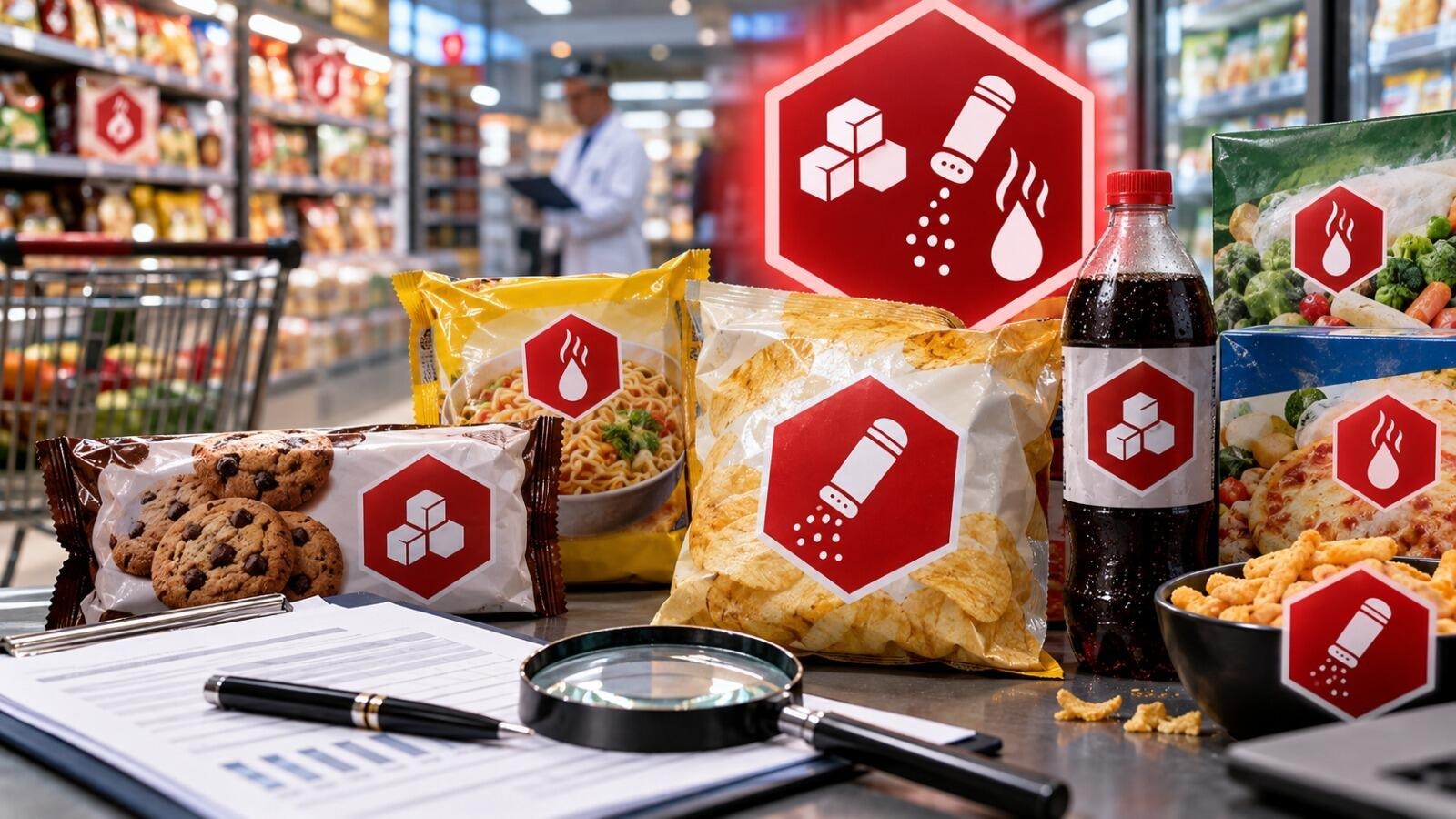
A strict step by the Food Safety and Standards Authority of India (FSSAI) has given sleepless nights to the country's leading food and beverage companies. To curb health problems like increasing obesity, diabetes and heart diseases in the country, FSSAI has presented a big proposal in the Supreme Court, under which it is being made mandatory to print a bright red hexagonal warning mark in front of packaged foods. Under the ambit of this new rule, all those popular things which people eat and drink with great gusto are going to come, such as children's favorite cookies, instant noodles, various types of packed snacks, soft drinks and ready-to-eat frozen foods. With the implementation of this system, it will not be possible for companies to market their products and hide harmful ingredients from consumers, which is causing panic in the entire food industry. The main objective of this new Front-of-Pack Nutrition Labeling (FoPNL) system brought by FSSAI is to tell consumers at a glance the quantity of ingredients harmful to health present in the packed food they are buying. Under this rule, if any packaged food product is found to contain added sugar (sugar), sodium (salt) or saturated fat (saturated fat) in excess of the prescribed limit, then a red colored hexagonal symbol will have to be placed in its main display area i.e. right in front of the packet. This red mark will clearly have words like 'high fat', 'high sugar', 'high salt' or 'highly sweetened beverage' written in big and bold letters. This warning will work just like a 'stop sign' on the road, so that the buyer can understand what he is consuming as soon as he sees the packet at the shop. Most of the ultra-processed foods and junk foods sold in the market use excessive amounts of sugar, salt and cheap fats like palm oil to enhance the taste. When these red warning marks are printed prominently directly on the packets, the awareness of the common man will increase rapidly and they will start shying away from purchasing such goods. It is believed that this will have a direct impact on the sales of multinational companies (MNCs) and domestic food brands. The main food items that will be most affected include biscuits made from refined flour, cookies, potato chips, namkeen, packed cakes, instant noodles, frozen French fries, nuggets and carbonated soft drinks and energy drinks. These companies will now either have to reformulate the recipes of their products to reduce the amount of sugar and salt, or else be ready to openly carry the red warning stamp on their products. FSSAI has prepared a roadmap to implement this proposal in a phased manner. Under the first phase, those products will be targeted that exceed the limits of two or more harmful ingredients (such as excessive fat and salt). After this, in the second phase, those products which violate any one standard (like only excessive sugar or only salt) will also be brought under its purview. However, the biggest catalyst behind this entire process is the strong rebuke from the Supreme Court of the country, in which the court had clearly said that the health of the citizens and especially the growing children is more paramount than the profits of the companies. Only after the strictness of the court, the regulatory body FSSAI has rapidly moved forward with this proposal, due to which health experts have heaved a sigh of relief, although they are also demanding some further improvements in its rules. Seen from the perspective of common consumers, this change can prove to be a historic step towards their health rights and food literacy. Till now, people did not bother to read the nutritional charts printed in very small print on the back of packets, which hid huge amounts of sugar and salt. But now having a warning in the red box in front will increase transparency. On the other hand, certain single-ingredient products traditionally consumed in pure form such as pure ghee, edible oils, butter, honey and sugar have been exempted from the scope of this mandatory warning. In the coming days, when this rule will completely come into effect, the food industry will have to completely change its marketing strategy and companies will have to adopt a more responsible attitude towards the health of the customers.