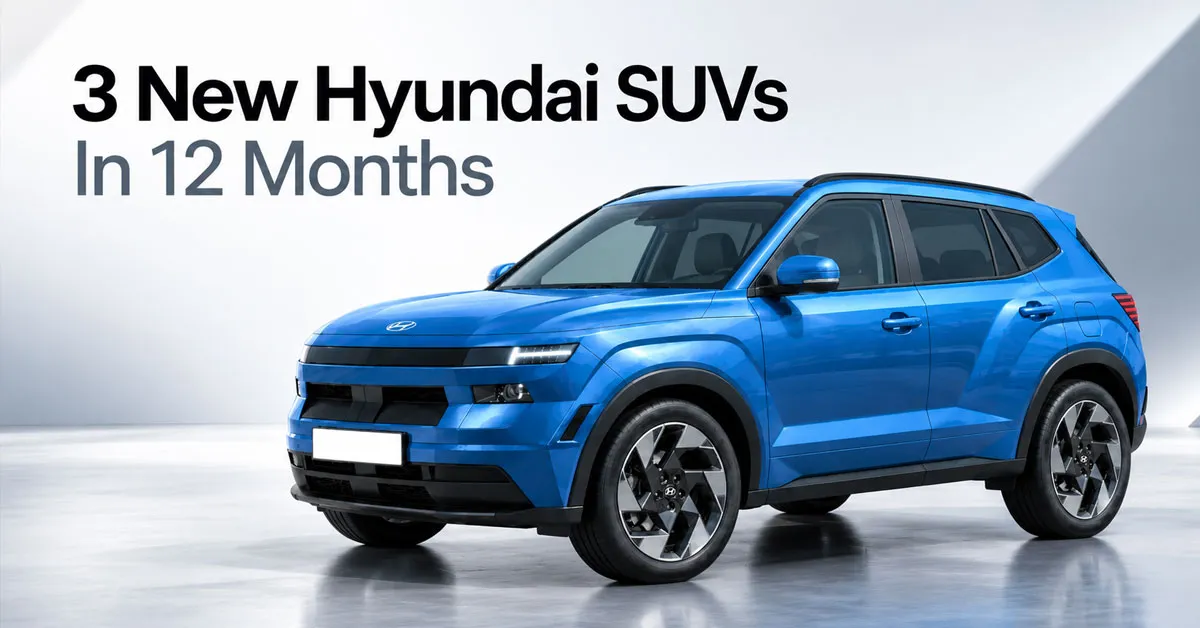
Hyundai is preparing for a busy 12 months in India. Three important SUVs are expected to launch during the period. These will be the second-generation Bayon-based SUV, a small (and affordable) electric SUV and the next-generation Creta. Each of these will target a different section of the market and will in the larger picture, help in increasing the Korean giant’s India footprint. At the time of writing, it ranks fourth, with Mahindra and Tata taking the third and second places. These launches are thus part of Hyundai’s comeback strategy.
The first launch is expected to be a small SUV. This project is currently codenamed BC4i and the production form is likely to reach showrooms this October. An almost production-ready form has already been spotted testing on Indian roads. Additionally, Hyundai has also released a teaser confirming the ‘Bayon’ name.
The BC4i will have a boxy, SUV-like design. It is likely to come with a connected LED light bar, LED DRLs, split headlamps, sleek LED tail lamps, and good-looking alloy wheels. Despite being compact in size, this SUV will have good road presence. Test mule sightings suggest the same.
Hyundai is expected to give it a premium, technology-rich cabin. Features like ventilated seats, electrically adjustable seats, panoramic sunroof, a curved dual-display, leatherette upholstery and ADAS are expected. If you are already wondering, the Bayon-based SUV will be positioned between the Venue and the Creta in Hyundai’s India lineup.
Under the bonnet, the BC4i is likely to be offered with a 1.5-litre naturally aspirated petrol engine. This is shared with the Creta and will be available with both manual and an iVT automatic transmission. There are also reports that the carmaker might introduce a new turbocharged 1.2-litre engine in this model. A CNG option also remains a strong possibility. The actual powertrain plan remains unclear for now.
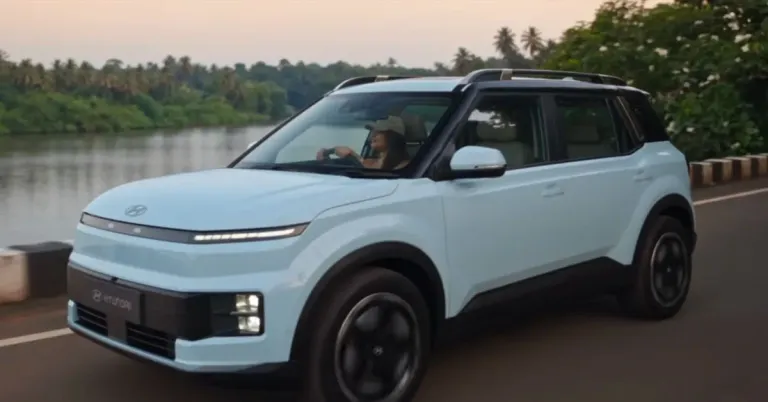
The next important launch will be a small, affordable electric SUV that will sit below the Creta Electric. This sub-four-metre EV is currently codenamed HE1i. It is expected to arrive in late 2026, possibly by December. When launched, it will compete with the likes of Tata Punch EV and Nexon EV.
The HE1i’s production form will be based on the new E-GMP (K) platform. It will be a heavily localised architecture. Two battery sizes are expected: 42kWh and 51.4kWh- same as those of the Creta Electric. Both versions are expected to offer a claimed range of 450-500km on a single charge.
Test mules of the HE1i have already been spied testing. This electric SUV will have a boxy design. It will likely have a split headlamp setup, a closed-off front grille, large window areas, machine-cut wheels, roof rails, shark-fin antenna, integrated rear spoiler, sleek LED tail lamps connected by a LED light bar, a muscular bumper, and more. The overall design could remind you of a larger version of the Hyundai Casper sold abroad.
Inside, this EV will get features like a large touchscreen infotainment system, leatherette upholstery, ventilated seats, automatic climate control, ADAS, Hyundai’s new-age steering wheel, and an electric sunroof.
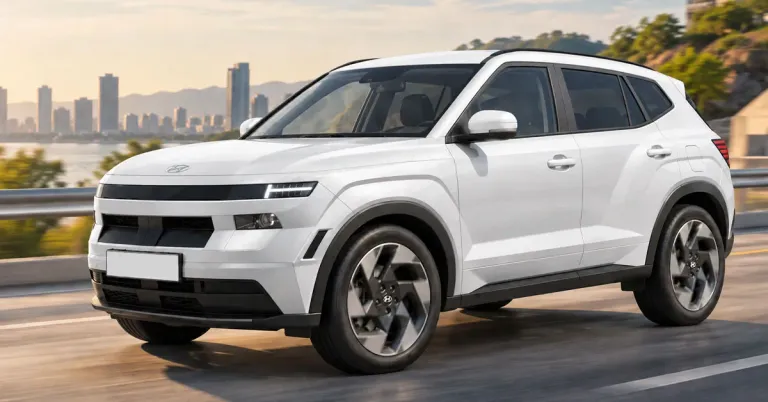
The biggest launch among these will be the next-generation Creta. Expected to arrive in the first quarter of 2027 (most likely in March), it will be a major departure from the outgoing model in terms of styling and packaging.
The next-generation Creta will move to the K3 platform, shared with the new Seltos. It will thus be larger than the current model. The new Creta will have a fresh design. As suggested by spy shots, it will have a more upright and boxy design. Expect it to come with LED lighting, particularly pixel-inspired clear-lens LED tail lamps.
The cabin will also receive a complete redesign. It is expected to get Hyundai’s new Pleos Connect infotainment system. The new Creta will retain the current model’s features. More features are also likely to be added.
The next-generation Creta will also offer a wide range of powertrains. It will retain the current model’s 1.5-litre naturally aspirated petrol, 1.5-litre turbocharged petrol and 1.5-litre diesel. A new 1.5-litre strong-hybrid powertrain is also expected. The Creta Electric will also get a corresponding update sometime later.