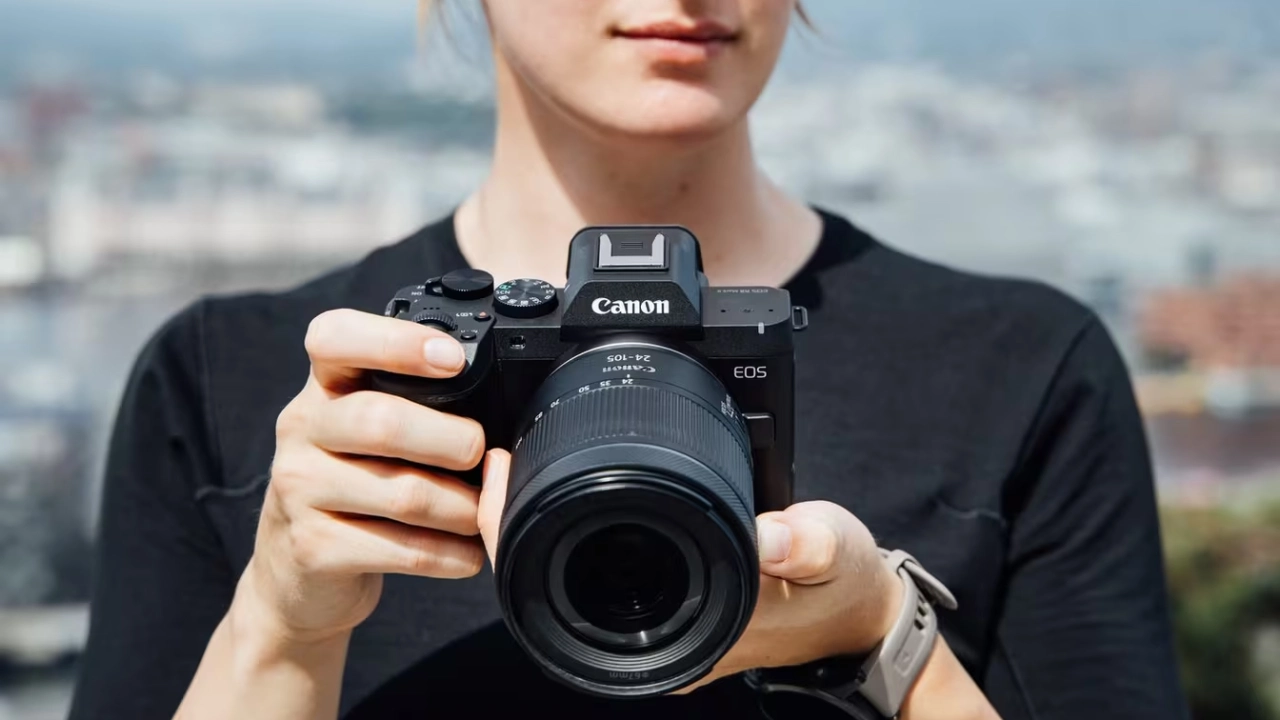
Canon has officially unveiled the Canon EOS R8 Mark II, and the second-generation full-frame mirrorless camera is focused less on reinventing the R8 than on fixing several of its most obvious omissions. The original EOS R8 offered full-frame imaging in a remarkably lightweight body, but it left out features that many photographers expect from a modern full-frame camera. Most notably, it lacked in-body image stabilization and a dedicated multi-controller for autofocus positioning.
The EOS R8 Mark II addresses both. However, Canon has not replaced the camera’s basic imaging architecture with a higher-resolution platform. The Mark II uses a 24.2MP full-frame CMOS sensor and DIGIC X processor, putting the emphasis of this generation on stabilization, handling, autofocus, burst performance, and video.
Canon Finally Fixes the R8’s Biggest Omission
The headline hardware addition is 5-axis in-body image stabilization. For handheld photographers, IBIS is more than a specification-sheet upgrade. It allows the camera to compensate for camera movement and can be particularly useful when shooting at slower shutter speeds.
Canon rates the EOS R8 Mark II’s Coordinated IS system at up to 7.5 stops of correction at the center and 7.0 stops at the periphery under its specified CIPA test conditions. The rating applies when the camera’s IBIS works with compatible lens stabilization, using Canon’s specified RF24-105mm F2.8 L IS USM Z lens at 105mm and electronic shutter. It should therefore be understood as a test-condition rating, not a universal 7.5-stop result in every shooting situation.
The camera also weighs approximately 546g with the battery and one SD card installed. Canon describes it as the lightest EOS camera with IBIS as of September 15, 2026. That keeps portability at the center of the R8 II proposition. Canon has added stabilization without moving the camera into the considerably heavier body class occupied by many traditional full-frame models.
The AF Joystick Matters More Than the New Look
The EOS R8 Mark II retains the original R8’s 40fps maximum electronic-shutter burst rate, so the generational improvement here is not a faster headline frame rate. Instead, Canon has concentrated on what happens around that maximum speed.
The Mark II provides approximately 30% more continuous RAW shots and 58% more continuous JPEG shots than the original R8. At 40fps, Canon lists approximately 73 RAW frames or 190 Large/Fine JPEG frames before the camera slows as it writes to the card.
The 40fps figure requires the electronic shutter in Continuous High+ mode, and Canon notes that the maximum rate can vary depending on camera settings and shooting conditions. Factors including shutter speed, lens, aperture, flash use, subject conditions, brightness, and flicker detection can reduce the continuous shooting speed. That makes the deeper buffer and Pre-Continuous Shooting more significant than simply repeating the 40fps headline. The R8 II can already shoot that quickly; the upgrade is about making that capability more usable.
40fps Shooting Makes the R8 II More Versatile
The EOS R8 Mark II also retains one of the original R8’s headline capabilities while building around it: extremely fast electronic-shutter shooting.
The camera can reach 40 frames per second, giving it considerably more burst-speed headroom than its modest full-frame positioning might suggest. That makes the R8 II particularly interesting for subjects involving unpredictable movement, including wildlife, sports and action. However, maximum burst speed should not be confused with unlimited continuous shooting. Buffer capacity, shutter mode and the file format being used all influence how long that speed can actually be sustained.
Canon has improved the buffer compared with the original R8, making the high-speed shooting system more practical.
Video Gets More Than a Token Upgrade
The R8 Mark II is also positioned as a hybrid camera. It supports uncropped 6K-oversampled 4K up to 60p, alongside Full HD recording at up to 180p for slow-motion footage.
For more advanced video workflows, Canon includes Canon Log 3 and its Custom Picture/Look File system. Custom LUT files can be applied in-camera through the Look File system for shooting, playback, viewing, and HDMI output, giving creators more control over the final look without treating LUT support as a generic standalone workflow feature. The camera also supports wired and wireless livestreaming, alongside UVC and UAC functionality for compatible streaming and video-call workflows.
Canon has added more unusual creator-focused features as well. The R8 Mark II supports both full-frame and APS-C RF VR lenses, while VR Clear Mode automatically applies image parameters intended for viewing through VR goggles.
Canon EOS R8 Mark II: The 24.2MP Sensor Is Still Here
This is where the R8 Mark II story becomes more nuanced. Canon retains a 24.2MP full-frame CMOS sensor and DIGIC X processor. The company does not position the Mark II as a higher-resolution successor; instead, the new model builds additional hardware and software capabilities around that imaging platform.
For someone moving from the original R8, that means there is no resolution-driven reason to upgrade. The case for the Mark II comes from the features surrounding the sensor: IBIS, the multi-controller, improved autofocus tracking, deeper buffering, Pre-Continuous Shooting, and expanded video functionality. That distinction matters because it separates the Mark II from the kind of generational camera upgrade where the sensor itself is the primary attraction.
The LP-E17 Battery Remains a Practical Limitation
There is also one area where Canon has kept the original camera’s compact approach: the LP-E17 battery. Canon’s official figures vary according to the camera’s display and power-management mode. With a new, fully charged LP-E17 at 23°C, the EOS R8 Mark II is rated for approximately 270 shots using the LCD in Smooth mode or 150 shots using the EVF in Smooth mode. Switching to Power Saving mode raises those figures to approximately 340 shots with the LCD and 220 shots with the EVF.
These are Canon’s stated CIPA-based figures and should not be treated as a single universal battery rating; actual results can vary considerably with shooting conditions.
The small LP-E17 remains a practical consideration for photographers planning longer shoots. Buyers may therefore want to factor in spare batteries or USB power options when planning extended use, particularly for travel or event work.
What About the Competition?
The EOS R8 Mark II enters a competitive full-frame market, and its ₹1.79 lakh price makes the comparison especially relevant in India.
The Nikon Z5 II is one of the clearest alternatives. Nikon lists the body at ₹1,64,495, with a current offer price of ₹1,54,495 on its India website. That puts the Z5 II below the R8 Mark II even before considering its feature set. Nikon’s camera uses a 24.5MP full-frame BSI CMOS sensor, includes two UHS-II card slots, a 3.69-million-dot EVF and a 2.1-million-dot rear display. It weighs approximately 700g with the battery and memory card, compared with 546g for the Canon. That creates a straightforward trade-off. The Canon is substantially lighter and offers a 40fps electronic burst mode, while the Nikon offers a heavier body with dual card slots and a different set of display and handling specifications.
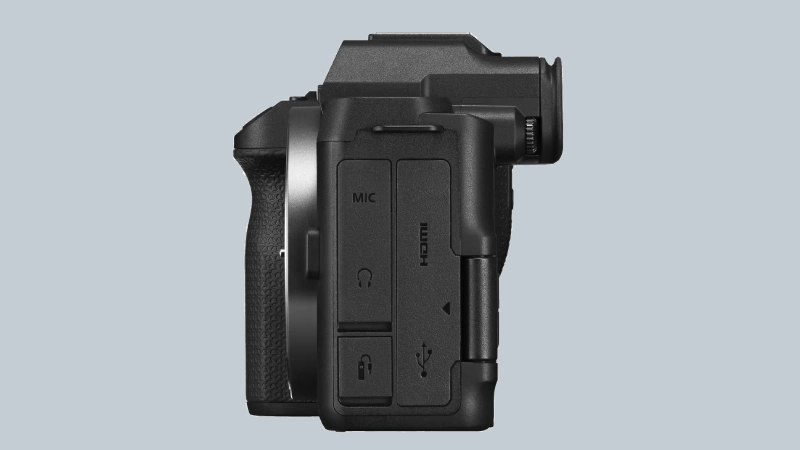
Sony’s A7C II complicates the lightweight argument further. It uses a 33MP full-frame back-illuminated sensor, includes 5-axis IBIS rated at up to 7.0 stops, and weighs approximately 514g with the battery and memory card. That makes the Sony roughly 32g lighter than the Canon despite offering a higher-resolution sensor and IBIS. Sony also rates the A7C II for approximately 530 shots using the EVF and 560 shots using the LCD under CIPA conditions, substantially above the R8 Mark II’s Smooth-mode figures.
The comparison therefore is not simply about which camera has more specifications. Canon’s argument is the combination of a 546g full-frame body, IBIS, Dual Pixel CMOS AF II, 40fps electronic shooting, and Canon’s RF ecosystem.
Is the R8 Mark II Worth ₹1.79 Lakh?
In India, the EOS R8 Mark II body is priced at ₹1,78,995, including taxes. For an original R8 owner, the upgrade case is strongest when the missing IBIS, joystick, deeper buffer,r or newer autofocus and video features are genuine limitations in the existing workflow. The unchanged 24.2MP resolution means the Mark II is not an upgrade that needs to be justified through image resolution alone. For a first-time full-frame buyer, the calculation is different. Nikon’s lower current body price and heavier, dual-slot Z5 II create one alternative, while Sony’s 514g A7C II combines an even lighter body with a 33MP sensor and substantially higher CIPA battery figures.
Canon has fixed several of the original model’s most obvious limitations while keeping the same basic imaging platform. That makes the EOS R8 Mark II less of a resolution-driven successor and more of a usability-focused second generation. At ₹1.79 lakh, the key question is therefore not simply whether the R8 II is more capable than the original R8. It is whether its particular mix of IBIS, controls, burst performance, autofocus, and 546g portability is worth paying for when Nikon and Sony offer different compromises at similar or lower prices.
(Source)