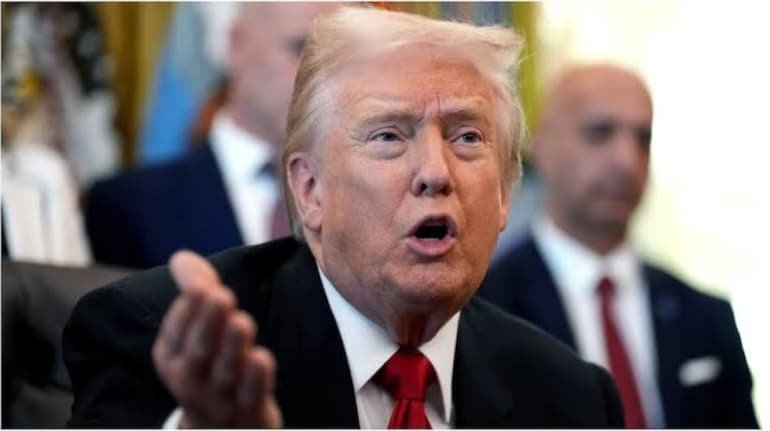
The US Parliament (Congress) has passed the most aggressive and comprehensive sanctions bill ever, aimed at breaking the back of Moscow's war economy amid the Russia-Ukraine war. After the US Senate, the House of Representatives also passed the 'Lindsay O. 'Lindsey O. Graham Sanctioning Russia and Iran Act of 2026' has been given the green signal. Now this bill has directly reached the White House, where President Donald Trump is soon going to sign it and make it a formal law. The main goal of this bill is to tighten the noose on Russia's energy and defense sector, top officials and the 'shadow fleet' (secret network of tankers) that evades oil sanctions. But the most explosive aspect of this law is the provision which directly hands the US President the authority to impose huge import tariffs of up to 100 percent on the world's top importing countries purchasing crude oil and natural gas from Russia. Why did India become America's target? Understand the mathematics of oil import. India imports more than 88 percent of its total petroleum requirements from abroad. Since the start of the Ukraine conflict in 2022 and the imposition of sanctions on Russian oil by Western countries, India has significantly increased the purchase of Russian crude oil at concessional rates. Today, India has become the second largest buyer of Russian crude oil in the world after China. Russia's share in the country's total oil imports has reached about 40 to 45 percent. American lawmakers argue that this huge purchase of oil by India and China is giving financial oxygen to the Russian economy. The new US bill directly targets the top 5 importing countries (which include India, China, Azerbaijan, Hungary and Slovakia) that buy energy from Russia. Will 100% tariff be imposed on India immediately? Know the legal nuances. As soon as this bill was passed, there was concern in Indian business and diplomatic circles whether America would immediately impose 100% tariff on Indian goods. However, legal experts and analysts have clarified that: Tariff will not be automatically implemented: Once this law is made, 100% duty will not automatically be imposed on all imports from India. Presidential Discretionary Power: This law only gives President Donald Trump the 'right' to impose punitive tariffs of up to 100% on goods coming from that country if a country continues to make new purchases of Russian oil after a stipulated period of 30 days. Provision for waiver: The most important thing is that in this bill, the US President has also been given the right to give special 'waiver' i.e. exemption from these sanctions to any allied country in view of national security or geopolitical interests. Potential threats to Indian exports: Which sectors will be affected? If Washington decides to impose partial or full tariffs on Indian products as part of a pressure strategy, its most serious impact will be on India's export sector. The US is India's largest trading partner and single largest export destination. The following key sectors may suffer huge losses in case of higher tariffs: Electronics and smartphones: 'Made in India' iPhones and other electronic gadgets going from India to the US will become costlier. Pharmaceuticals: The profits and market share of Indian pharmaceutical companies supplying generic drugs to the US will be affected. Textiles, Garments and Apparel: Textile hubs of Tiruppur, Surat and Noida will find it difficult to compete in the US market. Gems & Jewellery: The diamond polishing industry of Surat and Mumbai may face a major setback. Auto Components and Engineering Goods: The costs of companies supplying parts to American automakers will increase. Strategic experts believe that the Trump administration can use this law as a 'pressure tool' (bargaining weapon) in the ongoing bilateral trade deal negotiations with India instead of actually imposing harsh sanctions. The US has long been demanding greater access for its products to India's huge agricultural, dairy and medical device markets. India's Ministry of External Affairs (MEA) has taken a strong and clear stand on this entire incident. The Ministry of External Affairs has bluntly said that India is fully committed to ensuring the energy security of its 140 crore citizens. India will continue to purchase oil for its energy needs only on the basis of practical market conditions and diversified sourcing. New Delhi has made it clear to the US side that it is determined to take all necessary steps to protect its national economic and trade interests. Way forward: Will India stop buying oil from Russia? According to energy sector experts, it is practically impossible for India to change the source of more than 40% of its crude oil overnight. The global oil market is already in a critical phase due to rising tensions in the Middle East and the Red Sea crisis. If India suddenly stops purchasing Russian oil, then the price of crude oil in the international market may go beyond $ 120-130 per barrel, due to which the American economy itself will have to suffer. In such a situation, it is expected that after the enactment of the law, back-channel diplomacy will be active between New Delhi and Washington and a way will be found to provide special waiver to India on the basis of energy security.