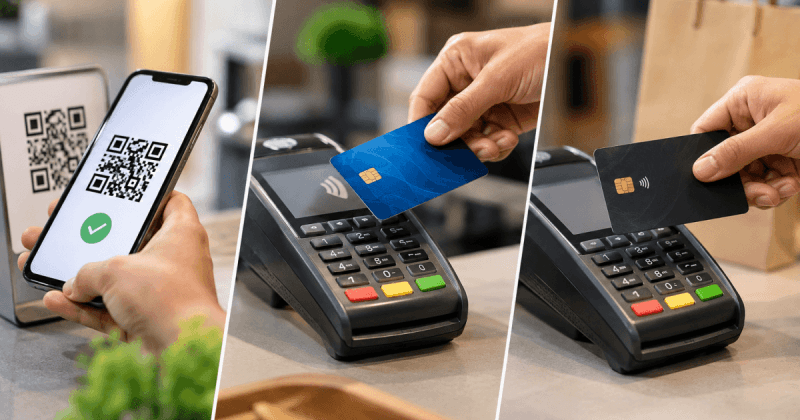

UPI vs debit vs credit card: Which payment method costs merchants the most and why?IANS
The introduction of a Merchant Discount Rate (MDR) on select UPI transactions from October 15 has changed the cost equation for merchants accepting digital payments. While UPI has traditionally been free for merchants, eligible person-to-merchant transactions above Rs 2,000 will now attract an MDR of 0.4 per cent.
However, even with the new charge, UPI is expected to remain cheaper for merchants than conventional debit and credit card payments in many cases.
Under the new framework announced by the National Payments Corporation of India (NPCI), a 0.4 per cent MDR will apply to specified UPI person-to-merchant transactions above Rs 2,000. The charge will be capped at Rs 300 for transactions of Rs 75,000 and above. Consumers will not be charged for making these UPI payments, while person-to-person transactions will continue to remain free.
For instance, a merchant receiving an eligible UPI payment of Rs 5,000 would pay Rs 20 as MDR, while a Rs 50,000 transaction would attract a charge of Rs 200. For a Rs 1 lakh transaction, the 0.4 per cent calculation would come to Rs 400, but the merchant charge would be capped at Rs 300.
Debit cards
Debit-card payments operate under a separate RBI framework. For larger merchants, the prescribed MDR ceiling can go up to 0.90 per cent for physical point-of-sale and online transactions, while lower ceilings apply to smaller merchants and QR-based card transactions.
This means that the actual amount paid by a merchant can vary depending on the merchant category, payment channel and arrangement with the acquiring bank. The RBI rates are ceilings and do not necessarily represent what every merchant pays.
Credit cards
Credit-card transactions generally carry higher merchant acceptance costs. NPCI’s latest FAQ puts standard credit-card MDR typically in the range of 1.5 per cent to 2.5 per cent, although the actual rate can vary depending on the merchant, card network, issuing bank, acquiring bank and payment processor.
For a Rs 10,000 transaction, an MDR of 1.5 per cent would mean a merchant charge of Rs 150, while a 2.5 per cent rate would mean Rs 250. This compares with Rs 40 under the new 0.4 per cent UPI MDR for an eligible Rs 10,000 transaction.
No fee on UPI transactions, Sitharaman clarifies; government to hold PSB Confluence on August 17-18IANS
Why are credit cards more expensive?
Unlike ordinary bank-account-funded UPI payments, credit-card transactions involve a broader payment ecosystem that includes card networks, issuing banks, acquiring banks and payment processors. Interchange and other costs form part of the overall merchant acceptance fee.
Credit cards also provide customers with access to a line of credit, along with features such as rewards, cashback and interest-free credit periods. These factors are part of the broader economics of credit-card payments.
So, which costs merchants the most?
The answer depends on the transaction and merchant arrangement. Under the headline rates, eligible UPI transactions above Rs 2,000 will carry a 0.4 per cent MDR, capped at Rs 300. Debit-card charges can go up to 0.90 per cent for certain merchants, while standard credit-card MDR typically ranges from 1.5 per cent to 2.5 per cent.
For a Rs 1 lakh transaction, for example, the UPI MDR would be capped at Rs 300. At a 0.90 per cent debit-card ceiling, the charge could be Rs 900, while a credit-card MDR of 1.5-2.5 per cent would amount to Rs 1,500-Rs 2,500.
These figures are headline rates and should not be treated as the actual cost for every merchant, as commercial arrangements and eligibility conditions can differ.
The new UPI framework therefore ends the zero-MDR model for specified higher-value merchant transactions, but UPI remains relatively low-cost compared with many card-based payment options. The government has also clarified that consumers will not bear the new MDR directly.