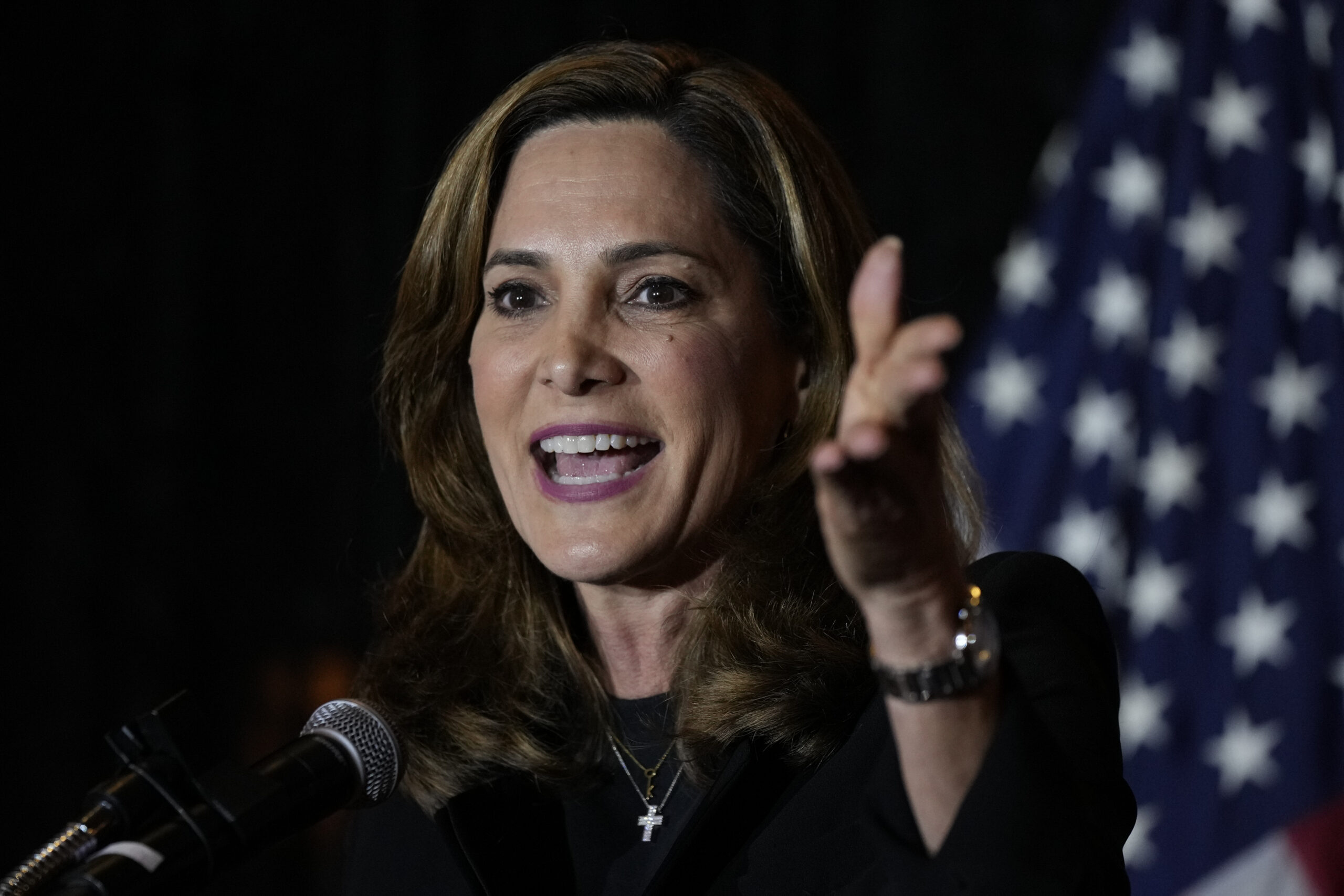
Florida GOP Rep. Salazar: Hispanic Voters Feel ‘Betrayed’ by Trump’s Immigration Policies/ TezzBuzz/ WASHINGTON/ J. Mansour/ Republican Rep. María Elvira Salazar is publicly challenging President Donald Trump over immigration enforcement as she campaigns for reelection in South Florida. Salazar says enforcement has extended beyond what many Hispanic voters expected and warns that some of Trump’s 2024 supporters now feel “betrayed.” She continues to support border enforcement but is calling for greater focus on people with criminal records and more dignified treatment of established immigrant families.
Quick Look
- Salazar criticized Trump’s immigration enforcement in a campaign advertisement.
- She represents Florida’s heavily Hispanic 27th Congressional District.
- Salazar said some of Trump’s enforcement policies have “gone too far.”
- She cited data indicating half of July’s ICE detainees had no criminal record.
- Salazar said she is not asking the president to provide amnesty.
- Florida leads the country in agency participation in ICE’s 287(g) program.
- A federal report examined conditions at the state’s “Alligator Alcatraz” facility.
- Salazar faces Democrat Eliott Rodriguez in the midterm election.
- Trump has not publicly responded to her criticism.
Deep Look
Salazar delivers rare Republican criticism of Trump
Florida Republican Rep. María Elvira Salazar is publicly challenging President Donald Trump’s immigration agenda, warning that some Hispanic voters who supported him in 2024 believe his administration’s enforcement campaign has exceeded what they expected.
Salazar delivered the criticism in a bilingual campaign advertisement released ahead of the midterm elections. The message represents an unusual break with Trump by a Republican incumbent running in a heavily Hispanic district.
“Mr. President, some of your immigration enforcement efforts have gone too far,” Salazar says in the ad.
Her message does not reject deportations or border enforcement. Instead, she argues that federal agents should prioritize immigrants with criminal records while treating longtime residents and their families with greater consideration.
Salazar’s advertisement highlights a growing disagreement within the Republican Party over the scope and implementation of Trump’s deportation agenda.
Warning about Hispanic voters
Salazar addressed her message directly to Trump, cautioning him that his advisers may not accurately understand the political and community effects of the administration’s policies.
“Be careful what your advisers are telling you about immigration policy,” she tells Trump. “The same Hispanics who helped you get to the White House in 2024 feel betrayed today.”
Trump increased his support among Latino voters during the 2024 election, particularly in South Florida. Salazar argues that aggressive enforcement against immigrants without criminal records is now weakening that support.
The criticism places her among a relatively small group of elected Republicans openly distancing themselves from parts of the president’s agenda before the November elections.
Salazar cites detention figures
Salazar says 50% of the people detained by U.S. Immigration and Customs Enforcement in July had no criminal record.
That figure is central to her argument that the administration’s enforcement campaign is reaching beyond immigrants who have committed crimes.
She said the government should distinguish between people who present public-safety threats and immigrant families who have lived, worked and raised children in the United States for years.
“I’m not asking you to give amnesty,” Salazar says in the advertisement. “I’m asking you to give immigrants a dignified life in this promised land.”
Her language reflects an attempt to balance support for immigration enforcement with her longstanding advocacy for legal protections for certain undocumented immigrants.
Salazar’s South Florida district
Salazar represents Florida’s 27th Congressional District, which includes substantial portions of Miami-Dade County.
Approximately three-quarters of the district’s residents identify as Hispanic, according to Census Reporter’s demographic profile.
The district includes significant Cuban American and other Latin American communities. Its voters have historically considered immigration alongside economic policy, U.S. relations with Latin America and opposition to left-wing governments in the region.
Trump carried the district by nearly 15 percentage points in the 2024 presidential election. Salazar is now seeking reelection while attempting to separate her position on immigration implementation from the administration’s broader enforcement approach.
Florida’s expanded immigration role
The debate is especially prominent in Florida, where state and local law enforcement agencies have taken an active role in federal immigration enforcement.
Under ICE’s 287(g) program, participating state and local officers can perform designated immigration-enforcement duties under federal supervision.
Florida has more participating agencies than any other state, according to federal figures. That extensive involvement has made the state a major testing ground for the administration’s enforcement strategy.
Supporters say the partnerships increase cooperation and help authorities identify immigrants who are subject to removal. Critics argue they encourage local police to become involved in federal immigration matters and can erode trust between officers and immigrant communities.
Scrutiny of ‘Alligator Alcatraz’
Florida has also faced criticism over conditions at its temporary immigration detention facility commonly known as “Alligator Alcatraz.”
A Department of Homeland Security inspector general investigation found that nearly 80 detainees were temporarily held in small metal enclosures before the facility closed during the summer.
The inspector general’s report examined the detention site’s operation and treatment of people held there.
The findings added to national debate over detention conditions as the administration expanded arrests and removals.
Salazar’s criticism focuses more broadly on who is being detained and how established immigrant families are treated, rather than calling for an end to immigration enforcement.
Conservative record combined with immigration reform
Salazar has developed a political identity that combines conservative positions with support for some forms of immigration reform.
She has promoted stronger border controls while also advocating legislation that could provide legal status or permanent residency opportunities for certain undocumented immigrants.
Her new advertisement reflects that same approach: enforcement should continue, she argues, but it should concentrate on public-safety threats and avoid treating every undocumented person in the same way.
The position distinguishes her from Republicans who support the administration’s large-scale deportation campaign without similar qualifications.
Immigration takes center stage in reelection campaign
Salazar is running against Democrat Eliott Rodriguez, a former South Florida television news anchor who is also Cuban American.
Immigration is expected to remain a central issue in their contest because of the district’s large immigrant population and the direct impact of federal policies on South Florida families.
Rodriguez and other Democrats have argued that Salazar is distancing herself from Trump because of changing political conditions. Salazar is presenting her intervention as a direct appeal to the president on behalf of constituents who favor border security but oppose indiscriminate enforcement.
The campaign will test whether voters view her criticism as a meaningful policy difference or as insufficient separation from an administration she has supported on other issues.
A visible Republican disagreement
Salazar’s remarks reveal a broader tension for Republican candidates representing areas with large Hispanic populations.
Many voters supported Trump’s promises to strengthen the border and remove immigrants convicted of crimes. Salazar contends that they did not necessarily endorse widespread arrests of people without criminal histories.
Her advertisement therefore focuses on enforcement priorities rather than questioning the government’s authority to deport people who lack legal status.
Trump has not publicly responded to her appeal. The administration has defended its enforcement campaign as fulfillment of the immigration platform presented to voters during the 2024 election.
More on US News