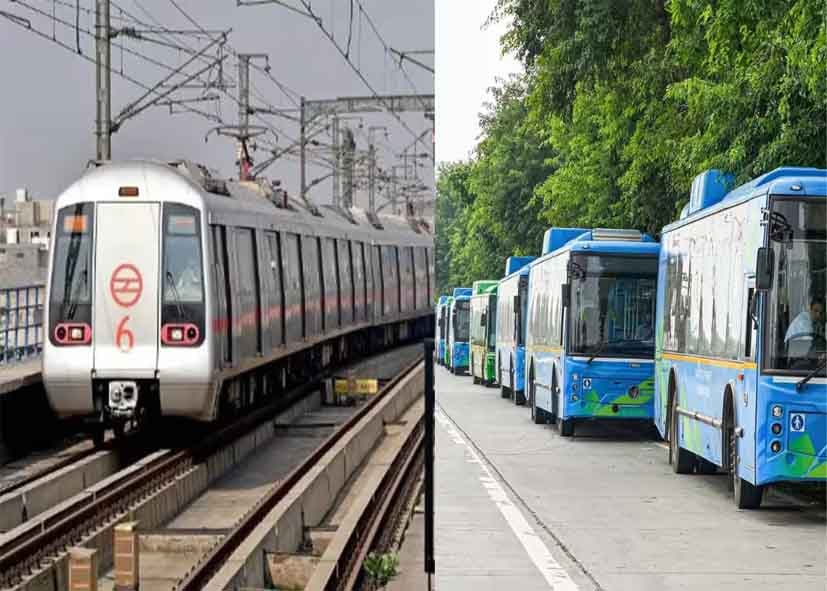
The effect of the strike of DTC bus drivers in Delhi is now visible on metro services as well. Due to the operation of buses being affected, there was a huge increase in the number of passengers in the Metro and on Thursday, Delhi Metro made a new record for the maximum number of passengers traveling in a day. A total of 82,44,903 passengers traveled by Delhi Metro on Thursday. Earlier, the record for maximum number of passengers traveling in a day was of August 8 last year. 81,87,674 passengers used the metro that day. On Thursday, this old record was broken with an increase of about 57 thousand passengers.
Due to the strike by DTC bus drivers, a large number of passengers turned to the metro to reach their destinations. Even as bus services were affected, Metro remained the main option of public transport in the capital. Due to the strike by DTC bus drivers, passengers turned to the metro in large numbers. After the Yellow Line and Blue Line of Delhi Metro, the maximum crowd was seen on the Pink Line. According to Delhi Metro Rail Corporation (DMRC), this increase in the number of passengers was due to the strike of DTC bus drivers. DMRC had already made preparations to deal with the pressure of additional passengers in view of the possibility of bus service being affected. In view of the increased number of passengers, Delhi Metro trains made 32 additional trips on Thursday. Running additional trips helped in handling the increasing rush of passengers on busy routes.
The strike of DTC bus drivers continued for the fourth consecutive day on Friday. Bus drivers appointed through private companies remained on strike demanding salary hike and other demands. Due to the strike, the public transport system in the capital was affected and passengers had to face a lot of trouble. Delhi government imposed duty on the buses of those drivers appointed on contract in DTC, who were deployed in other works. After this effort of the government, some DTC buses appeared on the roads, but due to non-operation of most of the buses, problems continued for the passengers. Taking advantage of the shortage of buses, many passengers had to resort to autos, cabs and e-rickshaws. According to passengers, at some places auto, cab and e-rickshaw drivers charged more fare than normal.
More impact in Bawana, Narela and Najafgarh
Bus services were affected in Bawana and Narela of outer Delhi and Najafgarh area of south-west Delhi. When buses were not available, people were seen reaching their destinations with the help of e-rickshaws, autos and metro. During the strike, some DTC buses were definitely seen on the road, but it was taking a lot of time for them to arrive. Due to this, all the passengers were not able to board the buses and had to resort to other means.
2700 drivers were deployed on buses
DTC on Friday released 2,700 contract drivers for bus operation. These drivers were earlier handling other tasks. On normal days, DTC operates 6,300 buses on about 550 routes. It is being told that on Friday, an attempt was made to take about 2,700 buses on the road. However, at some places, striking drivers tried to disrupt the operation of buses.
Support of e-rickshaw, auto and RTV
Due to shortage of buses, passengers had to resort to e-rickshaws, autos and RTV buses. Passengers going from Lakshmi Nagar Metro Station towards Mother Dairy, Mangalam Hospital and Mayur Vihar were seen dependent on these means. According to passengers, e-rickshaw drivers asked for a fare of Rs 15 to 20 for a distance of two to two and a half kilometers. Due to the long wait time for buses, many passengers were forced to resort to autos or e-rickshaws.
Follow the LALLURAM.COM MP channel on WhatsApp