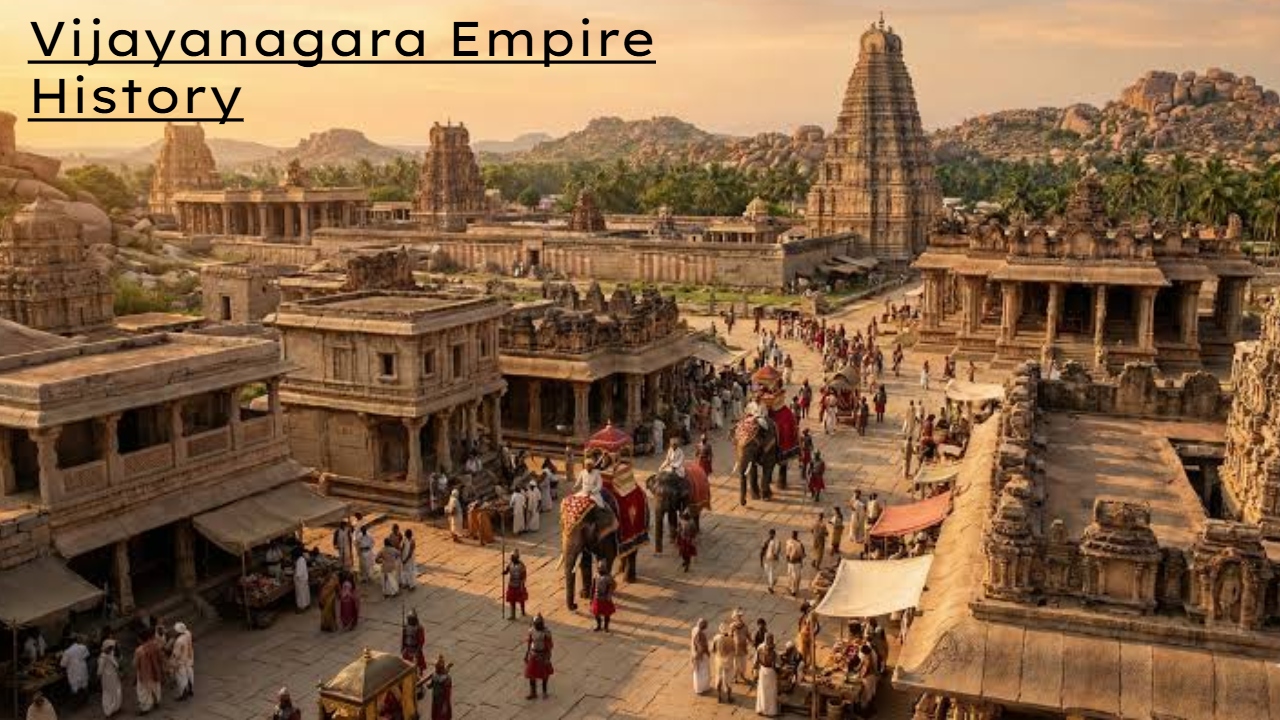
Vijayanagara Empire History: Hello friends, imagine a city which foreign travelers were surprised to see. Which was counted among the largest and richest cities of that period. Where diamonds and pearls were sold as easily as vegetables and fruits are sold in a common market. And now imagine that the same city became ruins within a few months. This is the story of Hampi, the capital of the Vijayanagara Empire, whose rise was as surprising as its fall. It is around the 14th century.
At that time, the armies of the Delhi Sultanate were continuously attacking South India and many small Hindu states were disintegrated. In such difficult times, two brothers Harihar and Bukray laid the foundation of a new empire on the banks of the Tungabhadra river. It is said that these two brothers got the advice and help of a saint. Who inspired him to establish this new state. This empire later came to be known as Vijayanagara. That is, the city of victory and Hampi became its capital. Vijayanagara had to fight many battles in its early years.
Its borders had to be protected and gradually this empire became stronger. This empire later came to be known as Vijayanagara. The Vijayanagara Empire made great progress in the next 200 years. Many kings ruled it and its area continued to grow. But its most glorious period came in the beginning of the 16th century when Krishnadev Rai, who is still counted among the greatest kings of South India, ascended the throne. Krishnadev Rai was not only a good warrior but was also very knowledgeable in art, literature and music.
Eight great poets lived in his court. Who were called Ashtadiggaj. Krishnadeva Raya himself had written a big treatise in Telugu language. Under his rule, Hampi became one of the richest and largest cities in the world. It is said that the population of Hampi at that time was more than 5 lakhs, which was a very large number for that time. Even more than big European cities like London or Paris of that era. The Portuguese traveler Dominic Pius, who came to India during that period, after seeing Hampi, wrote that this city was as big as the Rome of that time and even more beautiful.
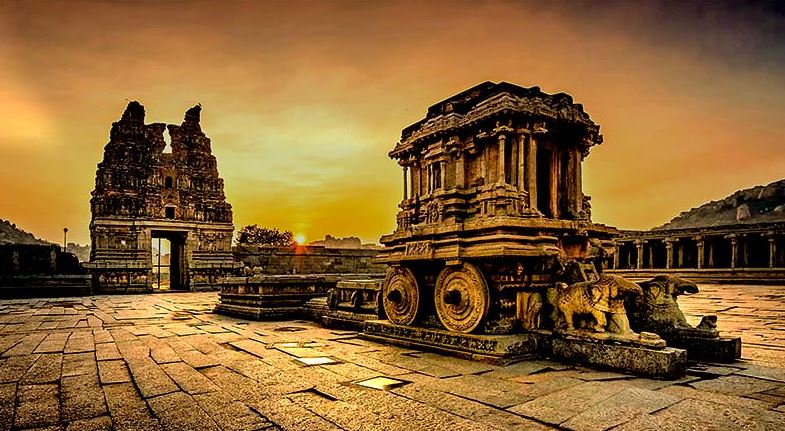
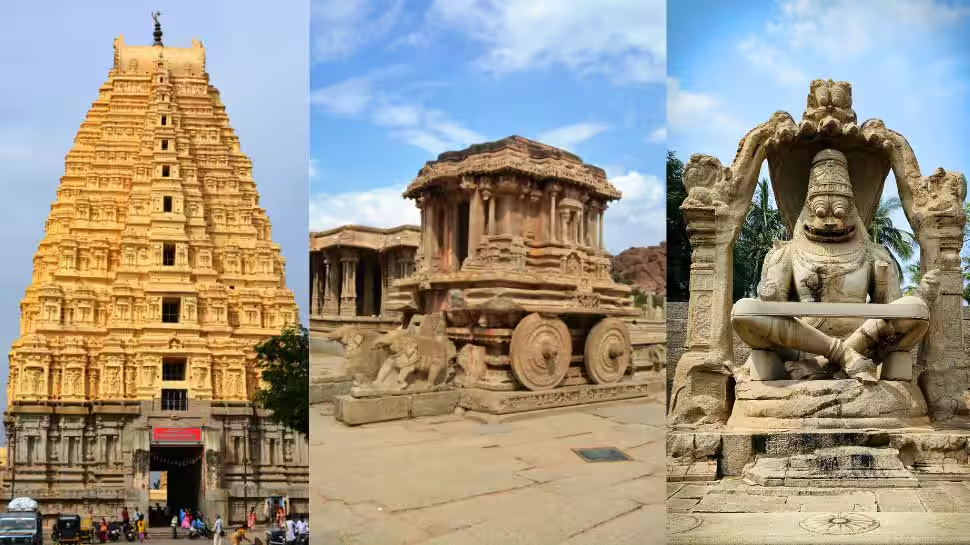
He also wrote that diamonds, pearls and gold were found in such large quantities in the markets here that they were weighed on scales and sold like ordinary things. Just like today vegetables are sold by weighing in the market. Another foreign traveler was the Persian envoy Abdul Razak who visited Hampi in the 15th century. He also wrote that he had never seen such a magnificent city in his entire life. The buildings of Hampi were as unique as the wealth there. The stone chariot built in the Vitthal temple complex was made so meticulously that even today people are surprised to see it.
But the most mysterious part of this temple complex is its musical pillars. There are 52 such pillars in the main hall of the temple that when lightly tapped on them, a different note comes out from each pillar. Just like the seven notes of Indian classical music. Like Sa Re Ga Ma Pa Dha Ni For centuries, the question has remained that how the artisans of that era, without any modern tools, made the hollowness inside the stone so finely that each pillar sounded like a different instrument. Later the British also tried to look inside by cutting some pillars.
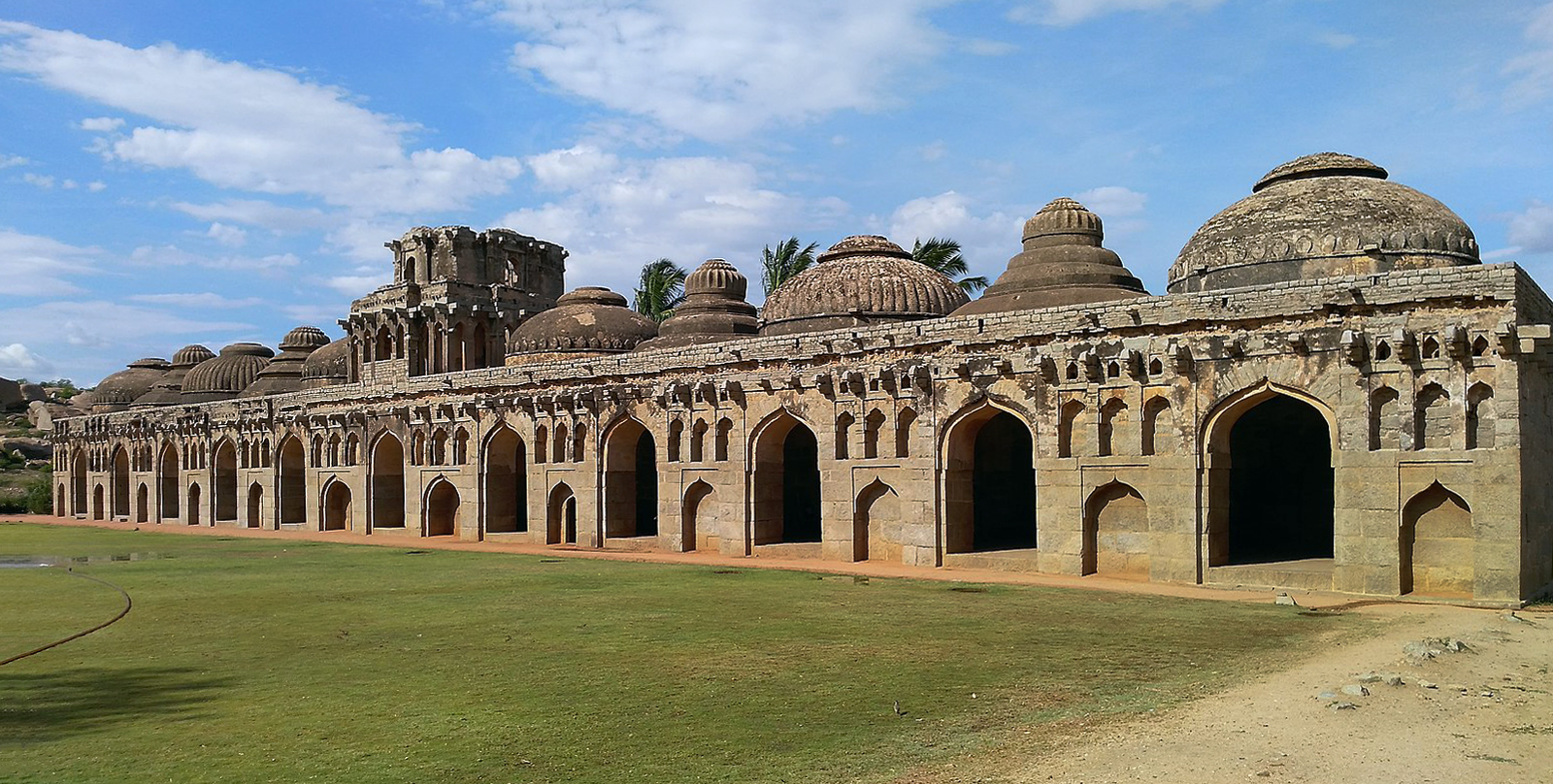
To know if there is any hollow tube inside. But only solid stone was found inside. No hidden tricks. The wealth of Hampi was not limited to temples and markets only. The water system, ponds and royal bathrooms here were examples of the best engineering of that era. The king's palace, the elephant stable and the queen's bathroom still bear testimony to the grandeur of that time. Talking about markets, there was not just one but many big markets in Hampi. Where traders from all over the country and abroad used to come. Cloth, spices, diamonds-jewels, horses, all kinds of goods were sold here. Horses were imported from Arab countries.
Because at that time good breed horses were considered very important for the army. But this glory did not last forever. After the death of Krishnadev Rai, political disturbances gradually started increasing in the empire. There was a tussle within the family regarding the throne and the strength of the empire gradually began to weaken due to weak rulers. During this period, there were five Muslim sultanates in the Deccan region. Bijapur, Golconda, Ahmednagar, Bidar and Berar which often fought among themselves. But the growing power and wealth of Vijayanagara had become a common threat to all of them.
In the year 1565, these five sultanates came together for the first time and raised a large army against Vijayanagara. This battle is known in history as the Battle of Talikota, which was fought on the banks of the Krishna River. The army of Vijayanagara was much larger in numbers. It is said that he had more than 1 lakh soldiers. But in the midst of the battle, two big army generals who were originally Muslims and who had held high positions in the Vijayanagara army. Suddenly changed sides and went towards the enemy. This deception changed the course of the entire battle.
The then king of Vijayanagara, Ramaraya, who had grown old, was still in command of the war. They were captured on the battlefield and their heads were cut off. His head was hung on a spear and paraded across the field so that the remaining (music) army would completely lose courage. Seeing this, there was a stampede among the remaining army and common people and everything fell apart. But the real trouble started after the battle. The enemy forces entered Hampi and completely looted and destroyed the city for the next 5 to 6 months.
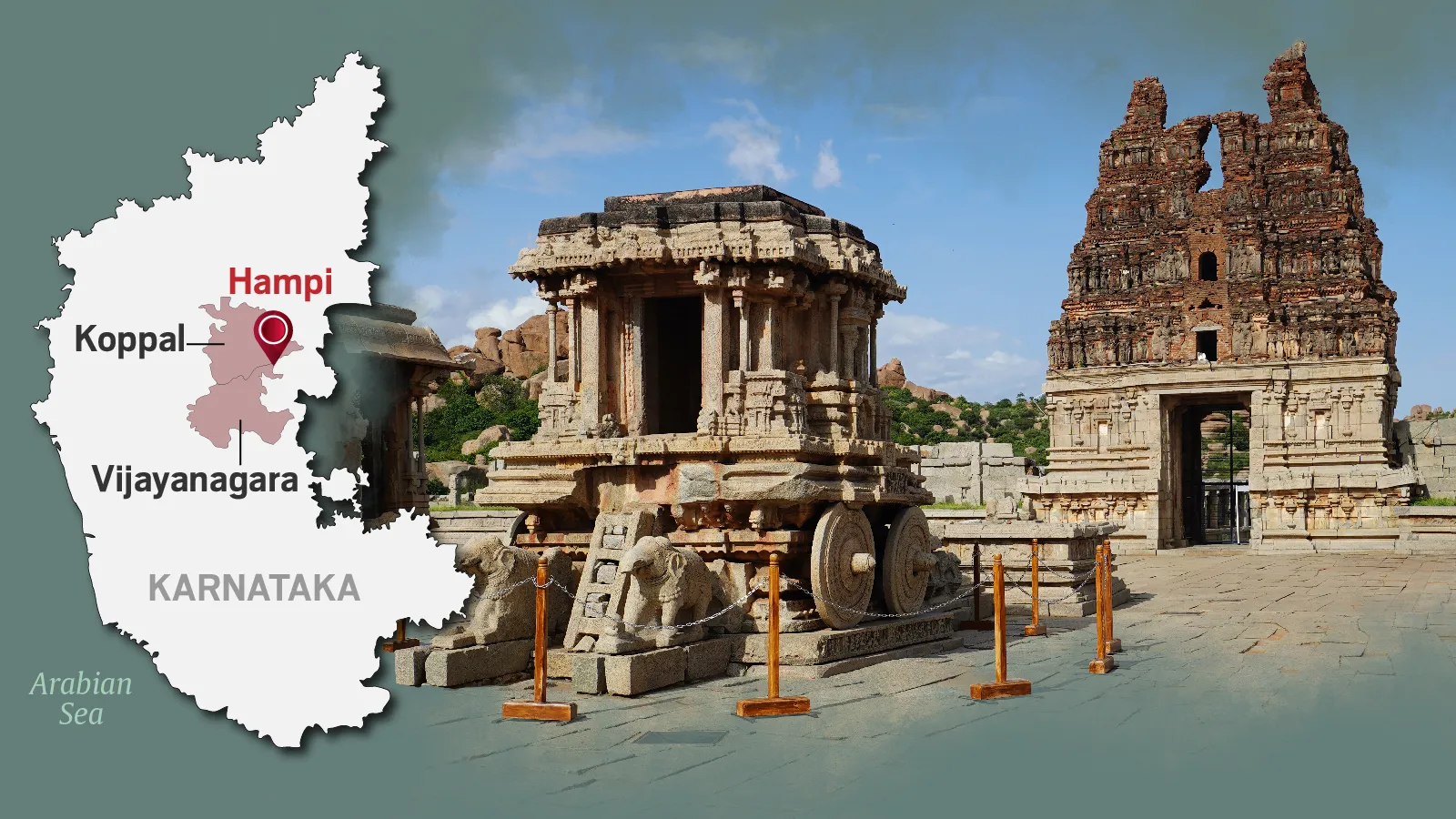
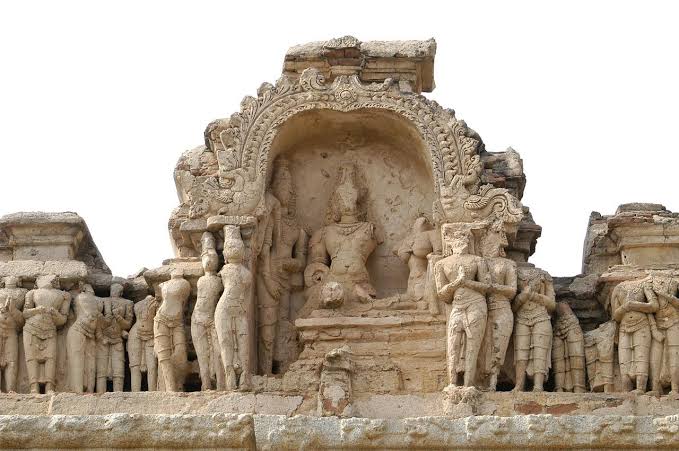
The gold and silver idols kept in the temples were uprooted. Palaces were set on fire and anything of value was looted. The buildings which could not be looted were deliberately demolished so that no trace of the glory of Vijayanagara remained. The faces and hands of many statues have been deliberately broken, which can still be seen in the ruins of Hampi. A city which was counted among the richest cities in the world till a few decades ago. Within a few months it turned into a heap of debris.
Those who managed to escape abandoned the city and Hampi became deserted forever. After this it was never established as the capital again. The Vijayanagara Empire continued to exist from different places for some more years. But he could never regain the same strength and glory as before. For centuries the ruins of Hampi (music) remained buried in dense forests and bushes. Almost forgotten. The local people knew about these ruins, but no one knew their real importance.
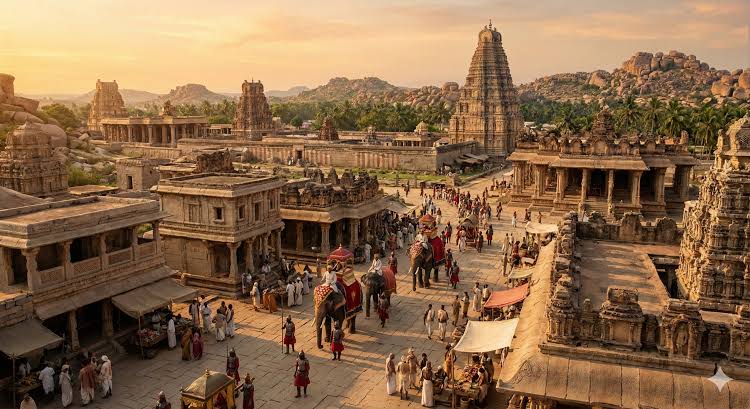
It was not until the 19th century that archaeologists rediscovered these ruins and began studying them. Gradually it came to light that this was no ordinary ruin, but the remains of what was once the most powerful and richest empire. Today Hampi is included in the UNESCO World Heritage List and thousands of tourists come to see these ruins every year. Stone chariots, musical pillars, broken temples, deserted palaces and deserted market streets. While roaming here even today one can imagine how bustling this place must have once been.
This place still quietly tells the story of how an empire that was once the center of the world's greatest wealth. Just because of a fight and mutual betrayal, it got destroyed forever (music). This story of Hampi teaches us that any empire, no matter how powerful and rich, if it loses unity and vigilance, if it blindly trusts its own people, can fall as fast (music) as it had risen.
Power and wealth can never secure an empire forever if its internal unity is weakened. If you liked this story, please like it, and tell us in the comments which lost empire's story you would like to hear next time. Till then see you, Jai