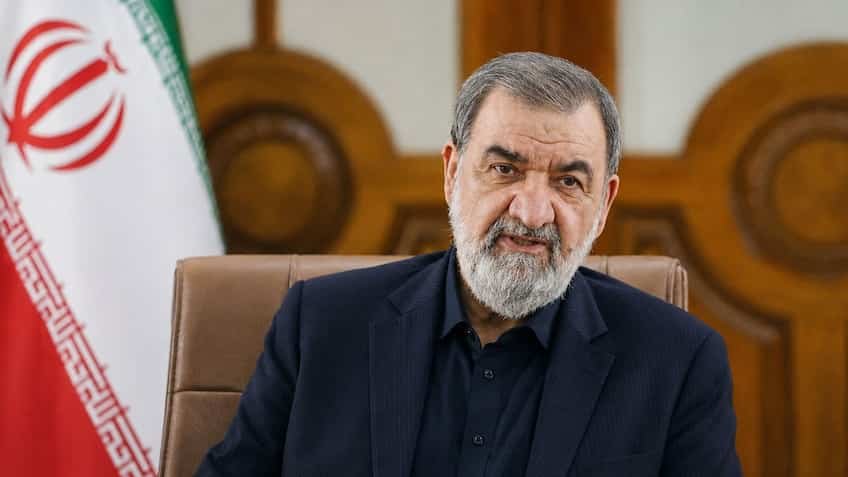
Amidst the smell of gunpowder in the Straits and Gulf region of West Asia, a very sensitive and decisive news has emerged from the diplomatic corridors. Iran has made it clear that if the United States wants to come back to the negotiating table with it and avoid the current conflict, it will have to accept seven basic conditions set by Tehran. Mohsin Rezai, Secretary of Iran's Supreme National Security Council, has bluntly said that Washington has no other option left. This demand, conveyed to America through intermediary countries, has created a new stir in international diplomacy, because Tehran's stance appears to be more aggressive and adamant than ever before. Tehran's strong diplomatic message reached Washington through Qatar. Mohsen Rezaei, the top strategist of Iran's Supreme National Security Council (SNSC), clarified that Tehran has conveyed its comprehensive stance to America without any strings attached. In this entire diplomatic exercise, Gulf country Qatar has played an important role as a mediator, while Pakistan has also been active in efforts to restore dialogue between the two sides. According to Rezai, America is entirely responsible for the explosive situation that has arisen in the region after the earlier informal agreements were broken. He said that America is trapped in a quagmire of its own making and if it wants to get out in an honorable manner, it will have to recognize the sovereign rights of the Iranian people. Out of the seven conditions put forward by Iran, three primary demands have been underlined with full seriousness in public forums. The first and most important condition is that America and its allies stop the ongoing military aggression and war on all fronts with immediate effect. Under the second condition, Iran's assets worth billions of dollars frozen in various international banks and financial institutions should be released without any condition and without delay. The third condition is related to the complete end of the US naval blockade imposed against Iran in the Gulf and international waters. Apart from this, points like stopping interference in internal affairs, stopping support to opposition groups and full respect for regional sovereignty are the main pillars of these conditions. American threats have no effect, Tehran is ready for a decisive war. Mohsen Rezai has strongly retaliated against the continuous tough statements coming from the American administration, especially President Donald Trump, and warnings that military options are open. He said that Washington's bluster is not going to make any difference to Tehran's military strategy. The Iranian leadership is not ready to bow down to any kind of pressure. Rezaei said it is in America's own national interest to seek a diplomatic solution, because if the White House is determined to choose the path of confrontation, the Iranian armed forces are fully equipped and mentally prepared for a decisive war of any scale. Iranian defense strategists believe that an air or missile attack can be launched by the US at any time and the army is moving forward keeping this potential threat in its primary calculations. Rezaei underlined that Iran has restructured its entire defensive and offensive strategy following the changed geopolitical equations in the last few months. Now the main focus of Iranian missile and naval divisions is on monitoring US aircraft carriers, destroyers and allied bases deployed in the Persian Gulf, the Gulf of Oman and the Arabian Sea. Iran has clearly indicated that if it is attacked, the scope of the war will not be limited but American military and strategic assets present in the entire region will be directly hit. Ground Reality of Naval Blockades, Maritime Security and Strategic Waterways The strategic maritime routes from the Strait of Hormuz to Bab al-Mandeb are currently at the most critical juncture in terms of the world's energy supplies. Highlighting the security of waterways, Mohsin Rezaee said that the issue of the Red Sea and Bab al-Mandeb is directly related to the independent decisions of Yemen's leadership and its people, on which no external power can impose its will. On the other hand, on the issue of the strategically important Strait of Hormuz, he said that Oman and Iran had made considerable progress in drafting a practical agreement, but it is necessary to take into account regional security and common interests before finalizing it. Iran has recently successfully tested a state-of-the-art multi-warhead anti-ship missile in the waters near American warships, demonstrating its strike capability at sea. Military analysts believe that this show of force was not just a defense exercise, but a direct message to Washington that the naval fleet deployed close to the Iranian coasts could become an easy target in the event of any attack. Rezai clarified that this deployment of the Iranian army is not for aggression but to respond to any possible foreign attack in its own language. Iran has reiterated its official stance towards the International Atomic Energy Agency and the Nuclear Non-Proliferation Treaty (NPT), despite tensions being high and tensions rising. Mohsen Rezaei said Iran has not yet taken any formal decision to withdraw from the NPT and the country's nuclear policy is based on a historic fatwa of the Supreme Religious Leadership that clearly prohibits the creation of weapons of mass destruction. Tehran's nuclear program is dedicated to peaceful energy and scientific research. However, the Security Council Secretary also added a serious warning. He said that if the US and its Western allies misuse the platform of the UN Security Council to impose additional unilateral economic sanctions on Iran or try to impose a diplomatic siege, then Iran will be left with no option but to completely exit the NPT agreement. Tehran has made it clear that it will not pretend to negotiate on unilateral terms and in an atmosphere of pressure. Now the eyes of the international community are focused on the next step of the American leadership whether it will reduce the tension by showing flexibility on the seven-point conditions or whether West Asia will move towards a new and fierce conflict.