A cordless hedge trimmer’s advertised runtime doesn’t always match the time you get in your yard. Battery capacity, hedge thickness, and maintenance all play a role. This guide explains how to estimate cutting time, stretch each charge, and decide whether a spare battery is worth buying.
Understanding Cordless Hedge Trimmer Runtime
Typical Runtime Per Charge
There’s no universal runtime for cordless hedge trimmers. Check the rating for the exact tool and battery combination. Treat “up to” figures as conditional manufacturer claims. Also distinguish powered cutting time from total yardwork time, which includes repositioning and cleanup.
Runtime for Light Trimming
Clipping soft new growth generally puts less demand on the motor than cutting woody stems. A regularly maintained hedge therefore gives you a better chance of approaching the advertised runtime. Releasing the trigger between passes also stretches the time between battery changes, though it doesn’t increase actual powered runtime.
Runtime for Heavy Cutting
Dense growth and thicker branches increase the cutting load and can drain the battery faster. Repeated stalls may also trigger protective shutdowns. There’s no reliable universal percentage reduction for heavy cutting. Plan around your own results, and remove branches beyond the tool’s rated capacity with suitable pruning tools.
Factors That Affect Battery Runtime
Battery Capacity
Amp-hours, shown as Ah, indicate battery charge capacity. Within the same compatible voltage platform, a 4.0Ah battery generally provides more runtime than a 2.0Ah battery under similar conditions. For energy comparisons, use watt-hours: nominal volts × amp-hours = watt-hours. Capacity alone cannot predict minutes without knowing the tool’s power demand.
Hedge Density and Branch Thickness
A blade cutting scattered soft shoots faces less resistance than one moving through tightly packed woody growth. Even branches within the rated cutting diameter can create a demanding load when several enter the blade together. Take shallower passes through dense sections.
Blade Condition
Sap buildup, debris, and dull edges can make cutting harder and leave you repeating passes. If the trimmer starts tearing stems instead of cutting cleanly, inspect the blades. Cleaning, lubrication, or professional sharpening may be needed before blaming the battery.
Motor Efficiency
Motor design affects how effectively stored energy becomes cutting work. Brushless motors can offer efficiency benefits. However, motor type alone doesn’t establish runtime. Blade design, speed, and load also matter.
Battery Age
Lithium-ion batteries gradually lose usable capacity through age and use. An older pack may indicate a full charge yet deliver fewer minutes than it once did. Compare performance on similar hedges in similar weather. A single difficult trimming session isn’t enough to diagnose battery wear.
Outdoor Temperature
Cold can temporarily reduce available battery performance, while excessive heat can cause protective shutdowns. Follow the operating and charging temperature limits in your manual. Keep batteries out of direct sun during breaks, and let an overheated pack cool naturally before charging.
Trimming Technique
Deep, hurried passes make the blade tackle too much material at once. Controlled passes reduce bogging and unnecessary recutting. Position yourself so you can see the cutting line clearly, and release the trigger when moving between sections.
How to Estimate Your Runtime
Check the Battery Capacity
Record the battery’s voltage, Ah rating, and model number. Then check whether the manufacturer’s runtime claim uses that same pack. A figure measured with a larger battery won’t describe your smaller pack accurately. Likewise, don’t confuse the combined runtime of two batteries with runtime per charge.
Assess Your Hedge Size
Measure hedge length and note its height, width, and accessible sides. A 30-foot hedge trimmed on both sides and across the top requires much more work than a single 30-foot face. Identify dense sections separately so they don’t distort your estimate.
Test the Trimmer for Ten Minutes
Start fully charged and trim a representative section for ten minutes of actual trigger time. Record the area completed and battery indication afterward. Battery bars are coarse estimates, so losing one of four bars doesn’t reliably mean you used exactly 25% of the charge.
Calculate the Expected Working Time
Use your measured pace to estimate cutting demand:
Required cutting time = total comparable area ÷ area completed in ten minutes × 10.
For example, completing 60 square feet in ten minutes suggests about 40 powered minutes for 240 comparable square feet. Compare that demand with runtime measured during previous full-charge sessions.
Allow Extra Time for Difficult Growth
Add a planning buffer for thicker patches and repeated shaping passes. An extra 20% to 30% is a practical allowance, not a tested runtime guarantee. Budget repositioning and cleanup separately, since those tasks extend the job without necessarily consuming battery power.
How to Extend Battery Runtime
Fully Charge the Battery
Begin a longer job with a full charge using the approved charger. Partial charging is fine for short tasks, but it leaves less energy available. Don’t repeatedly restart a trimmer after a low-battery shutdown; recharge or swap packs.
Clean and Lubricate the Blades
Remove the battery before blade maintenance. Clear clippings and sap, then apply the cleaner and lubricant specified by the manufacturer.
Remove Thick Branches First
Use hand pruners, loppers, or a pruning saw for oversized stems before shaping the leafy surface. This prevents repeated attempts at cuts the hedge trimmer cannot handle efficiently. The blade’s maximum cutting capacity is a limit, not a target for every pass.
Trim at a Steady Pace
Move slowly enough for the blade to finish each cut. Work in manageable sections and overlap passes only as needed. A consistent pace helps you achieve an even surface without repeatedly running the tool over already finished growth.
Avoid Forcing the Blade
If the blade slows sharply or jams, release the trigger. Remove the battery before clearing trapped material according to the manual. Forcing the tool increases load and may trigger overload protection; a spare battery won’t solve that underlying problem.
Store the Battery Properly
Store the pack in a dry location within its specified temperature range, away from hot vehicles and direct sunlight. Follow the manufacturer’s recommended charge level for extended storage. These practices protect long-term capacity rather than adding immediate minutes to today’s charge.
Deciding Whether You Need a Spare Battery
When One Battery Is Enough
One pack may be sufficient for a few shrubs or a maintained hedge if your measured cutting demand fits comfortably within its runtime. Occasional users who don’t mind a charging break may gain little from buying another battery.
When a Spare Battery Is Helpful
A spare battery makes sense for long hedge rows, dense growth, or several areas that need trimming in one session. Having a charged pack ready lets you keep working when the first runs low. Compare charging time with your actual cutting time, since two batteries won’t necessarily support continuous use all day.
How to Choose the Right Capacity
Choose a battery approved for your exact trimmer and charger, then balance longer runtime against added weight. A larger pack can reduce battery changes, but the extra weight may become tiring when trimming tall hedges. Matching the brand or Ah rating alone doesn’t guarantee compatibility.
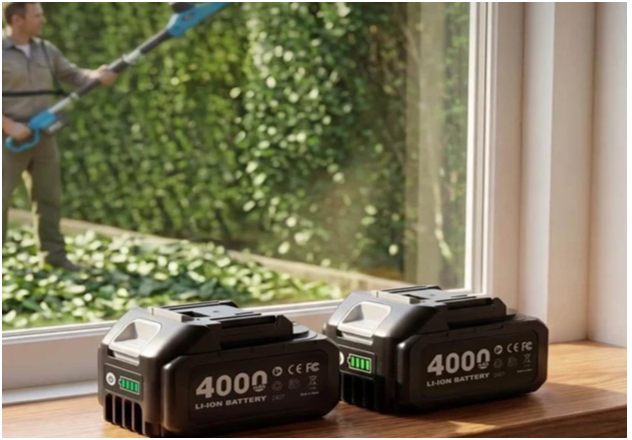
If you’re choosing a new trimmer for longer sessions and taller hedges, a kit with two batteries can simplify that decision. The Seesii Cordless Pole Hedge Trimmer includes two 4.0Ah batteries, so you can keep a charged spare ready, plus a telescoping pole for reaching upper growth from the ground. It’s an option worth considering if both reach and fewer charging interruptions matter for your yard.
Conclusions
The best runtime estimate comes from your specific cordless hedge trimmer and battery combination. Start with the manufacturer’s claim, measure a representative session, and leave room for harder cutting. Clean blades and controlled passes help each charge go further, while a compatible spare keeps larger jobs moving.