
Golconda Fort History in Hindi: 1526 The Battle of Panipat had just ended. Babar had conquered India. The entire North India was in the name of the Mughals. But there was a city in the south. There was a fort which did not bow before anyone. Its name was Golconda. And that city had such a secret for which later the Mughals, Portuguese, French and British all went crazy. But 700 years ago, all this was not there.
Just a mountain, a shepherd and a statue. 13th century. On the Deccan plateau where Hyderabad is today, there was a high granite hill. A shepherd boy used to go there every day with his goats. One day he found a stone statue on the top of the hill. He went and told his Kakatiya king. The king considered that hill sacred. A small mud fort was built there. Golconda. Means round mountain in Telugu.
This name later appeared on the world map. But the shepherd had never imagined that one day that small mud fort would turn into a huge fort standing on a 120 meter high hill whose walls would extend up to 10 kilometers. The Bahmani Sultanate was falling apart in 1518. Five new sultanates were emerging in the Deccan. One of these was the Qutubshahi Sultanate.
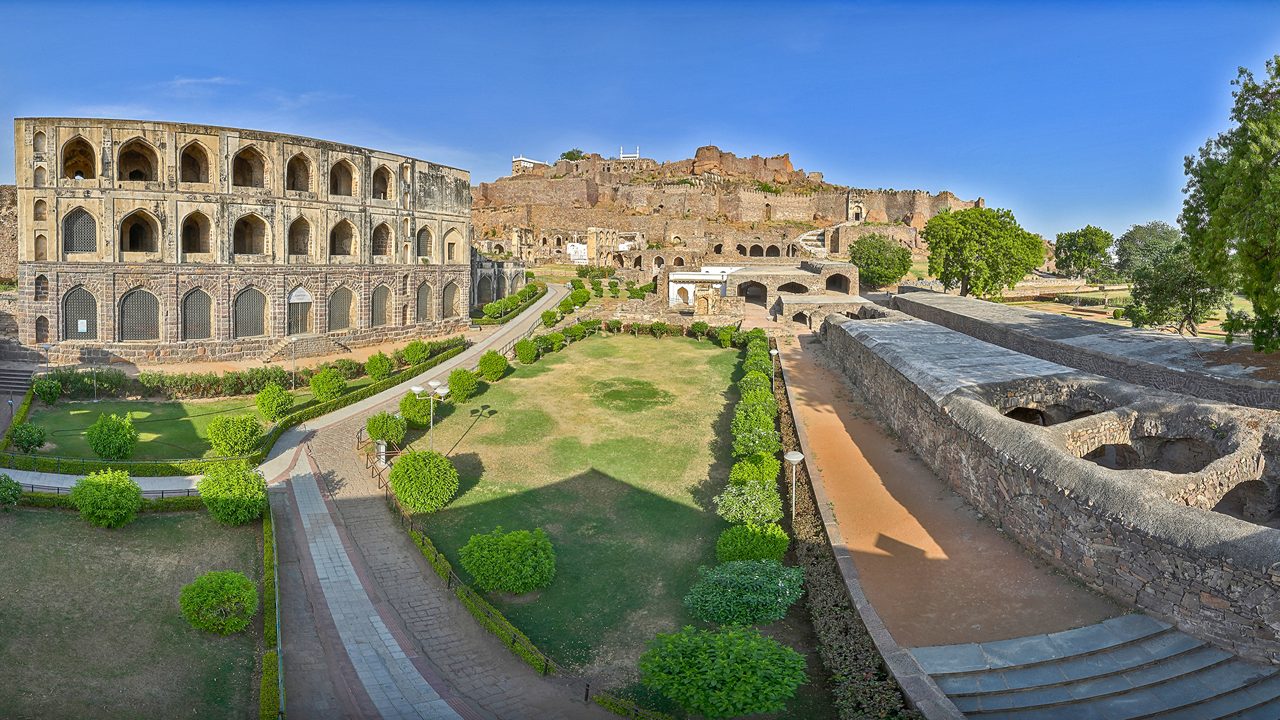
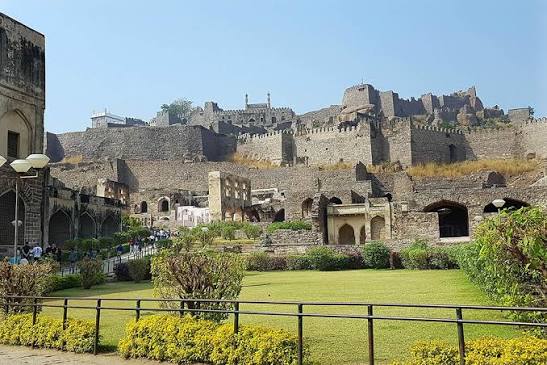
Sultan Quli Qutb Shah was a governor of the first Bahmani Sultanate. He made Golconda his capital and started converting the mud fort into stone. Huge granite walls, high strong doors. Seven Qutb Shahi kings continued to build this fort for the next 170 years. Every king added something. Every generation strengthened it further. And the fort that was completed was not just a fort.

That was a city. Inside the fort there were palaces, mosques, markets, gardens and ponds. Thousands of people lived within the walls of the fort. But the real strength of Golconda did not lie in its walls. His real strength lay underground. The Kullur, Pannar and many other mines around Golconda were the oldest and richest diamond mines in the world. Till the 17th century, all the diamonds in the world came from here. Only from here.
Jean Baptiste Tavernier, a French traveler who came here in the 1650s, wrote in his diary that he saw more than 60 thousand laborers working in the mines here and diamonds were found like pebbles in ordinary rivers. The names of the diamonds that came out of those mines are still recorded in the world's most powerful museums and royal treasuries. Kohinoor, Hope Diamond and Lowe, Noorulain.

All this is the gift of this soil and for these diamonds, the kings of the world turned their eyes towards Golconda, greed arose, conspiracies were woven. Now let us talk about the fort which is still standing today. There is such a thing in Golconda Fort that even today's engineers are surprised to see it. The main gate of the fort is called Fateh Darwaza. If you clap one clap, just one clap. So that sound is 1 km. It is clearly heard in the distance on the highest peak of the fort.
Without any mic, without any wires, without any modern technology. 400 years ago, artisans built walls and corridors in such a way that sound passed through them and reached the top. One step of the enemy and the king would get the news. Not only this, there was a water system in the fort, an earthen pipeline which supplied water from the height of the mountain to the bottom and to the queen's palace.
These people were not just fighters. He was a scientist. But wait, how did a fort which could not be broken in front of the world's largest army for 9 months, fall in one night? Who opened the door that should never have opened? And what happened to the treasure of Golconda that night? Let us know what happened that night when the fort which could not be broken even after 9 months of siege, fell in a single night because of a traitor and after that night Golconda was never the same as it was.
But before the devastation there was a golden period under Mohammad Quli Qutubshah, the fifth king of the Qutubshahi dynasty who ascended the throne in 1580. He was the king who did not let Gorkunda remain just a fort. He turned it into a culture. He himself was a poet. Wrote thousands of ghazals in Urdu and Dakhni. His court was full of poets, musicians and scholars. But there is another story of this king which is less found in history books.

Mohammad Quli fell in love with a Hindu girl. Her name was Bhagmati. A Muslim Sultan and a Hindu girl was no small thing in those times. The king married her and in 1591 when he founded a new city near Golconda, he named it Bhagya Nagar after Bhagmati. Later Bhagmati accepted Islam. His name was Hyder Mahal and the city was called Hyderabad after him. Today the city of more than 1 crore people is a symbol of love.
Mohammad Quli Qutub Shah did not just establish the city. He nurtured a language. Deccan Urdu, which was a combination of Persian, Telugu, Arabic and Hindi, flourished in this court. The Urdu we speak today has its roots in the court of Golconda. Both Hindus and Muslims spoke the same language. Used to sit in the same court. Used to carry forward the same culture.

This was the period when Golconda was not only a symbol of power but also of Ganga-Jamuni culture. But there was an eye in the north that was looking at Golconda (music). Aurangzeb was the Mughal emperor, whose rule was already vast. But the South was incomplete for him. The wealth of Golconda, those diamonds and the treasure did not allow him to rest. In 1687, lakhs of soldiers of Aurangzeb's army stood outside Golconda.
At that time, the last king of Golconda was Abul Hasan Qutb Shah, whom people fondly called dictator. Which means God's blessing in Telugu. Abul Hasan was brave. He had a fort. The fort had grains, water, soldiers and a fort whose walls were impenetrable. Aurangzeb started the siege. The fort was not broken for 1 month, 2 months, 6 months, 9 months. Aurangzeb's army started getting tired. Supplies began to dwindle. The morale of the soldiers was breaking. It is said that Aurangzeb himself started getting desperate.
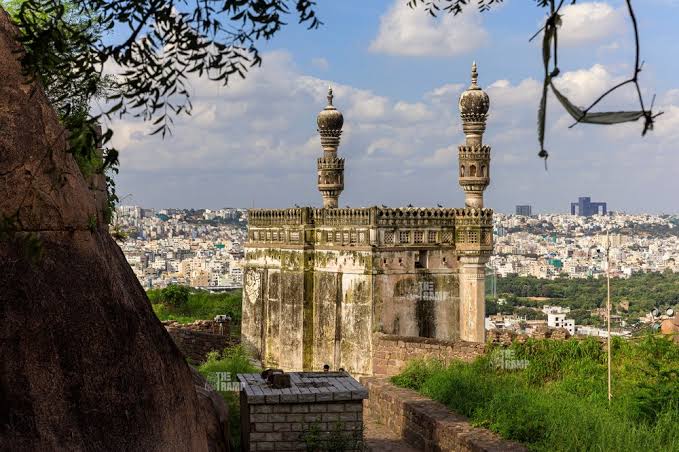
And then something happened that should not have happened. There was a man inside the fort. His name was Abdul Razak Lari. Close to a rich king of the fort. He contacted Aurangzeb's messengers. The deal was struck and one night when the guards were tired. When everyone was sleeping inside the fort. Abdul Razak opened a small door of the fort. Mughal soldiers entered inside. That fort which stood in front of an army worth lakhs for 9 months.
Fell in a single night because of a traitor. Abul Hasan was taken prisoner. He was sent to the fort of Daulatabad. Where he was imprisoned for 13 years and died in the same prison in 1704. The 200 year long Qutubshahi Sultanate ended forever in that one night. Historians say that what Aurangzeb's soldiers looted was so much that it took weeks to count it. Gold, silver, gems and diamonds. The diamonds which came out of the mines of Golconda were in the treasury of this fort for centuries.

After that night, those diamonds set out on different paths. Some reached the Mughal court. Some went to Iran, some to Afghanistan and the most precious one, the one who was the identity of Golconda, set out on a long and bloody journey. The diamond destroyed whoever it touched. But before that a question, was it really a curse or was there another truth behind that diamond which the world should never know. The story of the diamond that was born in the soil of Golconda and which destroyed whoever it touched.
Originated from the mines of Golconda. First went to the kings of Malwa. His kingdom was snatched away. Then he reached Mughal emperor Shahjahan. He was imprisoned by his own son Aurangzeb. In 1739, Nadir Shah looted Delhi and took it to Iran. He was murdered a few years later. Their sultanate disintegrated as soon as it fell into the hands of Afghan rulers. Maharaja Ranjit Singh who was the last Indian to get it
After his death, the British took over Punjab and in 1849 the diamond was handed over to British Queen Victoria through the East India Company. Since then it has been in the Tower of London, London. One thing is worth noting. This diamond is always worn by women in the British royal family. No man. Is it the fear of the old belief that the man who wears it will be doomed? History does not answer. Qutubshahi Tombs, a short distance from Golconda Fort, are the tombs of seven kings made of granite and lime.
That combination of Indo-Islamic and Persian styles which is not found anywhere else in the world. Aurangzeb tried to break them. Looting took place. But those tombs are still standing. And Aurangzeb's name is associated with Golconda in history. Just like an attacker. Whereas the legacy of the kings sleeping in those tombs, their poetry, their language, the Hyderabad they founded is still alive in the lives of crores of people.

Justice of time always comes late, but it definitely comes. Today India demands that diamond back. Britain refuses every time. The logic is that if it is returned to one country then demands will come from all over the world. But the question is not just about one diamond. The question is about that respect, about that heritage which was born in the dust of Golconda and is today locked in a safe abroad. Golconda is not just a fort.
This is the story of India which was once the richest country in the world. This is the story of kings who loved, fought, lost. But he left a legacy that is still alive today. It is also the story of a traitor who wiped out a 200-year-old Sultanate in one night and it is the story of a diamond that was born in this soil and is still waiting to come back home.
Whenever you go to Golconda, touch those stones once. Maybe he will say something. Perhaps he will tell the story of those 700 years which is not written in books but in stones.