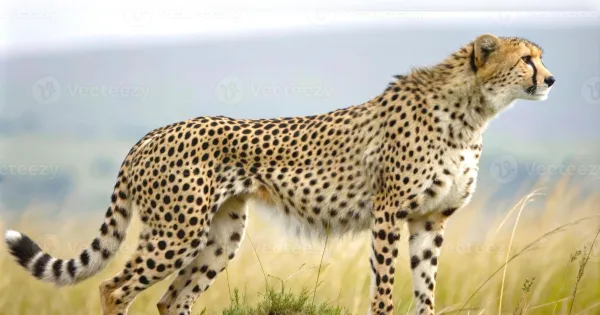
New Delhi: Once something becomes extinct from nature, it becomes very difficult or even impossible to bring it back to nature. If we talk about wildlife, then this also seems to be true because the history of wildlife is filled with such examples. The biggest example is dinosaurs, which are discussed about but they do not exist in the world.
Even after keeping all these things in mind, the land of India is known to re-awaken things that have become history. The latest example of this is “Project Cheetah”.
Cheetahs are once again creating havoc in the country
Under “Project Cheetah”, the roar of cheetahs is once again echoing in India. Actually, cheetahs were declared extinct from India in 1952, but today, under Project Cheetah, cheetahs are once again being seen doing mischief in India.
This is a major achievement in India’s wildlife conservation efforts. Today the number of leopards in India has increased to 56, out of which 36 were born on Indian soil. This is indeed a great news for India’s wildlife conservation.
Were once declared extinct, today there is an atmosphere of happiness due to increase in numbers
MyGov India has shared this information on its X handle. MyGov India posted on Twitter, “The roar of cheetahs is echoing again in India! After being declared extinct in India in 1952, cheetahs have made a spectacular comeback under Project Cheetah. This is a major achievement of India’s wildlife conservation efforts. Today the number of cheetahs in India has increased to 56, of which 36 were born on Indian soil.”
Cheetah is very important for wildlife
Cheetahs are very important creatures for wildlife. Actually, he is known as a hunter in wild life and maintains the balance of the ecosystem of the forest. This can be understood that cheetah mainly hunts small-medium sized herbivorous animals, which mainly include deer, gazelle, impala, gazelle etc. In such a situation, the number of these herbivorous animals remains balanced. If there is no cheetah, the population of these herbivorous animals will go out of control, which is neither good for the forest ecosystem nor for human life.
Trophic cascade threat
If the number of herbivorous animals increases in wildlife, they will graze more grass and vegetation, if this happens, soil erosion will not only increase but the diversity of plants will also decrease. In such a situation, the ecosystem of wildlife will weaken, the impact of which will be visible on the human world as well.
This effect in the forest is called Trophic Cascade. Under this, if any species disappears from the forest, then the entire food chain of the forest i.e. wildlife gets affected, due to which other animals also have to suffer.
And how does the cheetah keep the wildlife in balance?
Leopards are carnivorous creatures and they need meat to eat at any cost. They prey on weak or sick animals. Often he leaves his food when his stomach is full. In such a situation, the remains of food left by leopards are eaten by animals like vultures, hyenas and jackals. In this way the entire system of the forest continues to function. One creature hunts but fills the stomach of many creatures. On the other hand, the number of herbivorous animals is also not unlimited and the forest continues to run smoothly on its own.
Let us tell you that earlier the video of hunting by a leopard had become much discussed. Actually, the cheetah had entered Kuno National Park in Rajasthan and had hunted the goat.