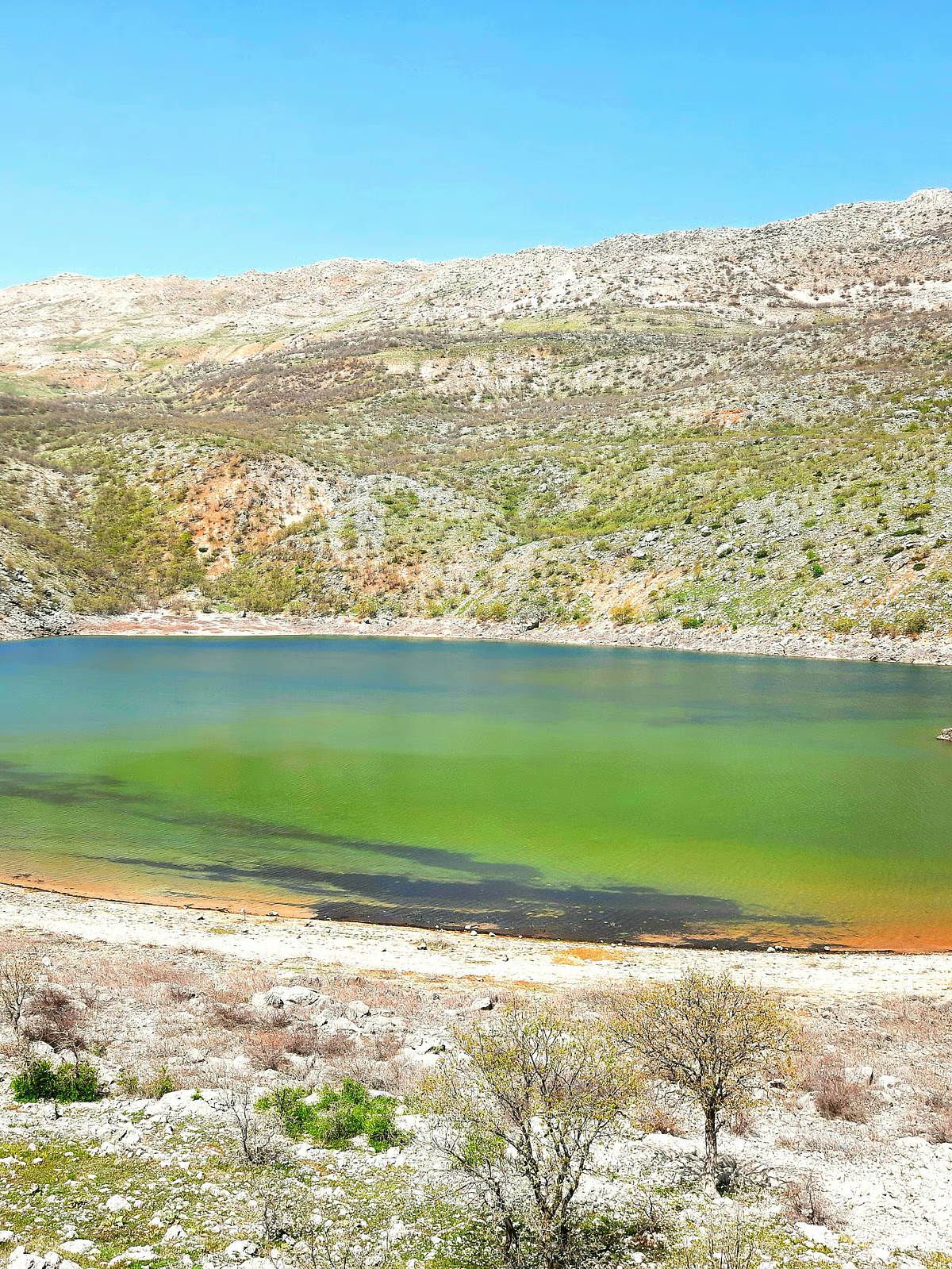
5 Places on Earth Where the Water Is Anything But Blue
When we picture a lake, river or ocean, we usually imagine shades of blue stretching across the horizon. But nature doesn’t always follow that familiar palette. Around the world, unusual combinations of minerals, microorganisms, sediments and natural chemicals can transform bodies of water into striking shades of pink, green, red and even bright turquoise.
Here are five fascinating places where the water looks very different from the classic blue we expect.
1. Lake Hillier, Australia — Bright Pink Water
Located on Middle Island in Western Australia, Lake Hillier is famous for its vivid pink appearance. The contrast between the bubblegum-colored lake, surrounding vegetation and nearby ocean makes it one of Australia’s most unusual natural sights.
Scientists have linked the lake’s coloration to microorganisms that thrive in its extremely salty environment, including salt-loving algae and bacteria. The lake’s color can vary depending on environmental conditions, but its distinctive pink appearance has made it internationally famous.
2. Laguna Colorada, Bolivia — Red Water
High in Bolivia’s Eduardo Avaroa National Park, Laguna Colorada can appear deep red or reddish-brown.
The unusual color is associated with algae and mineral-rich sediments in the shallow, highly saline lagoon. The surrounding landscape is equally dramatic, with volcanoes, desert terrain and flamingos creating an almost otherworldly scene.
The lagoon is also an important habitat for several species of flamingos, including the rare James’s flamingo.
3. Gruta do Lago Azul, Brazil — Deep Blue-Turquoise Water
Brazil’s Gruta do Lago Azul, or Blue Lake Cave, is famous for an enormous underground pool whose water can appear intensely blue and turquoise.
The cave is located near Bonito in Mato Grosso do Sul and is known for its impressive limestone formations. Sunlight entering the cave interacts with the exceptionally clear water, creating the spectacular color for which the site is named.
Although the water is technically blue, its unusually vivid appearance makes it look almost unreal.
4. Lake Natron, Tanzania — Red and Orange Tones
Lake Natron in northern Tanzania is another remarkable example of water taking on unusual colors.
The lake’s highly alkaline environment supports microorganisms that can produce reddish and orange pigments. Depending on conditions and location, the water can therefore appear red, pink, orange or brown.
The extreme environment also makes Lake Natron an important breeding area for lesser flamingos.
5. Emerald Lakes, New Zealand — Brilliant Green
New Zealand’s Emerald Lakes in Tongariro National Park look dramatically different from ordinary mountain lakes.
Their striking greenish color is influenced by volcanic minerals and particles suspended in the water. The lakes sit in the volcanic landscape of Tongariro and contrast sharply with the surrounding dark rocks and barren terrain.
The result is a landscape that looks almost digitally enhanced—but the colors are entirely natural.
Why Does Water Change Color?
Water itself is naturally transparent. What we perceive as its color is influenced by several factors, including dissolved minerals, microscopic organisms, suspended sediments, depth and the way sunlight interacts with the water.
In some locations, algae and bacteria produce pigments that dramatically change the apparent color. In others, minerals or volcanic compounds are responsible.
These unusual bodies of water are a reminder that Earth’s landscapes can be far more colorful than the familiar blue oceans and lakes we see every day.