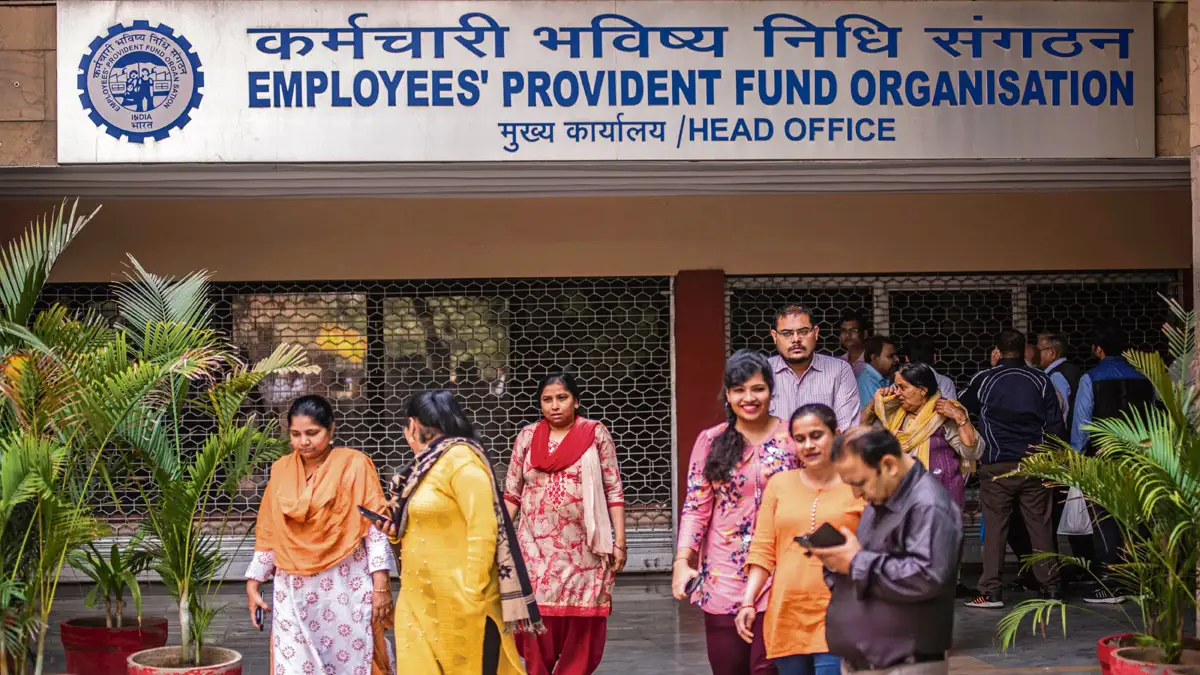
Whether the employed in the country are government or private, a big change related to the Employees Provident Fund Organization i.e. EPFO is going to directly impact the pockets of the employees. The Central Government has directly increased the limit of monthly salary falling under the mandatory scope of EPFO from Rs 15,000 to Rs 25,000.
The special thing is that this new system has already come into effect from 17 September 2026. With this big decision of the government, now about 51 lakh additional employees of the country getting salary ranging from Rs 15,000 to Rs 25,000 will compulsorily come under the ambit of PF. Let us understand in very simple language how this change is going to affect your salary and pension.
Apart from salary, what other things will be affected?
The effect of this change is not going to be limited only to the amount deposited in your PF account. This will also have a direct impact on EPS i.e. Employee Pension Scheme and EDLI insurance benefits. However, not every employee's take-home salary or pension will be affected the same. This will entirely depend on how much the employee is currently contributing to the PF and how his salary has been decided.
What changed for those earning ₹15,000 to ₹25,000?
Till now the rule was that it was mandatory for employees with PF salary up to Rs 15,000 to become members of EPFO. But now after the implementation of the new limit, this limit has increased to Rs 25,000. This clearly means that all those employees whose PF salary is more than Rs 15,000 but up to Rs 25,000 and were till now out of the purview of mandatory EPF, will now come under its purview.
At the same time, it will not be mandatory for an employee whose PF salary at the beginning of his job is more than Rs 25,000 and is not already a member of EPFO. The option of joining PF voluntarily i.e. on one's own will will be open for such an employee.
If PF is cut, how much salary will be reduced?
The most direct and biggest impact of this new change can be on the employee's 'take-home salary' (salary received in hand). In the old system, the maximum PF contribution of an employee on the limit of Rs 15,000 was 12% i.e. Rs 1,800 per month. Now with the new limit of Rs 25,000, this amount will increase to Rs 3,000 per month.
That is, if an employee's PF contribution is limited only to the fixed salary limit, then a maximum of Rs 1,200 extra can be deducted from his salary every month and can go into PF. This amount will be Rs 14,400 in a year, but do not worry, this money will not sink anywhere but will be deposited safely in your PF account. Along with this, the contribution of your company i.e. employer will also increase.
Will the expense burden on companies also increase?
According to financial experts, the employer cannot adjust this additional PF contribution in the existing CTC of the employee. In such a situation, for employees for whom PF contribution will increase, the costs or expenses of the companies may also increase slightly.
However, for those employees whose PF is already deducting full 12 per cent on the basis of their actual PF salary (like basic and dearness allowance etc.), the increase in this new limit on their take-home salary will not bring any significant or significant change.
More money will also go to EPS (Pension Scheme)
Let us tell you that a part of the 12 percent contribution of the company (employer) in EPFO goes directly into EPS i.e. Employee Pension Scheme. As per the old limit of Rs 15,000, the maximum contribution in EPS was around Rs 1,250 per month. But now according to the new limit of Rs 25,000, this amount can increase to around Rs 2,083 per month. This means that approximately Rs 833 more will go into the pension fund every month. The amount equal to this will be slightly reduced in the EPF portion, because the total contribution of the employer remains only 12%.
Will your pension also increase?
The biggest and direct benefit of this new limit will be given to those employees who will come under the ambit of EPS and will contribute according to this new increased limit for a long period.
According to the formula for calculating pension, monthly pension = pensionable salary × pensionable service ÷ 70.
Pensionable salary is based on your average salary for the 60 months immediately preceding your retirement. Simple calculation of the maximum pension at the old limit of Rs 15,000 came to about Rs 7,929 per month. At the same time, now at the new limit of Rs 25,000, it can increase to around Rs 13,214 per month. But one very important thing has to be understood here that just by increasing the limit, the pension of every employee will not directly become Rs 13,214, for this the entire service and rules will have to be observed.