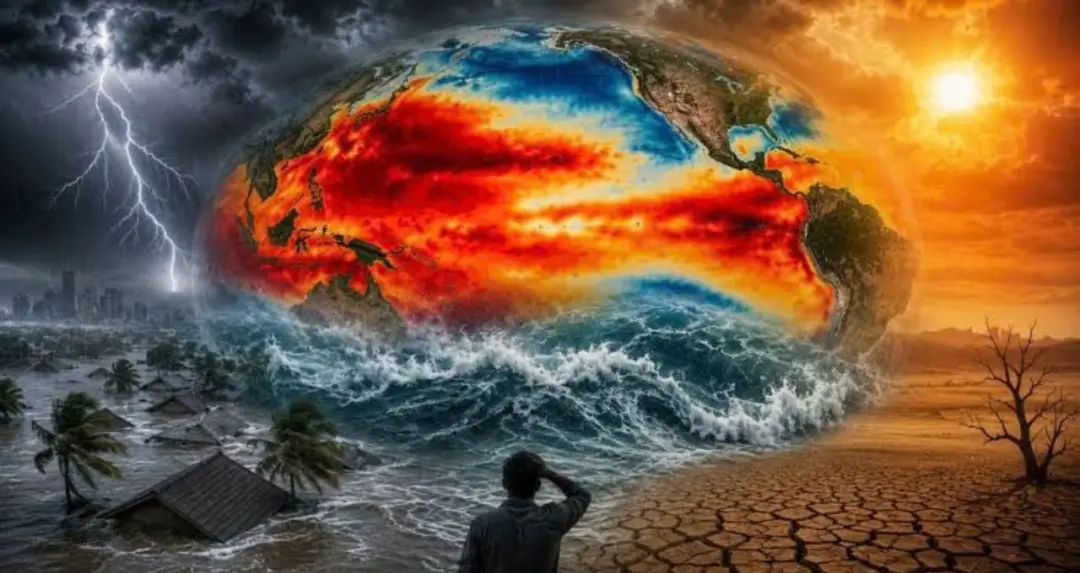
The continuously strengthening El Nino is having a serious impact in the Pacific Ocean in the form of typhoons and storms. Hundreds of people have lost their lives so far due to these storms, while business activities have also been badly affected.
El Nino Impact: The changing weather patterns in the Pacific Ocean are becoming a new challenge for the world. The activity of tropical storms and typhoons has increased in the Pacific region amid the strengthening of El Nino. The impact of these natural disasters is not limited only to coastal areas and local populations, but is also visible on international trade, maritime transport and global supply chains.
Over the past few months, several powerful storms have developed in different parts of the Pacific Ocean. Hundreds of people are reported to have died due to these, while many countries have suffered economic losses worth billions of dollars. Weather concerns have increased in the region after another typhoon made landfall around Japan. Experts predict that tropical activities may continue in the Pacific region until November.
Increased storm activity in the Pacific Ocean
El Niño is typically associated with an unusual increase in sea surface temperatures and associated atmospheric conditions over the equatorial Pacific Ocean. Changes in ocean temperatures and atmosphere can create favorable conditions for the formation of hurricanes in many areas. This time, the activity of tropical cyclones in many parts of the Pacific Ocean has raised concerns. Twelve tropical cyclones developed in the Pacific Basin and South China Sea in August. According to available meteorological data, this is the highest number reported in a single August since 1961.
Several weather systems in the central and eastern Pacific also reached tropical storm status. Some of these systems turned into extremely powerful storms. In some storms, wind speed reaching 179 kilometers per hour or more has been reported.
Hundreds of people died, loss of billions of dollars
Storms in the Pacific region have affected lives and property in many countries. Since April, more than 230 people have been claimed dead due to these cyclonic events. Apart from this, houses, roads, electricity networks, ports and other infrastructure have been damaged. In China too, economic losses due to natural disasters have increased significantly.
According to US government data, China suffered about $8.5 billion in direct economic losses from natural disasters in July alone. This data indicates that extreme weather events are now becoming a major source of local disaster as well as economic risk.
increased pressure on ports
Storms are also affecting maritime trade. Ship movements at many ports have been affected due to strong winds and rough sea conditions. The movement of goods has been delayed due to increased container congestion in some major ports. In maritime transport, the impact of any one major route or port being affected can reach many countries.
If ships run behind schedule, there may be increased pressure on container delivery, supply of industrial raw materials and export-import of finished products. Due to this, the logistics cost of companies is also likely to increase.
Picture different in the Atlantic
While storm activities in the Pacific Ocean are raising concerns, the weather conditions in the Atlantic Ocean are said to be the opposite. According to available data, the beginning of the Atlantic hurricane season has been one of the calmest periods since 1941. However, it would not be appropriate to attribute the difference in activity of the two oceans to just one factor.
Many natural conditions influence the development of tropical cyclones, including sea surface temperature, atmospheric pressure, wind direction and speed.