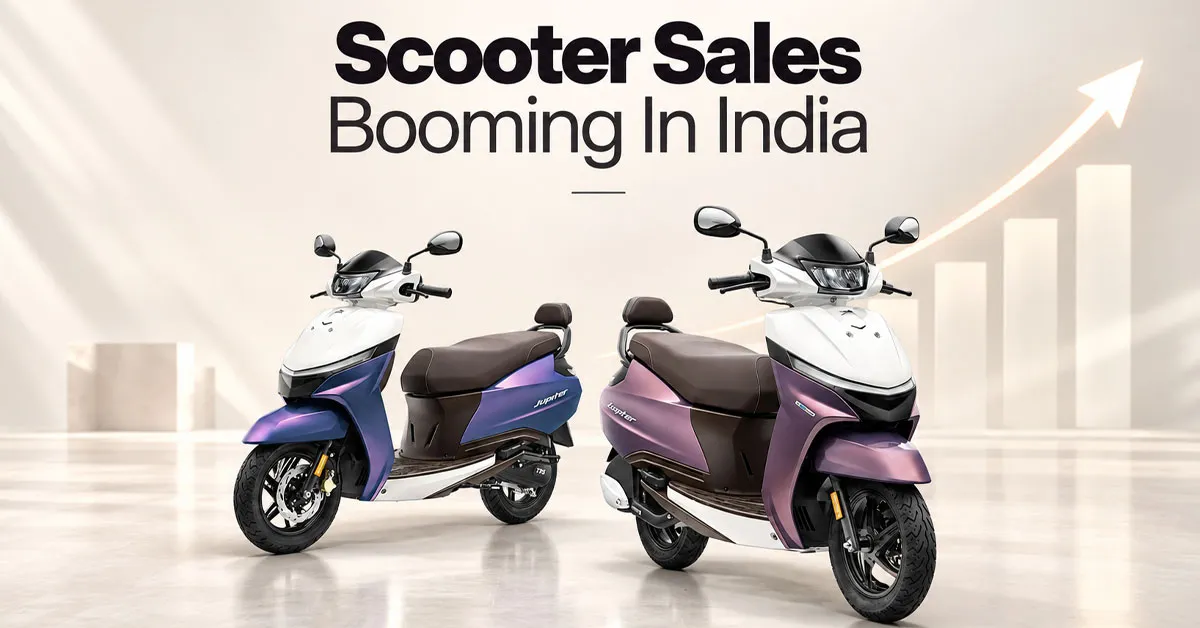
Domestic two-wheeler sales looked strong in August, rising 10.5% year on year to 20,34,698 units. But almost all of that growth came from one part of the market. Scooter sales jumped 23.8% to 8,55,715 units, adding 1,64,285 vehicles in a single year.
Motorcycles, still the bigger category, grew by just 2.4% to 11,33,047 units. Mopeds rose 4.7% to 45,936. The entire two-wheeler market added about 1.93 lakh domestic units over August 2025, which means scooters alone generated roughly 85% of the industry’s net growth.
The change also shows up in market share. Scooters accounted for about 37.5% of domestic two-wheeler sales in August 2025. A year later, that figure had climbed to roughly 42.1%. Motorcycles are still ahead, but the market has become noticeably less motorcycle-dependent in just twelve months.
Electric two-wheelers are one reason the scooter category now has more momentum. Vahan-based retail data puts August electric two-wheeler registrations at around 1.83 lakh units, up about 67% year on year. The high-volume EV models are overwhelmingly scooters.
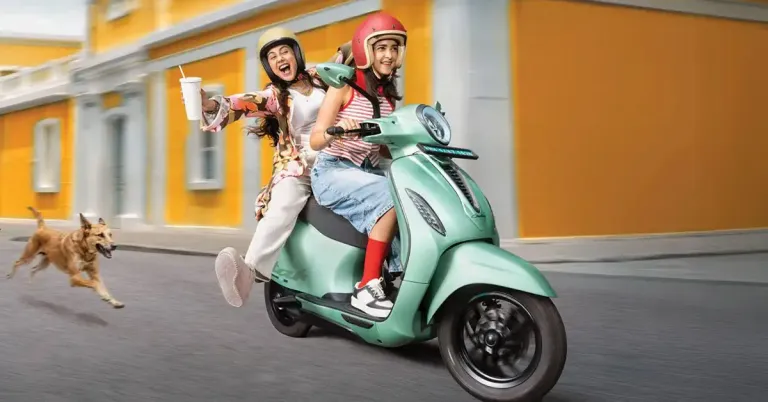
Bajaj Chetak alone recorded 52,248 units in model-level August data, up from 14,014 a year earlier. TVS iQube did 42,882 units, Hero Vida 25,558 and Ather Rizta 22,586. Even allowing for differences between wholesale and retail datasets, the direction is clear: electric scooters have become mainstream volume products rather than a small urban niche.
This is not an EV-only shift. Honda Activa remained the country’s second-best-selling two-wheeler overall at 2,55,815 units. TVS Jupiter sold 1,47,450, while Suzuki Access reached 69,558. All ten scooters in the latest top-10 scooter list recorded year-on-year growth, and their combined sales rose almost 20% to 7.17 lakh units.
The product mix has also widened. The 125cc class now gives petrol-scooter buyers more performance without moving to a motorcycle, while electric models offer several battery and range choices. That breadth lets the scooter format cover daily commuting, family errands and app-based urban work without forcing every buyer into the same specification.
Buyers can choose basic 110cc commuters, stronger 125cc family scooters, sporty models and electric scooters with several battery sizes and price points. Automatic transmissions, step-through access and under-seat storage also make scooters easy to share within a household and convenient for stop-start city use.
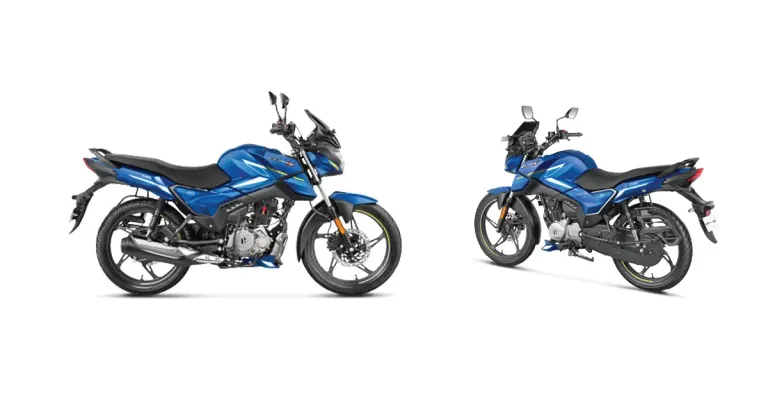
It would be wrong to read the August data as a motorcycle decline. Motorcycle sales still exceeded scooter sales by nearly 2.8 lakh units, and big-volume names remain extremely strong. Hero Splendor sold 3,53,842 units, Honda Shine 1,80,626 and Bajaj Pulsar 97,839. Splendor alone added more than 42,000 units year on year.
What has changed is the source of incremental demand. Scooters added more than six times as many domestic units as motorcycles did year on year in August, even though motorcycles started from the much larger base. Motorcycles remain the backbone of the market, especially where purchase price, fuel economy and bad-road ability matter most. Scooters, however, are adding buyers much faster, helped by electric adoption and a broader range of family-focused products.