By: The Obnews Editorial Team
India’s relationship with the global economy is moving in several directions at once. South Korea’s US$1.3 trillion National Pension Service is seeking a new route to invest directly in Indian government bonds, India’s approximately US$507 million development credit facility for the Maldives has formally become operational, and New Delhi is simultaneously expanding trade and investment relationships with countries including Canada and New Zealand.
Taken together, the developments reveal something larger than a collection of individual agreements. India is increasingly trying to position itself as both a destination for global capital and a source of capital, trade and development financing abroad, while using its domestic market to negotiate deeper relationships with governments and some of the world’s largest companies.


South Korea’s Pension Giant Looks Toward Indian Bonds
South Korea’s National Pension Service, one of the world’s largest pension funds with more than US$1.3 trillion in assets, is seeking regulatory authorization to invest directly in Indian government securities, according to Reuters. The application is being made through a simplified investment framework designed to make it easier for large, low risk institutional investors such as pension funds and sovereign wealth funds to enter India’s markets. No investment has yet been confirmed, meaning the development should be viewed as an important potential capital flow rather than money that has already entered the Indian bond market.
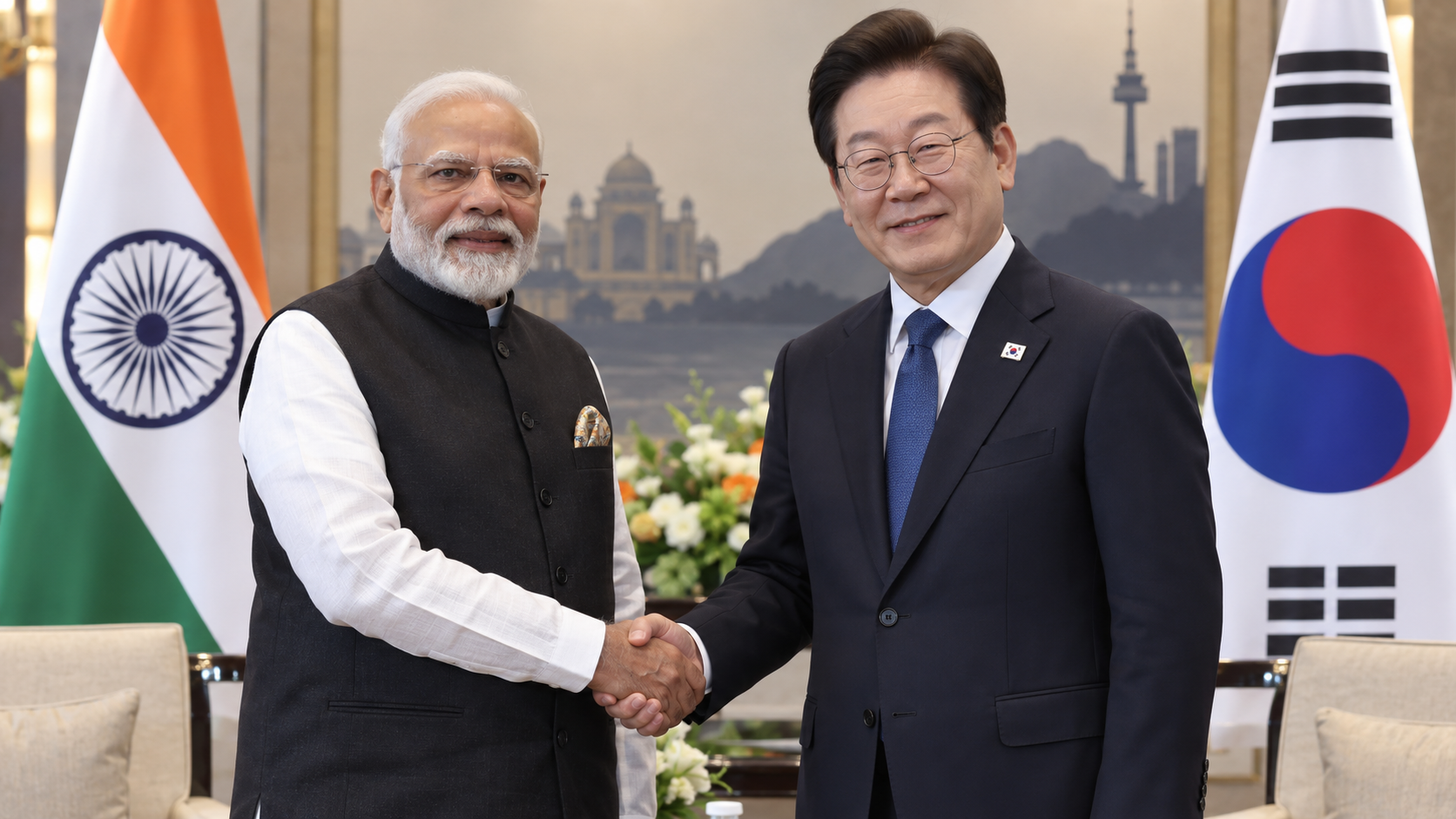
The timing is particularly notable because India and South Korea have spent much of 2026 deliberately building a deeper financial relationship. During South Korean President Lee Jae Myung’s state visit to India in April, Prime Minister Narendra Modi specifically invited South Korea’s National Pension Service to explore establishing an office in India. The two governments also welcomed a new India South Korea Financial Cooperation Forum covering areas including banking, capital markets and financial technology.
Five months later, the reported NPS application suggests those discussions may be beginning to translate into practical financial links. India and South Korea have also targeted an increase in bilateral trade from approximately US$27 billion to US$50 billion by 2030, while expanding cooperation in areas including semiconductors, steel, shipbuilding, critical technologies, energy and supply chains.
For India, attracting a pension institution with such a long investment horizon could be particularly significant. Foreign investors currently hold roughly ₹4 trillion in Indian government bonds, according to Reuters, but global pension funds account for only a relatively small portion of that total. Bringing more pension and sovereign wealth capital into the market could help broaden the investor base for Indian government debt, although actual effects on bond demand or the rupee would depend on the scale and timing of future investments.


A Closer Relationship Does Not Mean No Disputes
At the same time, India’s relationship with major South Korean businesses is showing another side of deeper economic integration. India’s Directorate of Revenue Intelligence is investigating Samsung Electronics and LG Electronics over the tariff classification used for imported OLED television display components, Reuters reported Wednesday. Authorities are examining whether components imported under a 5 per cent tariff category should instead have faced a 15 per cent duty.
Samsung and LG dispute the interpretation, and the investigation has not produced a final finding of wrongdoing or a final tax demand. The case is important because it illustrates how India can simultaneously court Korean investment and financial capital while enforcing its own customs and industrial policies against some of South Korea’s largest corporations.
That combination is likely to become increasingly common as India becomes a larger global market. Countries and companies seeking access to Indian consumers, financial markets and manufacturing opportunities are also encountering an increasingly consequential Indian regulatory system.
India’s $507 Million Maldives Credit Becomes Operational
India is not only attracting money from abroad. It is also increasingly deploying capital beyond its borders, with the Maldives providing one of the clearest examples this week.
The Reserve Bank of India announced Wednesday that the Government of India backed ₹48.5 billion credit facility for the Maldives, approximately US$507 million at current exchange rates cited by Reuters, became effective on August 27. The agreement allows individual development projects in the Maldives to move forward through separate credit arrangements of at least ₹5 billion each.
The structure of the agreement makes it economically important for India as well as the Maldives. At least 75 per cent of the value of goods, construction work and services financed under the facility must be supplied by sellers from India, while up to 25 per cent can be sourced elsewhere. That means Indian backed development financing can simultaneously support infrastructure in the Maldives and generate contracts and export opportunities for Indian businesses.
The agreement itself dates back to Prime Minister Modi’s July 2025 visit to the Maldives, when India agreed to extend the ₹4,850 crore credit line alongside measures covering debt repayments, digital payments, fisheries, infrastructure and negotiations toward an India Maldives free trade agreement. India has already financed or supported housing, road and drainage projects and other infrastructure in the island country.
There is another important financial dimension. India Exim Bank has identified the Maldives facility as its first Government of India supported line of credit denominated in Indian rupees, rather than the U.S. dollar. That does not by itself signal a wholesale move away from dollar based international finance, but it does provide another example of India attempting to increase the use of its own currency in cross border trade and development financing.
Canada Is Becoming Part of the Same Global Economic Story
India’s push outward is also becoming increasingly visible in Canada. Obnews reported on September 11 that a potential December visit by Prime Minister Narendra Modi was emerging alongside efforts by Canada and India to conclude their Comprehensive Economic Partnership Agreement, or CEPA, before the end of 2026.
The story moved considerably further this week. Canadian Prime Minister Mark Carney said on September 22 that Canada and India were making good progress in trade negotiations and were aiming to bring the process toward a conclusion around the December G20 period. Canadian Trade Minister Maninder Sidhu had separately told Reuters that Indian negotiators were expected in Canada and that Ottawa was optimistic an agreement could be completed before year end.
The negotiations extend beyond traditional imports and exports. Canada and India are discussing areas including liquefied natural gas, nuclear energy, critical minerals and investment, while major Indian companies have examined opportunities in Canadian resources. For Canada, the talks form part of a broader effort to diversify international economic relationships, while for India they add another large developed market to an expanding network of trade partnerships.
New Zealand Deal Adds Another Market
India’s agreement with New Zealand provides another example of that strategy already moving from negotiation to implementation. The two countries have completed ratification of their free trade agreement, which is scheduled to come into force on October 20, 2026. Indian exports will receive duty free access to New Zealand, while tariffs on most New Zealand exports to India will either disappear immediately or decline over time.
New Zealand has also committed to facilitate approximately US$20 billion of investment into India over 15 years, while both governments are seeking to expand a bilateral trade relationship currently valued at roughly US$2.3 billion annually. The agreement therefore represents more than tariff reductions and fits India’s broader effort to attract investment while securing improved access for Indian exporters.
Global Technology Capital Is Moving Toward India Too
The movement is also visible in advanced manufacturing. U.S. semiconductor equipment giant Applied Materials announced this month that it intends to invest US$5 billion in India over the next decade, including spending on research, supply chain development and workforce expansion. The announcement came as India continues trying to establish itself as a larger semiconductor manufacturing and research centre during a period when technology companies are diversifying global supply chains.
India has committed more than US$21 billion toward semiconductor incentives, according to Reuters, although its manufacturing ambitions remain a work in progress. Several projects have been approved and some packaging operations have entered production, but the country has not yet reached large scale advanced chip fabrication, illustrating both the opportunity and the distance still to travel.
India Is Increasingly on Both Sides of Global Capital
What connects Seoul, Malé, Ottawa, Wellington and the semiconductor industry is the changing direction of India’s economic relationships. South Korea’s pension fund represents potential long term institutional capital flowing into India, while Applied Materials represents global corporate investment entering the country. Canada and New Zealand represent attempts to widen markets, investment channels and supply chain relationships.
The Maldives development facility shows the movement in the opposite direction. Indian backed capital is being deployed abroad, with financing terms that can simultaneously support development projects and create demand for Indian companies, goods and services.
There are limits to how far these developments should be interpreted. The South Korean pension application has not yet become an investment, Canada and India have not yet completed their trade agreement, and the Samsung and LG investigation demonstrates that regulatory disputes remain capable of complicating international business relationships.
Even with those qualifications, the direction is becoming clearer. India is no longer simply seeking foreign investment or export markets independently. It is increasingly trying to connect its domestic financial market, industrial policy, development financing and trade diplomacy into a wider international economic strategy, placing India on both sides of the flow of global capital.