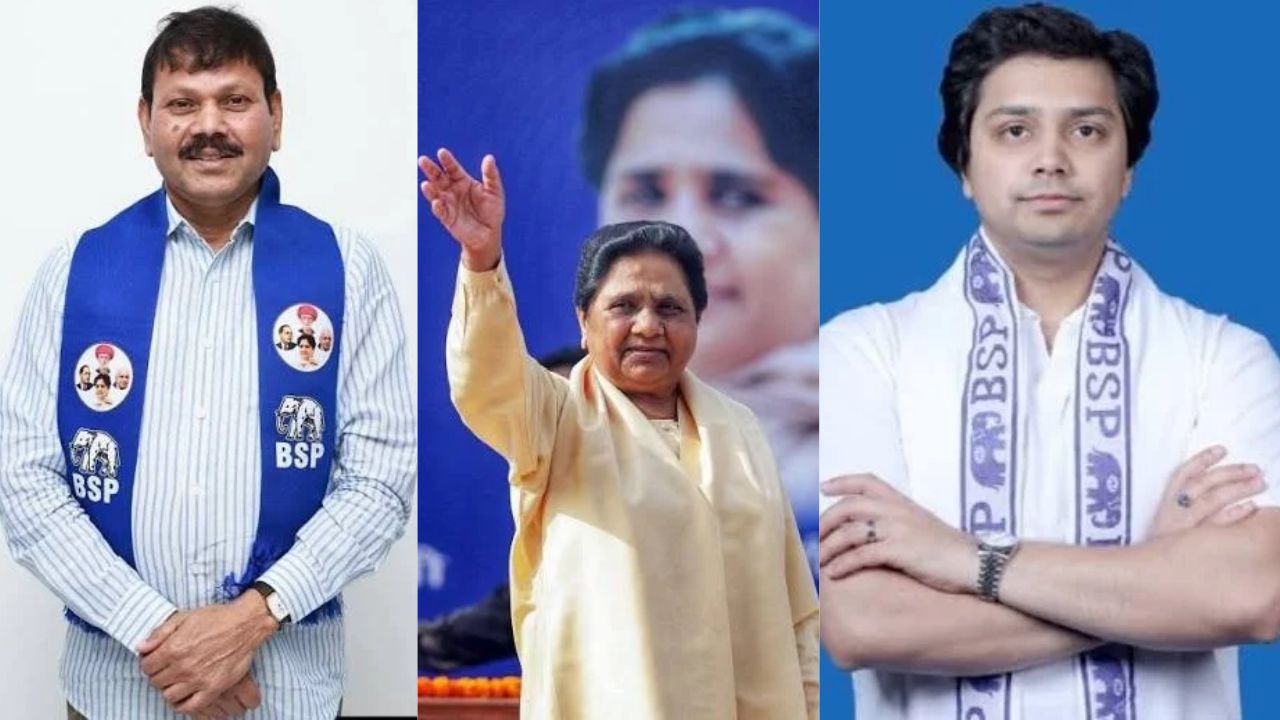
Lucknow: The political countdown to the Uttar Pradesh Assembly Election 2027 has intensified with the Bahujan Samaj Party (BSP) making another major organizational move under the leadership of party chief Mayawati.
In a significant restructuring exercise, Mayawati has appointed veteran party leader Rajaram as the National Coordinator of BSP, giving him a crucial role in managing organizational affairs and strengthening coordination across states.
The decision comes amid a series of leadership changes within the party, including recent developments involving Akash Anand and Ishaan Anand, triggering fresh political discussions over BSP's roadmap for the upcoming electoral battle in Uttar Pradesh.
The latest organizational overhaul highlights Mayawati's focus on rebuilding the party structure, improving communication channels and activating the cadre network ahead of the 2027 Assembly elections.
Mayawati's Leadership Reshuffle Creates Political Buzz
The appointment of Rajaram comes shortly after a major change in BSP's top-level leadership structure.
Earlier, Mayawati removed her nephew Akash Anand from the post of National Coordinator and relieved him of key party responsibilities. Following this, Ishaan Anand was given an important organizational responsibility as National Convener.
Now, with Rajaram being appointed National Coordinator, the BSP has brought an experienced political leader into a key position at a crucial time.
The latest changes indicate an attempt to strengthen organizational control and ensure smoother coordination between the party's central leadership, state units and grassroots workers.
BSP Changes National Organizational Structure
Along with leadership appointments, the BSP has also redesigned its national organizational framework.
The party has reduced its earlier six-sector structure into three major sectors with the objective of improving efficiency and faster implementation of organizational decisions.
Uttar Pradesh and Uttarakhand have been placed under Sector One, with Mayawati herself taking direct responsibility for these politically significant states.
The decision underlines the importance of Uttar Pradesh in BSP's future political strategy, as the state remains one of the biggest electoral battlegrounds in Indian politics.
Rajaram And Ramji Gautam Get Major Responsibilities
Under the new structure, senior BSP leaders have been assigned responsibilities for different regions.
Rajya Sabha MP Ramji Gautam has been given charge of 10 states, where he will focus on strengthening the party organization and coordinating with local leadership.
Former Rajya Sabha member Rajaram has been assigned responsibility for nine states, including managing organizational activities, strengthening party networks and preparing workers for upcoming political challenges.
The two leaders will act as key links between the BSP's central command and its state-level machinery.
BSP's Focus Shifts Towards UP 2027 Battle
The latest reshuffle comes at a time when political parties across Uttar Pradesh are intensifying preparations for the 2027 Assembly elections.
For BSP, rebuilding the organizational structure, increasing grassroots activity and strengthening booth-level networks are expected to remain major priorities.
The party has traditionally relied on a strong cadre-based structure, and the latest changes suggest a renewed focus on improving organizational effectiveness before the next electoral contest.
Mayawati's decision to directly oversee Uttar Pradesh and Uttarakhand also highlights the strategic importance of these states for BSP's political planning.
Leadership Changes Reflect Changing Political Landscape
The repeated organizational changes within BSP have become a subject of political discussion as parties prepare for the upcoming election cycle.
The reshuffle comes at a time when Uttar Pradesh politics is witnessing increased competition among major political players over voter outreach, social equations and organizational strength.
For BSP, maintaining a strong internal structure and improving coordination among leaders will be a key challenge ahead of the 2027 elections.