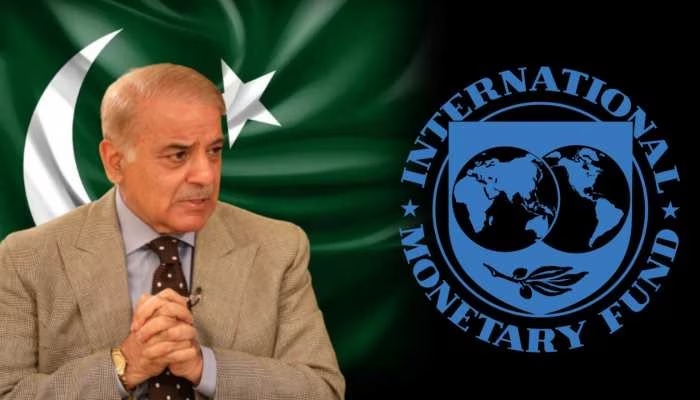
Islamabad. For Pakistan, which is facing economic crisis, preparations are going on for several legal and policy changes before the next review of the ongoing $7 billion program with the International Monetary Fund (IMF). Pakistan's Finance Secretary Imdadullah Bosal (Economic crisis) told the Standing Committee on Finance and Revenue of the National Assembly that about 174 legislative amendments Has been demanded. These amendments will be placed before the Parliament for approval, although the final authority to pass them will remain with the Parliament.
These changes are not limited to just one area. These include many areas including financial sector governance, governance of government companies, foreign exchange and remittances, climate reforms and local currency markets. IMF in Pakistan $7 billion Extended Fund Facility (EFF) The process for the fourth review of the IMF mission and the third review of the $1.4 billion Resilience and Sustainability Facility (RSF) is beginning.
Parliament's approval required
The Government of Pakistan is in the process of preparing these amendments and presenting them before the Parliament. The Finance Secretary clarified that changes have been demanded by the IMF, but it is the right of Parliament to approve them. In such a situation, the government will have to take these proposals forward through the legislative process.
Emphasis on government companies and sovereign wealth funds
In talks with IMF Sovereign Wealth Fund (SWF) Change in the law is also an important issue. Discussions are underway to align the governance, financial reporting and monitoring arrangements of government companies associated with this fund with the rules applicable to larger government undertakings. The IMF has already asked Pakistan to implement better governance and financial safeguards in the operation of SWFs.
Reforms in Pakistan's public sector enterprises have been a frequent part of the IMF programme. The fund's documents focus on strengthening the governance of government companies, reducing losses and financial risks, and privatization and restructuring as needed.
Discussion on change in Chinese policy also
Pakistan's sugar policy is also part of the talks with the IMF. Under the IMF program, emphasis has been laid on reforms like reducing government interference in the sugar market, changing licensing and production restrictions and making the import-export system more liberal. The recent program document of the IMF mentions the policy of liberalizing the Chinese market in a phased manner.
Subsidy on remittance is also an issue
Money sent from abroad to Pakistan i.e. remittance The financial assistance provided by the government to promote agriculture is also a subject of discussion in the IMF review. The IMF has focused on reducing reliance on costly government stimulus programs and removing the costs and other structural barriers to cross-border payments to increase remittances.
The Government of Pakistan has earlier cut the subsidy given for remittance promotion. According to the IMF, the goal in the long term is to create a framework that can encourage remittance flows despite reduced government fiscal support.
Thus, the scope of the 174 proposed amendments extends beyond taxes and government expenditure to government companies, financial administration, commodity markets, remittances and economic governance. After placing these changes before the Parliament, their passage will be considered important in the upcoming IMF review process of Pakistan.