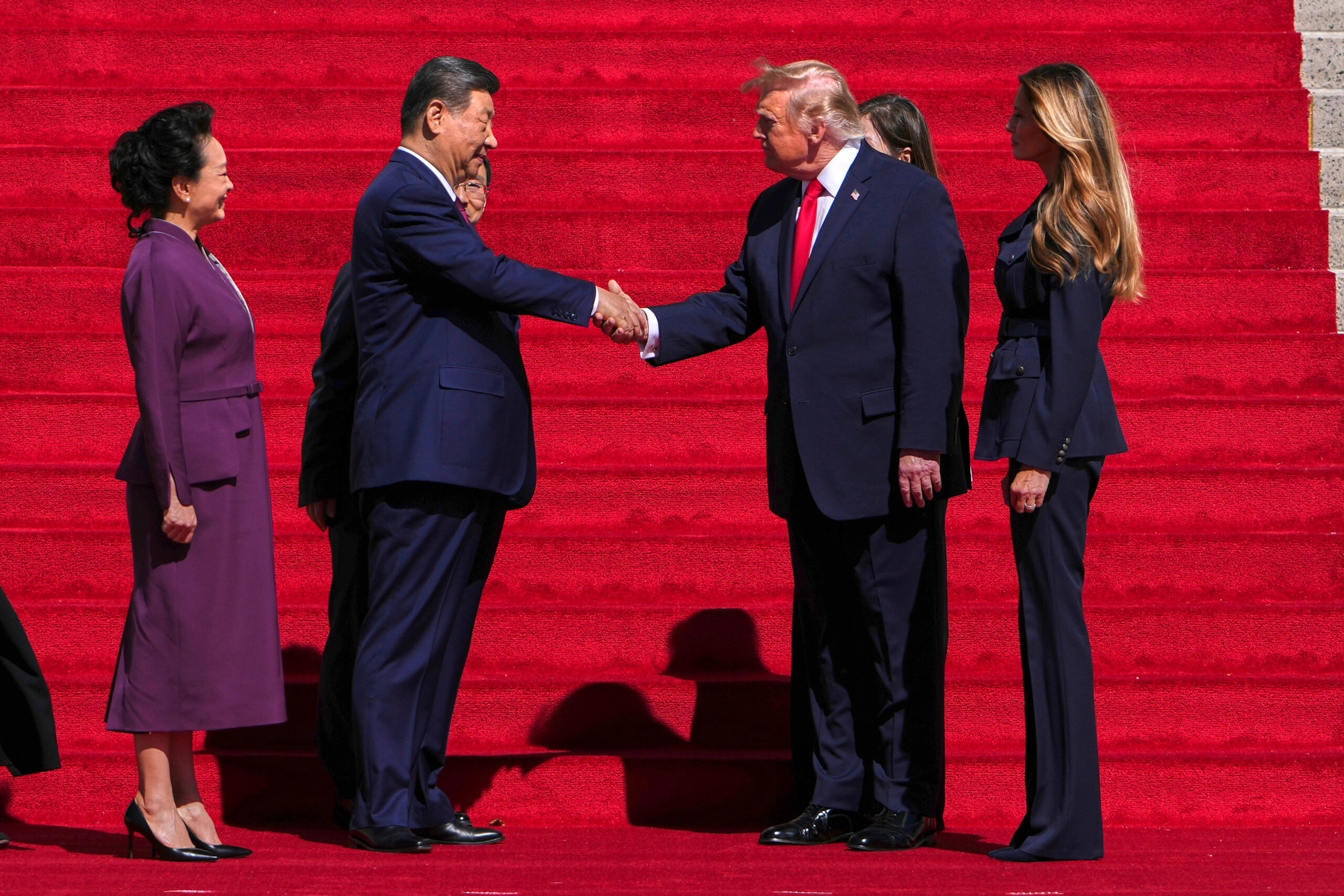
US-China Summit Produces New AI Dialogue, Trade Board & Military Communication Plan/ TezzBuzz/ WASHINGTON/ J. Mansour/ The United States and China agreed to establish a channel for handling artificial intelligence incidents and improve military crisis communications. The countries will continue negotiations on tariffs, rare-earth supplies, fentanyl chemicals and other trade concerns following the Trump-Xi summit. Although the meetings produced no major breakthrough, analysts said the new communication mechanisms could prevent future disputes from escalating.
Quick Look
- The United States and China will establish an AI incident channel.
- A dedicated AI dialogue is scheduled for November.
- Both countries plan to strengthen military crisis communications.
- A new bilateral Board of Trade began operating this week.
- The two-month trade truce will remain in effect.
- China agreed to buy at least 10 million metric tons of U.S. coal.
- Talks will continue over Chinese rare-earth exports.
- China added controls on two more fentanyl precursor chemicals.
- Trump and Xi expect to meet again in November and December.
- Both sides opposed tolls on international waterways.

Deep Look
US and China create AI safety channel
BANGKOK — The United States and China agreed to create a formal communication channel for managing artificial intelligence-related incidents following the three-day summit between President Donald Trump and Chinese President Xi Jinping in Washington.
Statements released by both governments Saturday said the mechanism would allow officials to discuss the risks and benefits associated with rapidly developing AI systems.
A dedicated bilateral dialogue on artificial intelligence is scheduled for November.
The agreement comes amid growing international concern that advanced AI could create national security emergencies, spread misinformation or cause unintended disruptions without clear communication between the world’s two leading technological powers.
Military crisis communications to expand
Washington and Beijing also agreed to accelerate work on communications intended to prevent military confrontations from escalating.
China’s Foreign Ministry said the countries would sign a memorandum of understanding on strengthening crisis communications and preventing disputes between their armed forces.
The ministry’s one-page statement provided few details about how the system would operate or when it would become fully functional.
Military communication is particularly important amid continuing tensions involving Taiwan, the South China Sea and encounters between American and Chinese aircraft and ships.
A reliable crisis channel could allow commanders and senior officials to clarify intentions quickly during an accident, confrontation or misunderstanding.
Summit produces incremental agreements
The summit did not result in major breakthroughs on the fundamental issues dividing Washington and Beijing.
However, analysts said the creation of working groups and communication channels represented meaningful progress.
Such mechanisms can provide officials with a structured way to address disagreements before they become larger economic, diplomatic or military crises.
Xi returned to Beijing on Saturday, according to China’s official Xinhua News Agency.
Trump treated Xi with unusual warmth throughout the state visit despite having escalated a trade war with China during the previous year.
Board of Trade begins operating
The two governments agreed to continue collaborating through a new Board of Trade focused on selected bilateral economic issues.
The White House said the board began operating during the summit week.
The initiative is intended to give officials a continuing forum for addressing tariffs, agricultural purchases, supply chains and other trade concerns.
Both sides also committed to continue working toward reciprocal tariff reductions covering approximately $30 billion in goods.
Most of the proposed reductions involve products considered less sensitive to national security, including agricultural goods and holiday decorations.
Two-month trade truce extended
Trump and Xi agreed during their meetings to extend the existing trade truce for two months.
The extension gives negotiators additional time to pursue a more durable agreement and reduces the immediate risk of another escalation in tariffs.
The United States and China previously imposed significant tariffs on each other’s products, disrupting global markets and increasing costs for businesses and consumers.
The latest agreements do not resolve the broader trade dispute, but they maintain temporary stability while negotiations continue.
China agrees to purchase US coal
The White House said China agreed to import at least 10 million metric tons of American coal during 2027 and 2028.
The commitment could benefit U.S. energy producers while helping reduce the trade imbalance between the two countries.
The statements did not specify the value of the planned purchases or establish a detailed schedule.
Previous U.S.-China trade agreements have faced criticism when promised Chinese purchases were delayed or never fully completed.
Rare-earth negotiations continue
Washington and Beijing will continue addressing American concerns about access to rare-earth materials.
The White House said the negotiations would proceed “with the goal of ensuring shipment levels return to appropriate levels.”
Rare earths are essential for producing advanced electronics, electric vehicles, military equipment and clean-energy technologies.
China imposed export controls on the materials last year in response to American tariffs, reducing shipments to the United States and other countries.
The restrictions highlighted global dependence on Chinese mining and processing operations.
Leaders schedule additional meetings
Trump and Xi expect to meet again at the Asia-Pacific Economic Cooperation summit in Shenzhen, China, in November.
Another meeting is planned for the G20 summit at Trump National Doral Miami in Florida in December.
Those gatherings will give the leaders further opportunities to address unresolved questions involving trade, Taiwan, artificial intelligence and military competition.
The upcoming APEC meeting is expected to include the first dedicated discussion under the newly established AI communication framework.
Joint language addresses Iran and Hormuz
The United States and China said Iran should honor its stated commitment not to develop nuclear weapons.
Both countries also said no nation should charge a toll for passage through international waterways.
The language appeared to reference the Strait of Hormuz, where traffic has declined significantly since the U.S. war with Iran began.
China depends heavily on oil shipped through the strait, while the United States has deployed military forces to protect commercial vessels navigating the waterway.
The shared statement suggested that Washington and Beijing have at least some overlapping interests regarding regional stability and energy shipments.
China expands fentanyl chemical controls
The United States welcomed China’s decision to impose export controls on two additional precursor chemicals used to manufacture fentanyl.
Both governments said law-enforcement cooperation had recently resulted in arrests connected to fentanyl cases.
Washington has repeatedly pressured Beijing to restrict exports of chemicals used by criminal organizations to produce the powerful synthetic opioid.
The new controls represent another incremental area of cooperation, although disputes remain over enforcement and the extent of China’s responsibility for the drug supply chain.
Analysts emphasize institutional stability
Wang Zichen, deputy secretary-general of the Beijing-based Center for China and Globalization, said the agreements could make stability between the two countries more sustainable.
“Personal diplomacy between the two leaders is important, but the emphasis on working-level engagement, military-to-military dialogue and crisis-management mechanisms suggests an effort to make that stability more durable and institutionalized,” Wang said.
The summit’s significance may therefore depend less on immediate headline agreements and more on whether officials continue using the new channels to manage future disputes.
More on US News