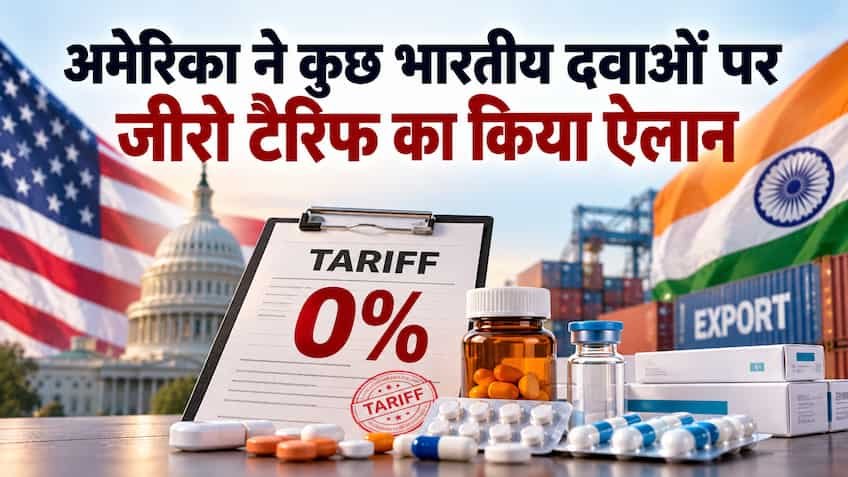
Amidst the ongoing turmoil over protectionism and import duties in global trade, a very relieving and positive news has emerged from the United States market for the Indian pharmaceutical industry. In order to fulfill its domestic health priorities and to control the shortage of medicines, the US administration has taken a big step towards making certain essential and life-saving drugs completely tariff-free. The direct and biggest beneficiary of this strategic decision is going to be India, known as the 'Pharmacy of the World'.
The Indian pharmaceutical sector has long been the largest and most trusted supplier of generic drugs to the US market. One out of every three generic drugs sold in the US is manufactured in plants of Indian companies. In such a situation, removal or zeroing of import duty on some specific categories of medicines will directly improve the profit margins of Indian pharmaceutical companies and the competitive strength of their products in America will be further strengthened. This decision will not only give a new impetus to India's pharma exports, but will also once again confirm India's central role in the global supply chain.
According to US health regulators and trade experts, the primary scope of this tariff exemption is being limited to those drugs which are experiencing serious drug shortages in the US domestic market or whose prices are becoming too heavy on the pockets of ordinary citizens there. This includes oncology medicines used in the treatment of cancer, essential medicines for cardiovascular diseases, high blood pressure, diabetes and many important antibiotics and anti-effective formulations.
Additionally, certain complex generic formulations and drugs used in rare diseases are also being given preference under this tariff-free regime. American hospitals and healthcare systems were under immense pressure due to skyrocketing drug prices. It was not possible to immediately increase the production of these medicines locally, due to which the US administration has chosen the practical path of removing the duty while accepting import dependence. India's top drug manufacturing companies like Sun Pharma, Dr. Reddy's Laboratories, Cipla, Lupine, Aurobindo Pharma and Zydus Lifesciences have huge and world-class capabilities in the production of these medicines, due to which they are sure to get direct strategic benefits from this policy relaxation.
The share of the US market in India's total pharmaceutical exports remains between 30 to 35 percent. During the last few years, Indian pharma companies were facing tough financial struggles in the US market due to stringent US FDA audits, price erosion and some regulatory uncertainties. In such a situation, abolition of tariffs on selected medicines will lead to direct savings in shipping costs for companies and strengthen their EBITDA margins.
Financial analysts believe that after this announcement, there will be a new glow in the pharma shares listed on Dalal Street and domestic stock market. In particular, companies with large exposure to the US market and a large pipeline of US FDA approved Abbreviated New Drug Applications (ANDAs) are likely to see solid growth in revenues in the coming quarters. With the removal of import duty, Indian companies will be able to deliver their supplies to American hospitals and pharmacy chains more quickly, which will also give a new boost to the bilateral trade balance between the two countries.
This exercise by America to make medicines tariff free is not limited only to finished medicines, but it will also directly affect the global equations of active pharmaceutical ingredients i.e. API and bulk drugs. Since the Covid pandemic, western countries have been working on a strategy (China Plus One) to eliminate excessive dependence on China for their medicine supplies. India has achieved huge self-sufficiency in manufacturing of APIs and Key Starting Materials (KSMs) domestically through the Production Linked Incentive (PLI) scheme of the Central Government.
When the world's largest healthcare economy like the US eases import restrictions and tariffs on certain medicines, Indian manufacturers are encouraged to expand their production capacity and invest more capital in research and development (R&D). Major Indian pharma hubs like Hyderabad Genome Valley in Telangana, Ankleshwar and Ahmedabad pharma clusters in Gujarat, Tarapur in Maharashtra and Baddi in Himachal Pradesh are expected to pick up the pace of shipments to the US markets. In short, this development is not only a huge financial relief for Indian pharma exporters, but is also a clear testimony of India's essential and indispensable position in global health security.