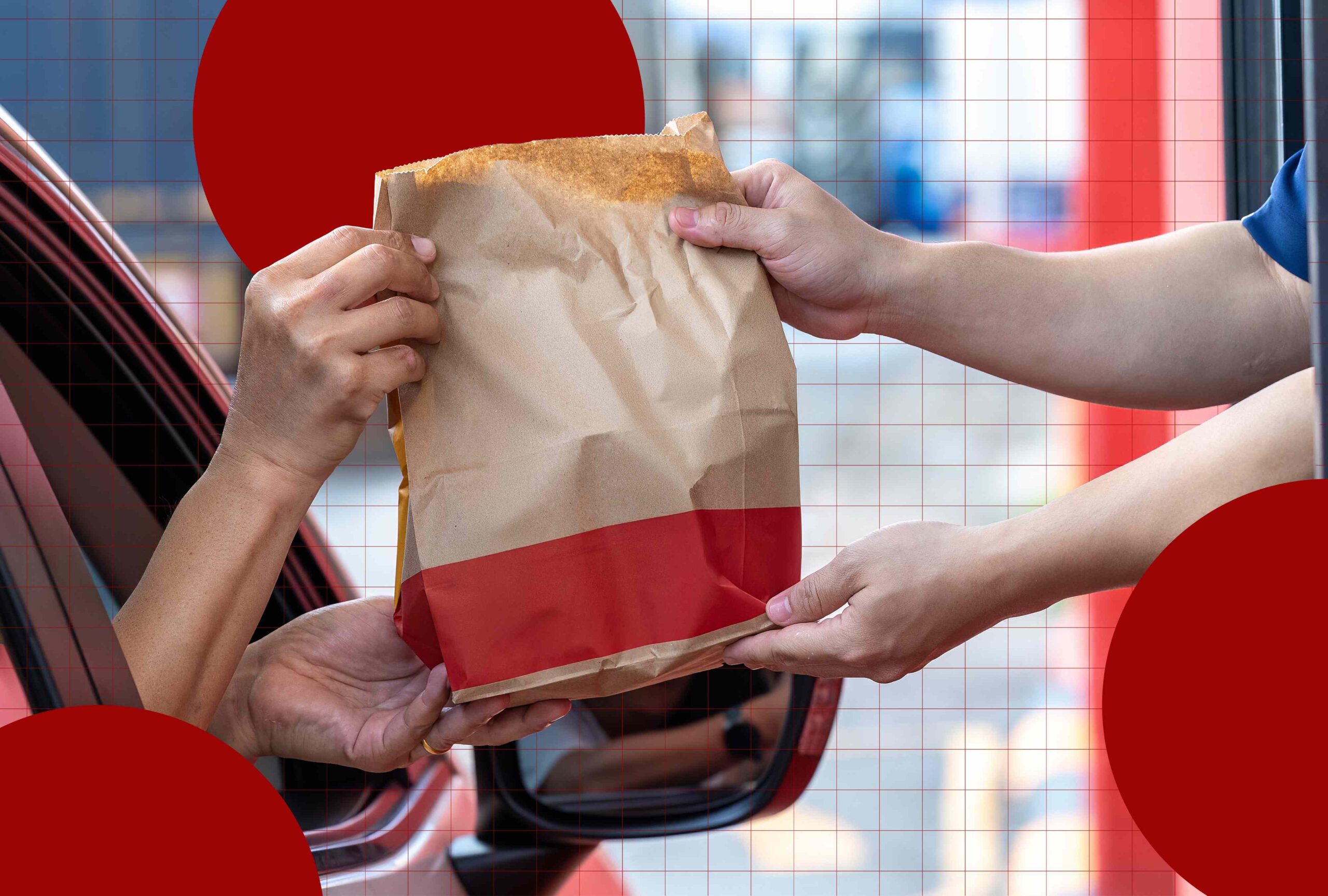
Dietitians say this lunch may not be the best choice if you’re trying to reduce abdominal fat.
Reviewed by Dietitian Jane Leverich, M.S., RDN
Key Points
- Visceral fat is the fat that is found in the abdominal area.
- Dietitians agree that a fast-food combo meal may not be the most supportive choice for visceral fat.
- Regularly consuming foods and drinks high in added sugar and saturated fat may be associated with visceral fat.
Lunch can be a convenient time to grab fast food, especially when you’re short on time or eating on the go. But some typical combo meals can pack a lot of added sugar, saturated fat and energy-dense foods into one meal. “A fast-food combo is about as bad as it gets for visceral fat,” says Lisa Young, Ph.D., RD. Visceral fat is stored deep in the abdomen, around your internal organs. Higher levels of visceral fat are associated with health risks, but luckily, what you eat can play a role in managing it.
A typical fast-food combo might include fried chicken or a hamburger, fries and a soda. “Sugar-sweetened beverages (especially those with high-fructose corn syrup), fried foods and red/processed meats are consistently associated with visceral fat accumulation,” adds Lauren Harris-Pincus, M.S., RDN. Here’s why dietitians say these types of fast-food combo meals may not be the most supportive choice for visceral fat management, plus how to build a more balanced lunch.
Why a Fast-Food Combo Meal May Not Support Visceral Fat Management
It Can Be a Large Meal
“Some fast-food combos can equal an entire day’s worth of calories in a single meal,” shares Kelly Burgess, M.B.A., RD, LDN. Fast-food combo meals are often energy-dense, providing a lot of calories in a relatively small amount of food, she adds. Add the calories in a fried chicken sandwich or cheeseburger, plus fries and a soda, and you can easily end up with a meal containing more than 1,100 calories.
While it may be helpful to put that number in the context of a typical 2,000-calorie-per-day diet, it may be more beneficial to focus on what you’re getting along with those calories rather than a specific calorie “budget.” A combo meal may provide plenty of energy while offering less fiber, fruit and vegetables than a more balanced meal.
It May Be High in Added Sugar
Fast-food combo meals often come with a beverage, such as soda or another sugar-sweetened drink. Sugary drinks can add calories without making you feel as full as food, and research suggests that regularly consuming them may contribute to visceral fat accumulation.
Consuming large amounts of rapidly digestible sugars, like those found in soda, can cause an increase in blood sugar and insulin. Over time, regularly consuming large amounts of added sugar may contribute to changes in fat storage and lead to greater visceral fat. A medium-size soda at a fast-food restaurant can range from 20 to 32 ounces. A Coca-Cola that size packs about 44 to 65 grams of total sugars, close to or more than the recommended limit of 50 grams or less of added sugar per day.,
It Can Be High in Saturated Fat
Fried foods and fatty processed meats are common in fast-food meals and can contribute significant amounts of saturated fat. Saturated fat is found in foods such as red meat, butter, lard and tallow, as well as coconut oil and palm oil. Research has associated higher intakes of saturated fat with greater visceral fat accumulation.
It May Contain Ultra-Processed Foods
Ultra-processed foods are made with industrially processed ingredients and additives, such as flavorings, emulsifiers and thickeners. Fast-food buns, sauces, fries, drinks and other menu items may fall under the ultra-processed category, depending on how they’re made.
Diets higher in ultra-processed foods are associated with greater visceral fat levels. Ultra-processed foods contribute to visceral fat accumulation in many ways. Ultra-processed foods can vary widely in their nutritional content, so the category itself doesn’t tell you everything about a particular food. That said, some ultra-processed foods are hyperpalatable, meaning that it may be easier to eat more calories than necessary. Extra calories contribute to greater fat stores and weight gain.
Ultra-processed foods may also have a higher energy density and lower nutrient density, contributing to blood sugar fluctuations that alter appetite cues and fat storage. Additionally, industrial processing breaks down natural food matrices, creating a soft, easily chewable texture that makes food easy to eat quickly and harder for you to recognize satiety signals.
Strategies for Building a Balanced Lunch to Support Weight Loss
“Plant-forward, Mediterranean-style lunches have been shown to help reduce visceral fat,” says Harris-Pincus. Focus on adding nutrients to your plate, and play with different textures and flavors to prevent boredom.
- Use lean protein to anchor your meal. Young recommends building your plate around a lean protein—like chicken, tofu, fish or legumes—to promote satiety while keeping saturated fat low.
- Make half the plate vegetables. Nonstarchy vegetables should comprise the bulk of your plate. These vegetables provide vitamins, minerals, fiber and water to support satiety and overall health. A bonus is that you can eat a large quantity of nonstarchy vegetables with minimal impact on calories.
- Replace refined grains with whole grains. Choosing whole grains over refined carbohydrates may be associated with less visceral fat over time, possibly because of whole grains’ fiber content. Fiber helps slow digestion and carbohydrate absorption, leading to more controlled increases in blood sugar. Aim to make one-quarter of your plate whole grains, such as quinoa, barley, whole-wheat bread or pasta, brown rice or farro.
Our Expert Take
A fast-food combo typically includes several foods linked to visceral fat, such as sugar-sweetened beverages, ultra-processed foods and saturated fat, and likely in large portions. Having a fast-food combo meal once in a while won’t determine how much visceral fat you carry, but regularly eating this lunch may make it harder to manage. For a more balanced lunch, build your meal around a lean protein, add vegetables and choose whole grains when possible. If you’re ordering fast food, start by swapping the soda for water and order a fruit or vegetable as a side whenever possible.