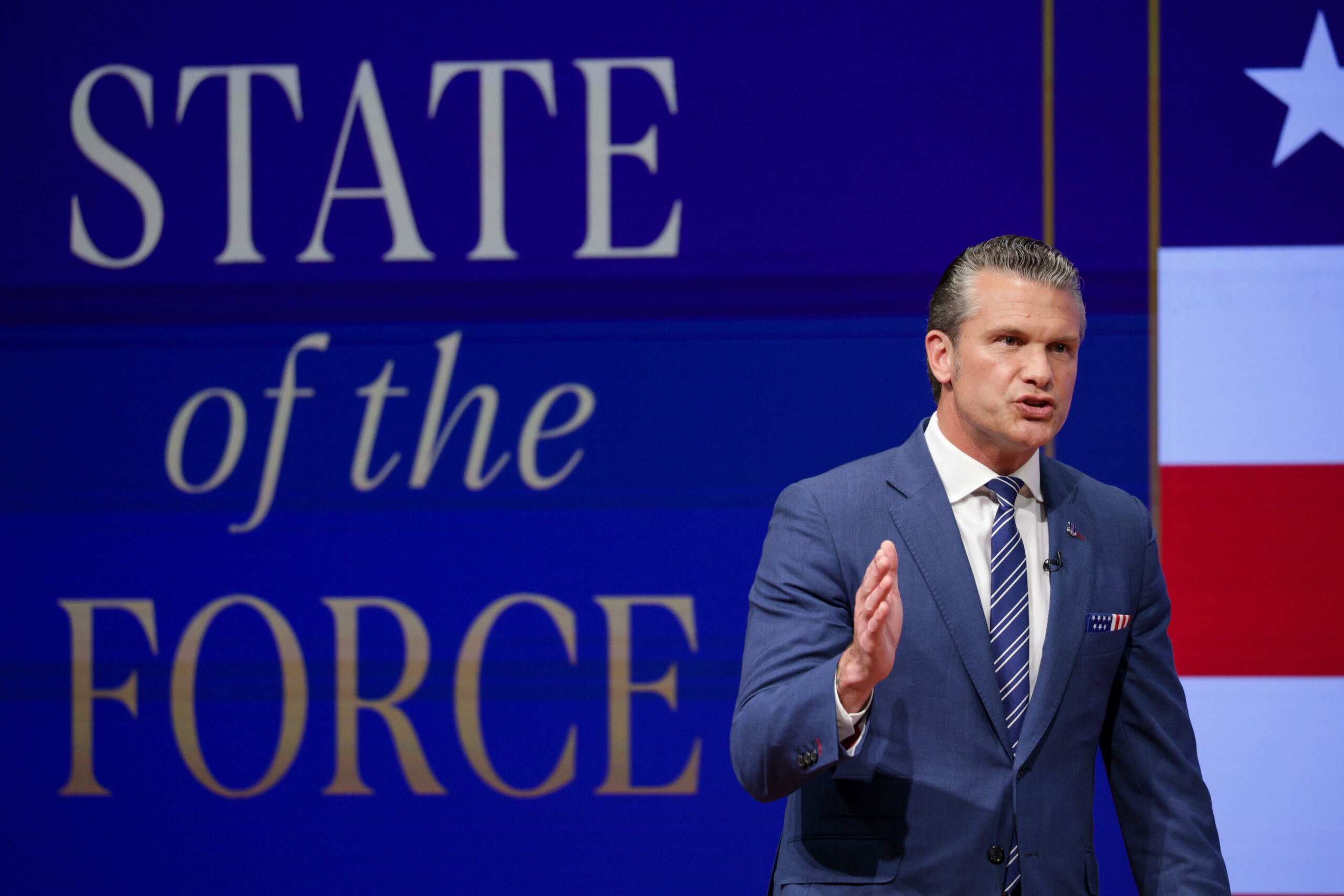
Hegseth Plans 20% Cut to Generals and Admirals, New Drone Command/ TezzBuzz/ WASHINGTON/ J. Mansour/ Defense Secretary Pete Hegseth announced plans for a new drone-focused command and ordered a 20% reduction in general and admiral positions by Jan. 1, 2027. His “State of the Force” address also outlined a future warfare study led by Elon Musk, Newt Gingrich and Palmer Luckey, alongside plans for a new military base. The proposals come amid the prolonged Iran war, concerns about depleted weapons stockpiles and congressional scrutiny of military leadership cuts.

Quick Look
- Drone command proposed: A new four-star command would oversee autonomous and robotic military capabilities.
- Leadership cuts expanded: Hegseth doubled an earlier 10% reduction target to 20% across roughly 800 general and flag officer positions.
- Deadline set: The reductions are to be completed by Jan. 1, 2027.
- Future warfare study: Elon Musk, Newt Gingrich and Anduril co-founder Palmer Luckey will lead the effort.
- New base planned: All 50 states are invited to compete to host a proposed installation accommodating 15,000 to 25,000 service members.
- Energy initiative: Hegseth announced plans to make every military base self-powered.
- Religious affairs office: The Pentagon will create an Office of Religious Affairs.
- Congressional concerns: Lawmakers questioned the leadership reductions and the reversal of an Army drone warfare initiative.
- Weapons supply pressure: Experts say replacing key systems heavily used in the Iran war will take at least three years.


Deep Look
Hegseth Outlines Broad Military Changes at Quantico
QUANTICO, Va. — Defense Secretary Pete Hegseth announced a series of military changes Wednesday, including plans to establish a drone-focused command and reduce the number of generals and admirals by 20%.
Speaking to junior officers and enlisted leaders at Marine Corps Base Quantico, Hegseth also outlined a future warfare study, a new Office of Religious Affairs and plans for a military base.
It was the second consecutive year he delivered a “State of the Force” address. Such a speech is not a customary Pentagon event; previous defense secretaries generally addressed military leaders in smaller or private settings.
Proposed Command Would Focus on Drones and Autonomous Systems
Hegseth said he intends to create a new four-star command overseeing the introduction of autonomous and robotic capabilities.
He described the initiative as “the fastest peacetime shift in modern military history,” while acknowledging that “the pace of war is changing faster than the process to support it.”
The proposal comes as inexpensive drones play an increasingly important role in combat. Iranian drones have killed American troops during the ongoing war, while Ukraine has pioneered new uses of uncrewed systems against Russian forces.
“Ukraine’s lesson is not that one type of drone wins wars, but rather the need for a purpose-built system that maximizes the ability to adapt,” Hegseth said.
American forces have also gained firsthand experience studying Ukraine’s approach.
Army Drone Unit Reversal Draws Congressional Questions
The proposed command follows a recent decision to end the specialized drone warfare work of a U.S. Army unit based in Europe.
The unit was ordered to return to operating as a traditional infantry battalion.
A bipartisan group of lawmakers subsequently requested an explanation from the Army, citing the growing importance of uncrewed systems and rapidly changing battlefield tactics.
The decision has raised questions about how existing drone initiatives fit into the Pentagon’s broader modernization plans.
Iran War Continues Despite Claims of Military Success
Hegseth delivered his address seven months into the war with Iran, with no clear end in sight.
American forces remain in a stalemate with Iran over control of the Strait of Hormuza critical corridor for global energy shipments.
The conflict has required the United States to use hundreds of costly missile interceptors against Iranian attacks. Despite those defenses, missile and drone strikes have killed and wounded U.S. personnel.
Hegseth repeated claims that American forces had destroyed Iran’s navy, air force and defense systems, along with many leaders and parts of its industrial base.
However, Iran has continued intermittent attacks on U.S. and allied bases and retained the ability to threaten commercial and military vessels in the strait.
Weapons Stockpiles Face a Lengthy Recovery
Hegseth highlighted the Trump administration’s investment in defense production and efforts to press contractors to deliver weapons faster.
Those measures come amid concern about the strain the Iran war has placed on American arsenals.
Experts say military contractors will need at least three years to replenish stocks of key weapons systems used extensively in the conflict.
The gap between immediate operational needs and production timelines remains a challenge as the Pentagon pursues new capabilities.
General and Admiral Reductions Double to 20%
Hegseth directed the military services to expand leadership cuts from the 10% reduction ordered last spring to 20%.
The directive covers roughly 800 general and flag officer positions, with the reductions to be completed by Jan. 1, 2027.
“I call it accountability and long overdue,” he said.
Some lawmakers have described the cuts as a purge and warned that rebuilding experienced leadership could take years.
Senators Question the Impact of Leadership Cuts
Sen. Mark Kelly, an Arizona Democrat and former Navy combat pilotcriticized the expanded reductions.
“He’s got some kind of like deep-seated grievance about leadership in the military,” Kelly said. “He’s purging a generation of great leaders of the military, and it’s going to take a generation to recover from it.”
Republican Sen. Mike Rounds of South Dakota, a member of the Senate Armed Services Committee, said he wanted to examine the justification before reaching a conclusion.
“If it’s simply a matter of eliminating a very heavy top, there may be some validity to it, but I want to see it first,” Rounds said.
Musk, Gingrich and Luckey to Lead Future Warfare Study
Hegseth announced an effort led by SpaceX chief executive Elon Musk, former Republican House Speaker Newt Gingrich and Anduril Industries co-founder Palmer Luckey to study future warfare.
He said the work “will be focused on discovering, developing and fielding the weapons and systems that our children and our grandchildren will need in their lifetimes.”
The ambition, he said, is to dominate “any future battlefield, from under the Earth to beyond the moon.”
The announcement follows the United States’ confirmation this month that it had deployed weapons in space, after earlier warnings about potential Russian weaponization of space and longstanding treaty commitments concerning peaceful use.
States Invited to Compete for Proposed Military Base
Hegseth also announced plans to build a new military base, describing it as the first such development in 40 years.
He invited all 50 states to compete to host the installation, which would accommodate between 15,000 and 25,000 service members.
Separately, he outlined a plan to make every military base self-powered and announced the creation of an Office of Religious Affairs.
Cultural Changes Remain Central to Hegseth’s Agenda
Alongside the operational proposals, Hegseth emphasized his campaign against what he calls “woke” military culture.
His initiatives have included rolling back diversity programs, reviewing ground combat units with female personnel and introducing screening for testosterone deficiency among male service members.
He also criticized media coverage of the military.
The address came during a period of extensive U.S. military activity beyond Iranincluding the capture of Venezuelan leader Nicolás Maduro and strikes on alleged drug-trafficking boats in Latin America that have killed more than 200 people.
Together, those operations and the proposed structural changes have intensified debate over the Pentagon’s priorities, readiness and leadership.
More on US News