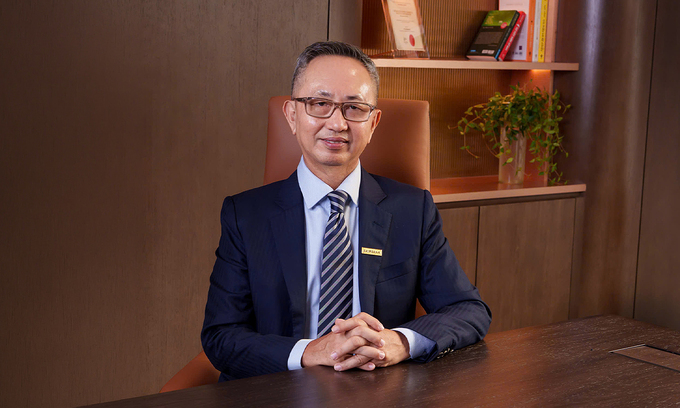
Having worked across trading, treasury, risk management, human resources and corporate governance, Ho has witnessed banking through periods of expansion, financial crises and industry transformation.
Now a member of Eximbank’s Board of Directors, he is drawing on that experience as the Vietnamese lender reviews its strategy and plans its next phase of development.
For Ho, banking is not about building the largest balance sheet or generating profits as quickly as possible. It is about earning customers’ trust and maintaining the discipline to protect it.
“Do what is right” was a phrase he returned to repeatedly during a conversation in Hanoi, reflecting lessons from some of the most challenging periods of his career.

Ho began his career at Citibank in 1986, trading foreign exchange, money market instruments, fixed income products and derivatives. He later held positions at Volvo Group Treasury Asia, Standard Chartered and KBC Bank before joining OCBC, where he led global asset and liability management before becoming Group Chief Human Resources Officer and serving on senior management committees.
Two financial crises shaped his approach to banking.
During the 1997 Asian financial crisis, Ho was corporate treasurer for Volvo in Asia Pacific. He saw companies borrow in U.S. dollars to benefit from lower interest rates without adequately accounting for foreign exchange risks. When regional currencies came under pressure, he spent weeks traveling across Asia managing the financial consequences.
The 2008 global financial crisis reinforced another lesson: banks could report strong profits while excessive leverage, liquidity risks and weaknesses in decision-making accumulated beneath the surface.
These experiences did not lead Ho to conclude that banks should avoid risk. Instead, he believes they must understand, assess, price and manage risks while recognizing their responsibility to depositors and other stakeholders.
“You are always tempted by money-making opportunities,” he said.
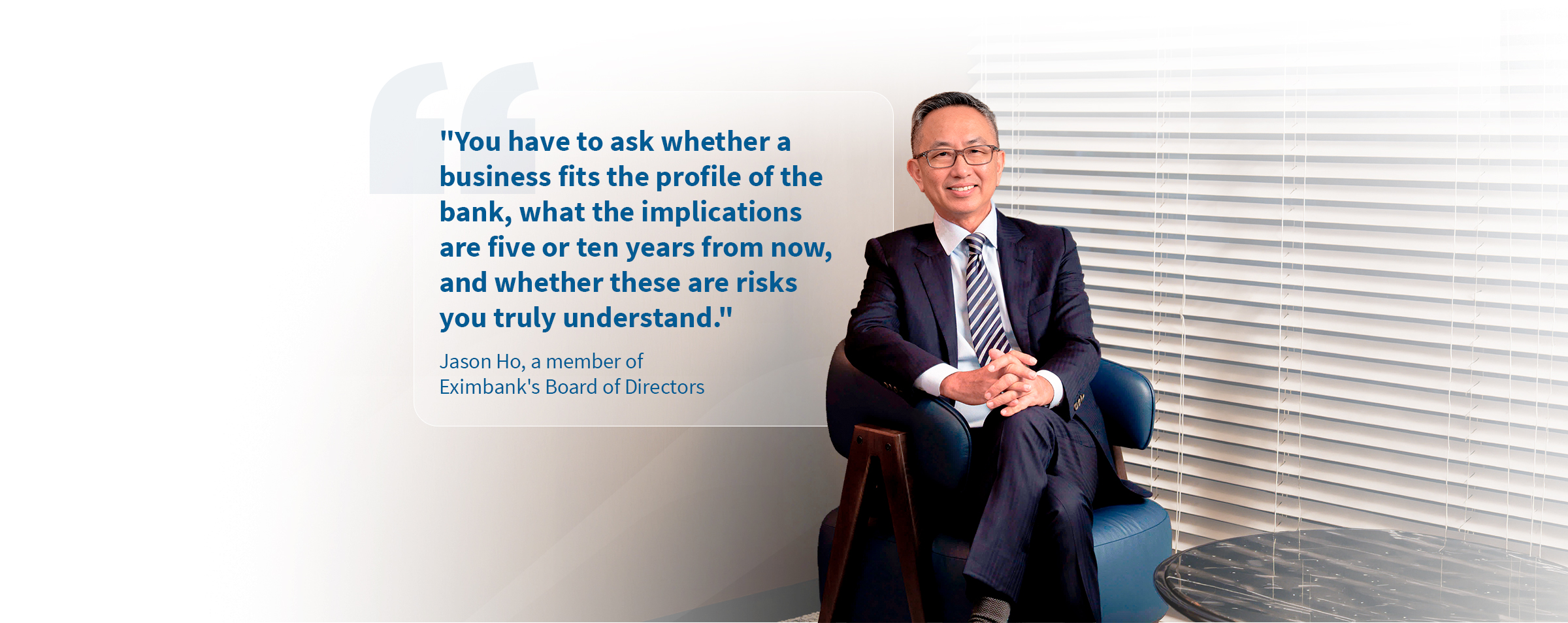

Ho identifies fiduciary responsibility, reputation, corporate governance and sustainable profitability as the foundations of a sound bank.
He considers profitability an outcome of appropriate decisions, effective risk management and customer confidence rather than an objective to pursue at any cost.
“A good bank has an enormous responsibility towards its depositors, clients, employees, and shareholders,” he said. “Profitability is an outcome of the quality of what you have done.”

His understanding of that responsibility also comes from growing up in a low-income family in Singapore. Ho remembers his mother regularly setting aside small amounts of money in the Post Office Savings Bank, an experience that helped him appreciate the importance of savings to ordinary households.
When asked what depositors should expect from a bank beyond competitive interest rates, he described it as “peace of mind.”
Reputation, he believes, is central to providing that assurance.
“It takes many years to build and can be destroyed in the blink of an eye,” he said.
For Ho, corporate governance provides the framework for protecting that trust. Clear responsibilities, effective oversight and established risk limits help institutions challenge assumptions and identify problems before they develop into crises.
He also emphasizes the distinction between the board’s responsibilities and those of management. Management implements strategy and oversees daily operations, while the board sets strategic direction, approves major plans, oversees risk appetite and provides independent judgment.
“The Board should be close to the management team, but not too close,” Ho said. “Management executes and operates; the board provides oversight. We need a trusted partnership where management brings up not only the good news but also the issues that are going off track.”
His experience in balance sheet and liquidity management, organizational transformation, and committees covering risk, ethics, digital development and sustainability informs his contribution to Eximbank’s board.
He sees his role as providing strategic input and independent oversight rather than participating in daily management.
“In banking, the focus should not solely be on profit maximization. It is about building a sustainable business that can grow in a meaningful way,” he said.
“If you do the right things – with the right people, culture, risk management, and technology, supported by strong governance – sustainable profitability will follow.”

Ho joined Eximbank’s Board of Directors in 2026 as the bank entered a period of strategic review and transformation.
He believes the board should contribute experience, independent judgment and oversight while leaving execution to management.
For Ho, Eximbank’s success should not be measured primarily by its size or ranking among Vietnamese banks. Instead, he wants the lender to strengthen customer trust, improve its funding profile, maintain effective risk controls and generate sustainable returns.
He favors a balanced set of financial and non-financial indicators, including sustainable growth in return on equity (ROE), funding stability, customer satisfaction, employee engagement, fewer fraud incidents and controlled non-performing loans (NPLs).
He also considers employees’ willingness to recommend Eximbank as a workplace an important indicator of organizational culture.
Technology is another area he approaches from a long-term perspective. Ho sees artificial intelligence and digital investment as tools to improve customer understanding, decision-making and service delivery rather than objectives in themselves.
He believes banks must also retain human judgment where technology cannot fully replace personal interaction or professional assessment.
As customer behavior changes and digital technologies reshape expectations, adaptability will become increasingly important.
“The core pillars won’t change,” he said. “But we must increase our ability to adapt and our learning agility.”

For customers, he wants these improvements to deliver practical benefits, particularly greater confidence in the safety of their deposits and easier access to banking services.
For investors, he believes governance, transparency and institutional discipline will remain important indicators of a bank’s long-term prospects.
Asked what depositors should expect beyond interest rates, Ho said, “Sleep at night knowing your deposits are safe. Trust that the bank will do the right thing. Simple, user-friendly-to-use services. And fast, open support when problems arise.”
Eximbank is examining its customer journeys, identifying areas where AI could improve services and determining where human involvement remains necessary.
Ho believes the bank’s strategy, risk management, organizational culture, technology and governance must develop together rather than as separate initiatives.
At the board level, he sees establishing a clear and comprehensive strategy for Eximbank’s next development phase as an immediate priority. The Board will provide strategic direction and oversight, while management will remain responsible for implementation.
Ho acknowledges that transformation takes time and that not every initiative will produce the intended result.
“We are moving fast,” he said. “If we get 70% of it right over five years, Eximbank will be a very different bank.”
His ambition, however, is not for Eximbank to become Vietnam’s largest lender.
“Eximbank doesn’t need to be the biggest,” he said. “We need to do things correctly.”
Beyond the bank’s business strategy, Ho also hopes to contribute to developing a Young Banker Programme to equip younger banking professionals with technical skills and professional values.
He sees investment in the next generation of financial professionals as important not only for Eximbank’s long-term development but also for Vietnam’s ambition to become an international financial center.

Written by Thy An
Designed by Thai Hung
Photos courtesy of Eximbank