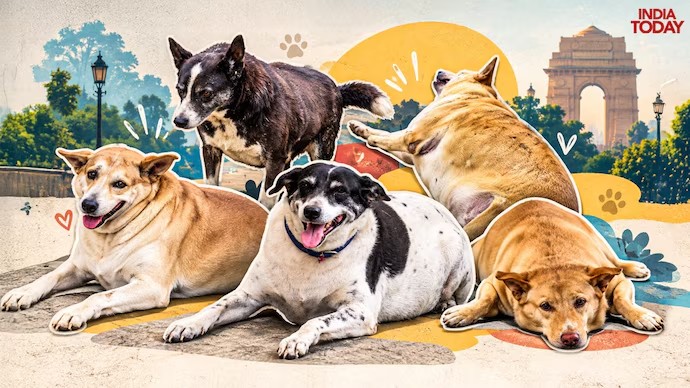
New Delhi: Delhi’s dog lovers have found an unusual reason to campaign, vote and rally behind their neighbourhood favourites, with the viral ‘Fat Dogs of Delhi’ contest turning overweight community dogs into unlikely internet celebrities.
What began as a social media page featuring photographs of chubby dogs spotted around the city has grown into a popular online competition, complete with campaign posters, fan clubs, neighbourhood rivalries and even physical polling booths.
Googoo from Saket and the late Gola, also known as Rajpal Singh, from SDA have emerged as finalists after days of voting and campaigning. The contest has attracted widespread attention, with the Instagram page reportedly gaining nearly a lakh followers.
But the popularity of the competition has also sparked a debate among dog lovers and animal welfare advocates. While some see it as harmless fun that has brought attention to Delhi’s community dogs, others worry that celebrating animals for being overweight could normalise canine obesity and potentially encourage irresponsible feeding.
How the Fat Dogs of Delhi contest began
The contest began with a Delhi University student posting photographs of overweight dogs she encountered around the capital.
The page soon attracted submissions from other people, who sent photographs of dogs from different neighbourhoods along with their names and localities.
About two weeks before the finale, the page was turned into a formal competition.
The idea quickly spread beyond the original Instagram audience. Dogs were given distinctive names, supporters began campaigning for their favourites and neighbourhood loyalties emerged around the contestants.
Among the names that became familiar to followers were Kutta Singh, Mahakutteshwar, Chonki and Gajinder.
The contest eventually developed into something resembling a playful election, with supporters making appeals on social media and sharing photographs of their preferred candidates.
The finale has focused on Googoo of Saket and Gola, also known as Rajpal Singh, from SDA. Gola died during the contest, adding an unexpected and emotional dimension to the competition.
Delhi gets its own dog election
The unusual contest went beyond Instagram polls, with physical polling booths being organised at four locations.
The voting locations listed for September 30 were FES Cafe and Desserts at Galleria Market in Gurgaon, AKU’s at Basant Lok Market in Vasant Vihar, FES Cafe and Desserts in Kamla Nagar, and AKU’s at Adarsh Bhawan in Punjabi Bagh, New Delhi.
The polling exercise added another layer to what had initially been a social media joke.
Supporters could participate online or visit one of the designated venues, turning a competition about overweight dogs into a city-wide social media event.
The popularity of the contest has also resulted in businesses and brands joining the conversation.
Photos and videos of dogs that did not make the official competition have also circulated online, with owners and admirers joking that their own pets could have won the title.
The appeal appears to come partly from the personalities attached to the dogs. Rather than being anonymous street animals, the contestants have acquired names, neighbourhood identities and dedicated supporters.
View this post on Instagram
Why some dog lovers are uncomfortable
Behind the humour, however, animal lovers have raised questions about what exactly is being celebrated.
Ashna Mehta, who owns a seven-year-old Shih Tzu, said she was uncomfortable with the way canine obesity could be portrayed as something desirable.
Mehta said her own dog developed arthritis after being mildly overweight and that the contest made her concerned about normalising excess weight in animals.
For her, the issue is not whether people can enjoy the competition, but whether repeatedly celebrating dogs because of their size could obscure the health consequences associated with obesity.
Koustav Das, a Noida-based media professional and dog owner, also described the contest as insensitive.
Das argued that overweight dogs may have underlying health problems and cannot consent to being presented as entertainment.
The concern is particularly relevant because dogs cannot make decisions about their diet or how they are portrayed online.
Veterinarians warn about canine obesity
Veterinarians say excess weight in dogs is not simply an aesthetic issue.
Dr Abhishek Choudhary, a veterinarian at Vetic Pet Clinic, said obesity can place additional stress on a dog’s joints and increase the risk of conditions including diabetes, heart problems and breathing difficulties.
Excess weight can also affect mobility and quality of life.
According to Choudhary, a dog that becomes less mobile because of its weight can enter a cycle in which reduced exercise leads to fewer calories being burned, resulting in further weight gain.
The health impact can therefore extend beyond appearance.
The concern becomes especially relevant in a contest where the physical size of the animals is the central attraction.
Googoo is already on a weight-loss plan
There is an irony at the centre of the competition.
Googoo, one of the two finalists, reportedly weighs around 46 kg and is being cared for at an animal-care centre.
Rather than being deliberately maintained at that weight for the contest, Googoo is reportedly on a regulated diet and receiving regular medical check-ups aimed at helping him lose weight.
His case illustrates the difference between celebrating an individual animal and treating obesity as a desirable condition.
The dog’s participation has brought attention to him, but his carers are simultaneously working to address his weight.
Why dogs become overweight
Divya Arora, a dog owner who also cares for stray dogs in her neighbourhood, said weight gain in dogs can have several causes.
Overfeeding can contribute to obesity, but hormonal and medical conditions can also affect an animal’s weight.
Neutering may also be associated with changes in metabolism and energy requirements, meaning that a dog’s diet may need to be adjusted after the procedure.
Arora questioned what the competition ultimately seeks to achieve.
She said the contest could be viewed as harmless entertainment, but raised concerns about the possibility of people deliberately overfeeding pets or community dogs to make them eligible for similar competitions.
That concern has become one of the central arguments against the contest: whether the attention could unintentionally encourage behaviour that harms the animals being celebrated.
Animal welfare advocates see a positive side
Not everyone involved in animal welfare sees the contest negatively.
Some people who care for Delhi’s community dogs argue that the attention has helped make street animals more visible.
Akriti Rana, who works with street animals, said many dogs described as “fat” may have health conditions or weight gain linked to hormonal changes or sterilisation rather than simply being overfed.
She believes the popularity of the contest could have a useful side effect by encouraging people to recognise community dogs as part of their neighbourhoods.
According to Rana, even people who initially engage with the animals because of a viral trend could become more aware of their needs and welfare.
That increased visibility, she argues, can potentially translate into greater interest in animal care.
For some, visibility matters more than the joke
Mahima of Friends of Feedoh also offered a different perspective.
She pointed out that many street dogs live with inadequate nutrition and other health problems, making the visibility of well-fed community dogs a different issue from the wider problem of stray-animal welfare.
Mahima argued that attention should also be paid to the way street dogs are treated, including cases involving abuse, starvation and hostility towards people who feed them.
From that perspective, the contest can be seen as an opportunity to show that community dogs are not merely animals living on the margins of cities.
They are part of neighbourhoods and can develop relationships with residents who feed and care for them.
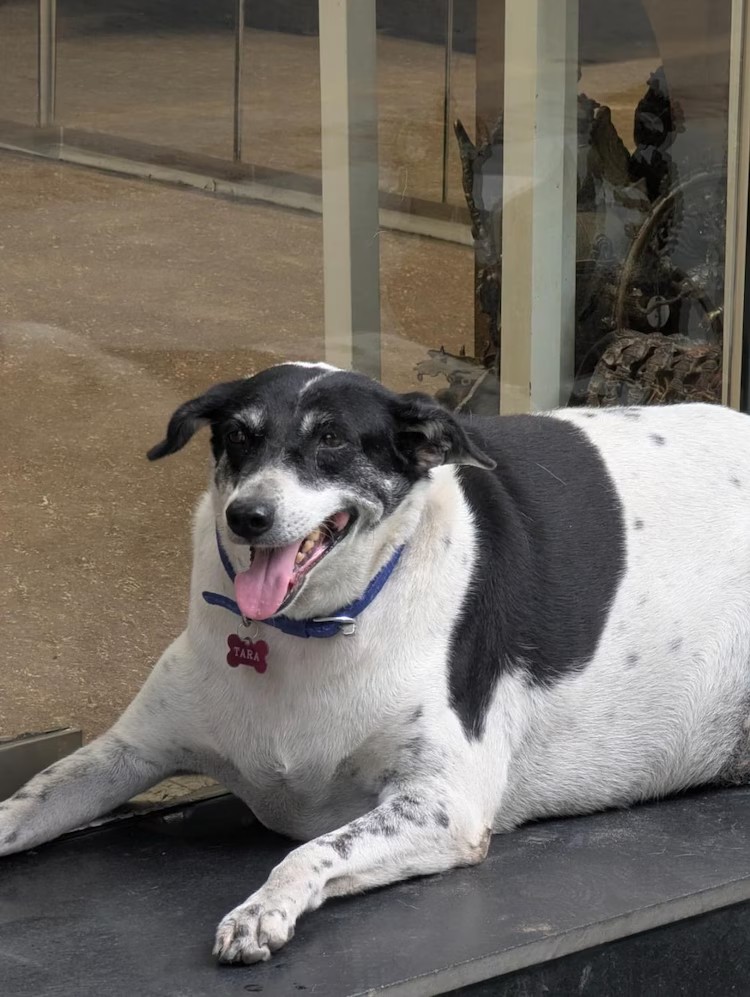
Another dog lover involved in the discussion similarly argued that the competition has brought attention to the place of stray and community dogs in urban society.
Instagram page expands beyond the contest
The Fat Dogs of Delhi phenomenon has also moved beyond the competition itself.
The Instagram page has reportedly been using its growing reach to raise funds for animals and share adoption appeals.
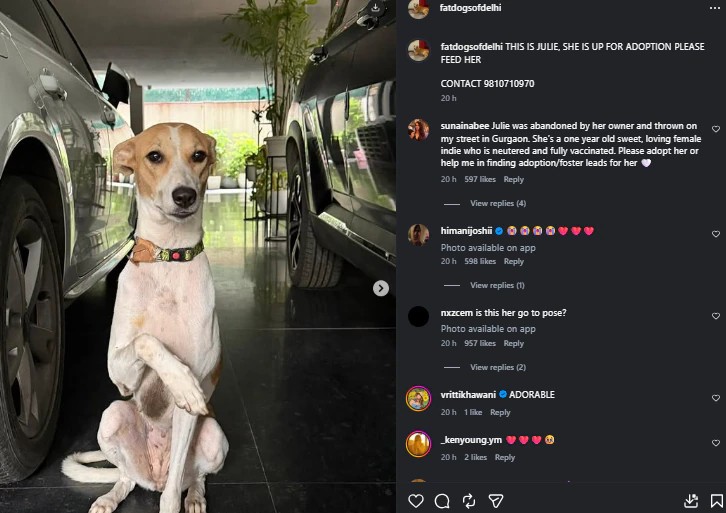
That has given the platform a wider animal-welfare purpose.
Instead of functioning solely as a contest based on the appearance of overweight dogs, the page has increasingly become a place where followers can encounter appeals involving animals that need homes, treatment or other forms of assistance.
For supporters, this is an important distinction.
They argue that the attention generated by the contest can be redirected towards animal welfare, even if the original idea was primarily intended as entertainment.
A viral contest with a complicated debate
The Fat Dogs of Delhi contest has therefore created two very different conversations.
On one side are people enjoying an unusually light-hearted competition centred on neighbourhood dogs. The campaign posters, social media polls and playful names have given Delhi’s community animals an unexpected moment in the spotlight.
On the other are pet owners and animal welfare advocates concerned that obesity should not be treated as a desirable physical characteristic, particularly when excess weight can contribute to serious health problems.
Both perspectives highlight an important distinction: loving and celebrating an individual dog does not necessarily mean celebrating the health condition that may have contributed to its weight.
For the animals themselves, appropriate nutrition, veterinary care and healthy weight management remain more important than winning an internet contest.
At the same time, the popularity of Fat Dogs of Delhi demonstrates how social media can turn ordinary community animals into widely recognised personalities almost overnight.
As Delhi’s unusual dog election reaches its finale, the contest has succeeded in getting people talking not only about Googoo, Gola and the other canine candidates, but also about how cities treat their community animals.
Whether viewed as a gloriously silly internet phenomenon, an unintended animal-welfare campaign or a combination of both, the Fat Dogs of Delhi have certainly managed to make a large audience pay attention to some of the capital’s most recognisable four-legged residents.