
Lucknow, Read: Bhitiharwa of West Champaran still tells the story of that period when Mahatma Gandhi did not limit himself to just listening to the complaints of the farmers in Champaran and understanding the question of indigo cultivation. For him the struggle in Champaran was also a question of changing village life from within.
After reaching Champaran in 1917, Gandhi saw closely the problems of the rural society. The pressures of indigo cultivation on farmers and the British indigo plantation system were of immediate concern, but in Gandhi's view this was only part of the whole problem. Lack of education in villages, poor sanitation conditions and lack of social awareness were also increasing the problems of the people. That is why Gandhi started constructive work along with Satyagraha in Champaran. He considered education as the most important medium of change. Bhitiharwa became an important center of this experiment.
Thinking beyond the movementGandhi Jayanti 2026: The story of Gandhi's table, which even today reminds of Champaran Satyagraha
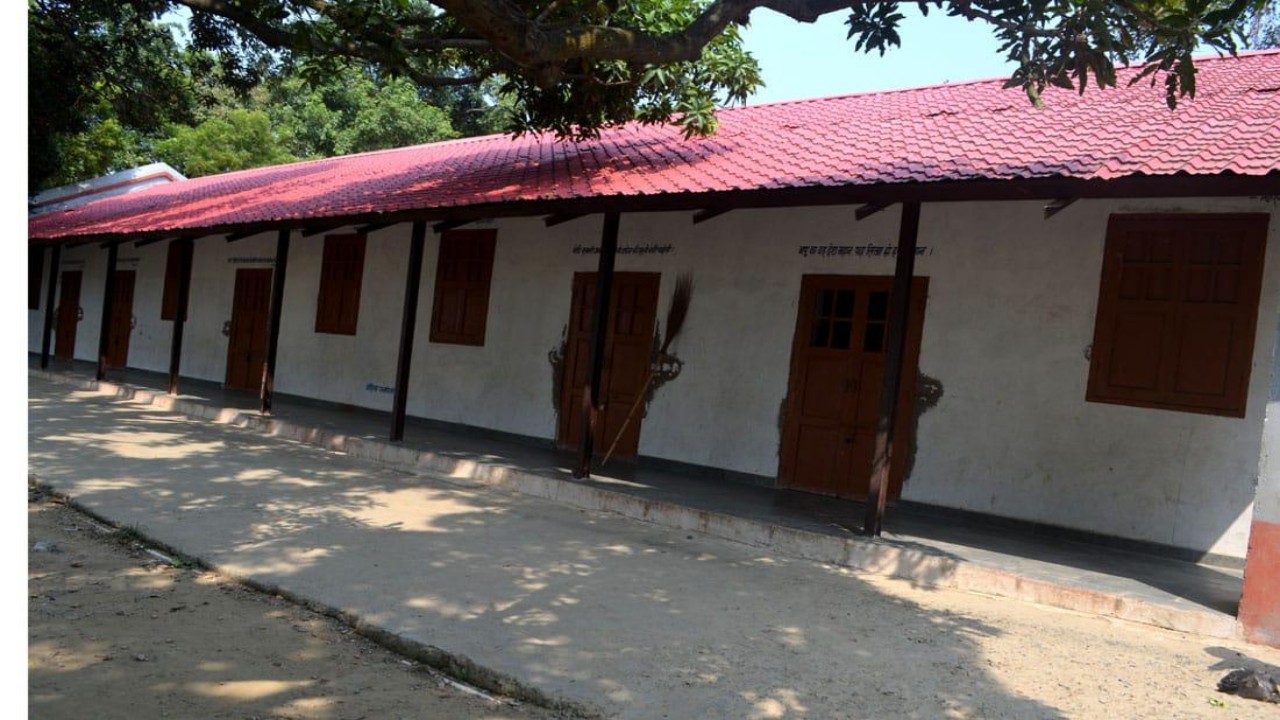
Gandhi's Champaran visit is generally seen in connection with the struggle and Satyagraha of the indigo farmers. But the other side of his strategy was education and social reform in the villages. Gandhi believed that it is not enough to just tell a society about the rights. He will also have to be given the means to improve his life. Therefore an attempt was made to open a school in Champaran. According to the Gandhi Heritage Portal, the school at Bhitiharwa was started on 20 November 1917. Earlier, the school had been started in Barharwa Lakhansen on 14th November. Later a school was also opened in Madhuban. Bhitiharwa's school was part of this broader thinking. Here education did not just mean teaching children to read and write. For Gandhi, education was also related to a person's character, behaviour, cleanliness and responsibility towards society.
Teachers were part of the experiment for Gandhi
The school building alone was not sufficient for the kind of education Gandhi wanted. They needed people who could live in villages and work among the people. For this purpose, his colleagues took up the work of education and social awareness in the villages of Champaran. Women's participation also became an important part of this effort. Many colleagues, including Avantika Bai Gokhale, Anandibai and Kasturba Gandhi, contributed to this creative program. In Gandhi's view, the role of a teacher was not merely that of a person who teaches lessons. The teachers themselves became an example of behavior in front of the children and the people of the village. This was an important part of his ideas regarding education.
Gandhi's school was also outside the school walls
The use of education in Bhitiharwa was not limited to the classroom only. The sanitary condition in the villages became a matter of grave concern for Gandhi. Problems such as filth around houses, poor condition of roads and unhygienic environment around wells were common. Gandhi and his colleagues tried to make people aware of cleanliness. He believed that cleanliness is not only a personal habit but also a community responsibility. This was the reason why his program in Champaran seems to be running on many levels – understanding the problems of farmers, spreading education, laying emphasis on cleanliness and creating confidence among the people.
When the school roof was burnt
An incident in the story of Bhitiharva's experiment is particularly helpful in understanding Gandhi's determination. The school started with a simple thatched structure. This effort of Gandhi's activities and education also gave rise to opposition. One night the roof of the school was burnt. The choice before us was to stop the work due to opposition or consider the difficulty as a challenge and move ahead. Gandhi and his associates chose the second path. After the burning of the thatch, efforts were made to give the school a more permanent form. The building was constructed using bricks. In this way, the incident which was intended to stop this experiment in education, later became the reason for it taking a permanent form.
Another face of Gandhi in Champaran
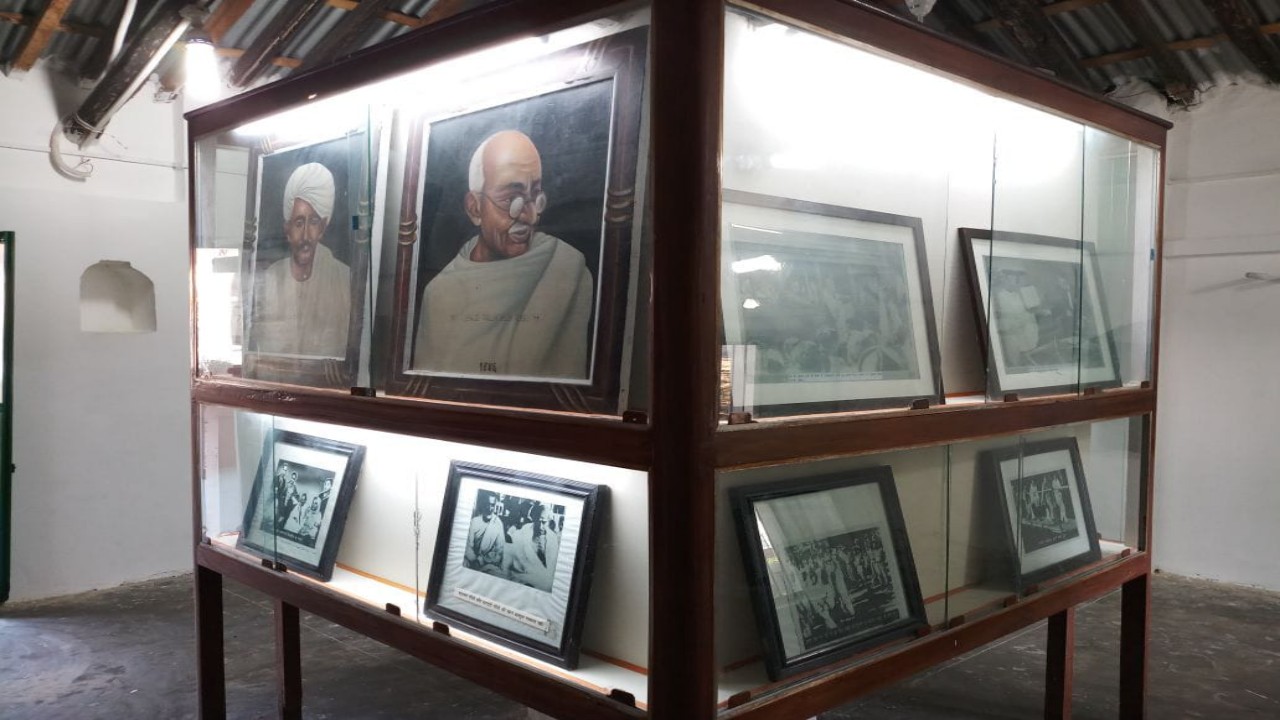
Champaran is important in Gandhi's public life because here the power of Satyagraha was used extensively. The Champaran chronology of the Gandhi Heritage Portal contains a detailed record of his work and activities from April 1917 to January 1918. But Bhitiharwa gives an opportunity to see this history from a different angle. Nearly a century later, Bhitiharwa is an important place associated with the memory of Gandhi's Champaran experiment. There is also mention of Bhitiharwa's educational institutions and programs related to Gandhi in government documents. While remembering Gandhi's Champaran journey, the picture of indigo fields, farmers and Satyagraha often comes to the fore. Bhitiharva adds another color to that picture. Effort to make the village educated and aware.
Also read: Gandhi Jayanti 2026: The story of Gandhi's table, which still reminds of Champaran Satyagraha