
Madhya Pradesh heritage: The land of Madhya Pradesh is like an open page for history lovers. The journey here takes you to the world of dynasties, wars, art and love stories. The heritage spread from Bundelkhand to Malwa and Nimar is still alive with forts, palaces, temples and age-old traditions.
Gwalior: Bravery, Music and Architecture
As soon as the name of Gwalior comes, the memory of the huge fort and music emperor Tansen arises. Gwalior Fort situated on Gopachal Hill is famous for its strong ramparts and historical importance. It is also called ‘Gibraltar of India’. The colorful tiles, carvings and beautiful architecture of the Manmandir palace in the fort attract. Saas-Bahu Temple and Teli Ka Temple can also be seen in the complex. The city’s Jaivilas Mahal Museum offers a glimpse of the royal splendor and lifestyle of the Scindia dynasty.
Orchha: Bundela Heritage on the banks of Betwa
Orchha Bundela, situated on the banks of Betwa river, is a unique confluence of architecture and natural beauty. Raj Mahal, Jahangir Mahal and Rai Praveen Mahal are the major tourist places in the Orchha Fort complex. The huge courtyards, arches and chhatris of Jahangir Mahal reflect the fusion of architectural styles. Ramraja Temple is the unique identity of Orchha. Here Lord Rama is worshiped as a king and as per tradition he is saluted by armed guards. The chhatris built on the Betwa coast offer a mesmerizing view at sunset.
Mandu: Love story set in palaces
Located in the plateau region of Dhar district, Mandu is known for its fortified city, greenery and Afghan influenced architecture. The love story of Baz Bahadur and Rani Roopmati has given a special identity to this historical city. Jahaz Mahal, built between two reservoirs, looks like a ship floating in water. The sloping walls of Hindola Mahal are its architectural feature. Roopmati Mandap offers a wide view of the Narmada Valley. The monuments of Mandu tell the story of the cultural and historical splendor of this place.
Chanderi: the fort and the art of the weavers
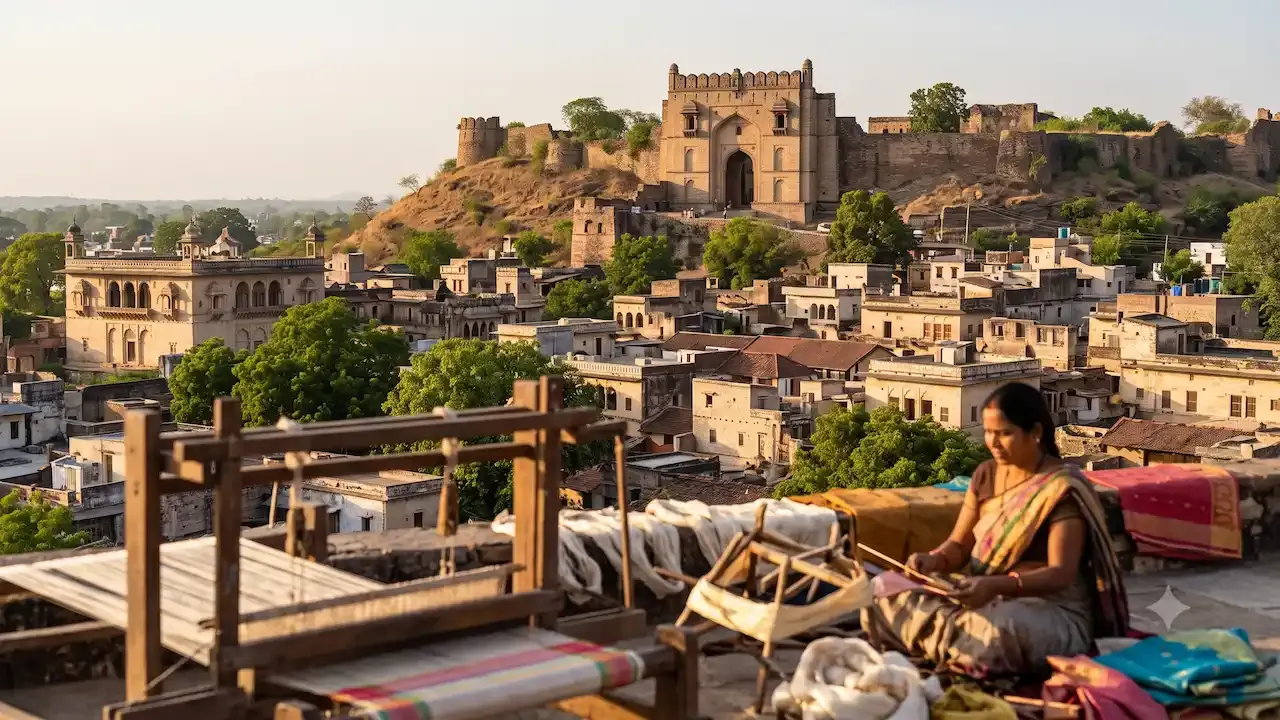
Chanderi in Ashoknagar district is known for its hill fort, historical buildings and the famous Chanderi sarees. Chanderi Fort reminds of the old strategic importance of the city. Badal Mahal Gate, Koshak Mahal and Jauhar Memorial are the main tourist places here. The fine saree manufacturing tradition of local weavers is still a part of the city’s identity.
Burhanpur: Mughal period and water management
Burhanpur, situated on the banks of Tapti river, was an important administrative and military center during the Mughal period. Shahi Qila, Ahukhana and Jama Masjid can be seen here. Aahukhana is linked to the memory of Mumtaz Mahal. The underground water system of Kundi Bhandara is a remarkable example of water engineering of old times.
travel plan
Gwalior, Orchha and Chanderi can be combined in one trip, while it would be convenient to make separate routes for Mandu and Burhanpur. The weather is generally favorable for visiting from October to March. The forts may involve walking, so carry comfortable shoes, water and plenty of time. The stories related to these monuments and the architectural intricacies can be better understood with a local guide.
FAQ
Which is the best place to see tribal art in Bhopal?
Madhya Pradesh Tribal Museum is the best place, where the art, houses and beliefs of Gond, Bhil and Baiga tribes are extensively displayed.
Is it possible to visit the Museum of Man (IGRMS) completely on foot?
IGRMS is spread over approximately 200 acres. Walking all the way can be a bit tiring, so wear comfortable shoes. Vehicle and van facility is also available for some parts inside the campus.
On which days are the museums of Bhopal closed?
Most of the major museums of Bhopal such as the Tribal Museum, Manav Museum and State Museum remain closed to visitors on Mondays and national holidays.
What is the best time to visit Bharat Bhawan?
It is best to visit Bharat Bhawan in the evening. Being situated on the banks of the lake, the atmosphere here is pleasant and plays or art exhibitions are often organized in the evening.
Do these museums charge entry fees?
Yes, all these museums charge very nominal entry fees (about ₹10 to ₹50). Concessional ticket facilities are available for students and children.
Read More: What is passenger parenting, know its effect on child’s mental health