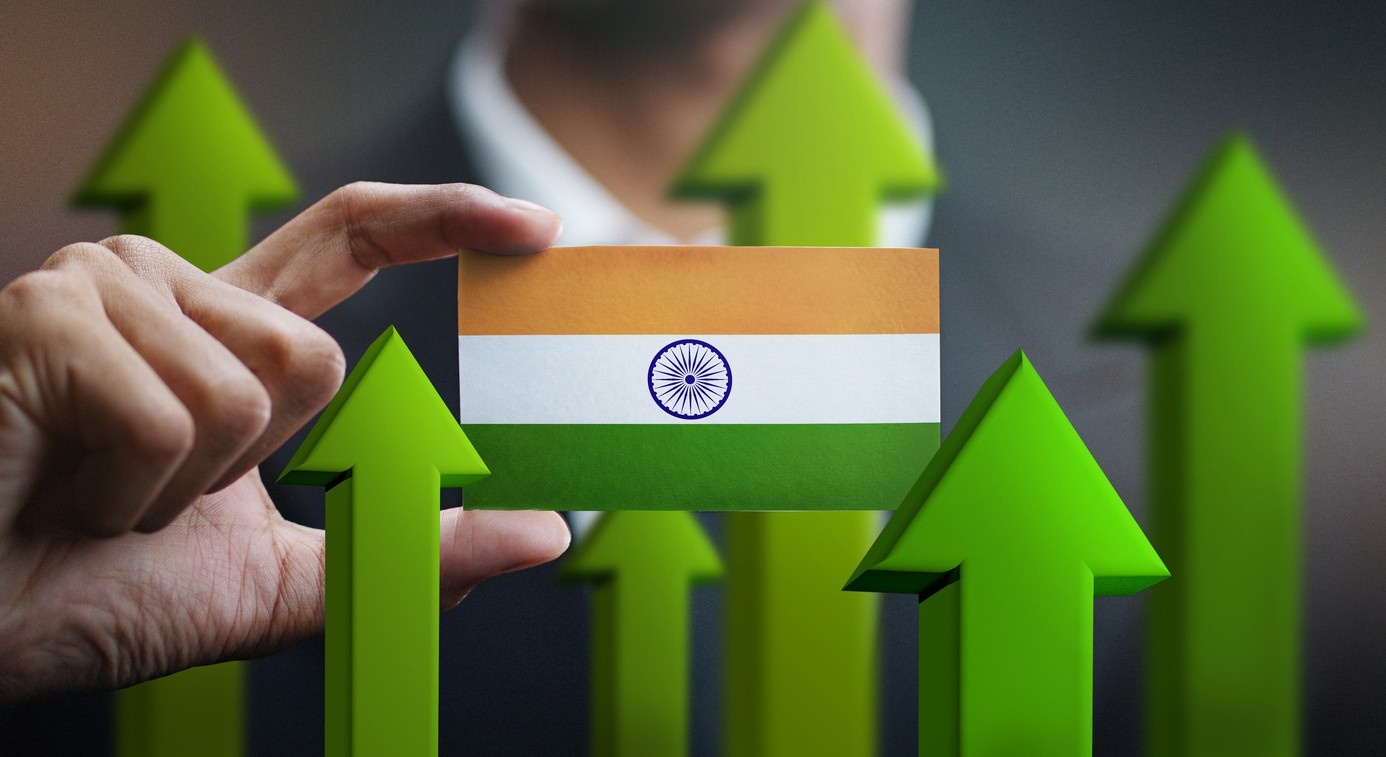
While forecasting that the Indian economy will gain from strong domestic demand and exports, the World Bank has also sounded an alarm over risks from global oil prices, El Niño and financial-market corrections that could trigger volatility in capital flows.
The World Bank’s latest India Development Update said the Indian economy is expected to grow 7.1% in FY27, keeping it among the fastest-growing major economies in the world, even as global economic risks remain high.
For ordinary Indians, one of the most important messages in the report is about what comes after strong headline growth: whether India can use new technology, especially AI, to raise productivity, create opportunities and improve everyday public services.
AI investment is rising rapidly
The World Bank said India has a strong starting position because of its large technical workforce, globally connected IT industry and digital public infrastructure.
Private investment in AI more than tripled, rising from $1.2 billion in 2024 to $4.1 billion in 2025. Employment in Global Capability Centres also increased from 1.9 million professionals in 2024 to 2.36 million in 2025, it said.
The World Bank described India as one of the “top 0 leading emerging-market performers on AI readiness.” Paul Procee, World Bank Acting Country Director for India, said that using AI as a development tool could be a powerful way to raise productivity and improve public services.
But the report did not suggest that AI will automatically make everyone better off. The long-term economic and labour-market effects of AI remain uncertain, it noted. Some workers will need to learn new skills as technology changes the way jobs are performed.
‘Focus should be on practical AI’
The World Bank’s recommendation is not simply to chase the most advanced AI systems. It argues that India and other developing economies can gain substantially by adopting existing AI and adapting it to local needs.
This includes what the World Bank calls “small AI” — targeted tools that can work in low-resource settings and address specific local problems.
Such applications could be particularly useful in agriculture, healthcare, education and government services, where trained professionals are often in short supply. The regional World Bank report pointed to AI-based weather information being delivered to small farmers in India as one example.
The World Bank recommended strengthening workforce skills, physical and digital infrastructure and the business environment. It also wanted governments to make it easier for smaller companies to adopt AI, encourage local innovation and establish clear rules that protect data security and privacy.
‘Smaller businesses cannot be left behind’
This is an important part of the World Bank’s message.
Around 23% of Indian firms report using AI, compared with about 43% in the US, according to the companion South Asia Economic Update. The gap is even larger when more sophisticated AI applications are considered. That means India’s challenge is not only developing technology. It is ensuring that technology reaches businesses outside the largest companies and cities.
For a small manufacturer, shop, farm-related business or services company, access to affordable digital tools, reliable internet, electricity, finance and trained workers may matter more than access to the world’s most advanced AI model.
South Asia remains the world’s fastest-growing region
India’s performance is also helping drive a strong regional outlook. The World Bank expects South Asia to grow 6.9% in 2026, maintaining its position as the world’s fastest-growing region. Growth is then expected to slow to 6.7% in 2027 as global headwinds increase. Strong domestic demand, remittance inflows and structural reforms are supporting the region.
But the region faces significant risks. Persistently high energy prices could push inflation higher and tighten financial conditions. A severe El Niño could hurt agriculture and food security. A sharp reversal in global AI investment could also create financial strains, according to the World Bank report.
Franziska Ohnsorge, World Bank Group Chief Economist for Asia, said AI could “transform South Asia’s development trajectory” by increasing labour productivity, expanding export opportunities and improving public services. But she added a crucial warning: governments must first deal with the “foundational gaps that hold back adoption.”
What this means for India
The World Bank’s message is ultimately about turning growth into broader economic opportunity.
India already has strong growth, a large technology workforce and rapidly rising AI investment. The next challenge is to make sure that growth reaches workers, small businesses and people who depend on public services, rather than remaining concentrated among the most technologically advanced companies.
That will require better skills, stronger infrastructure, easier business conditions and sensible AI regulation.
At 7.1% growth, India has a strong foundation. The bigger question is whether it can use that momentum to build a more productive economy in which the benefits of AI are available not just to technology companies, but to ordinary workers and businesses across the country.