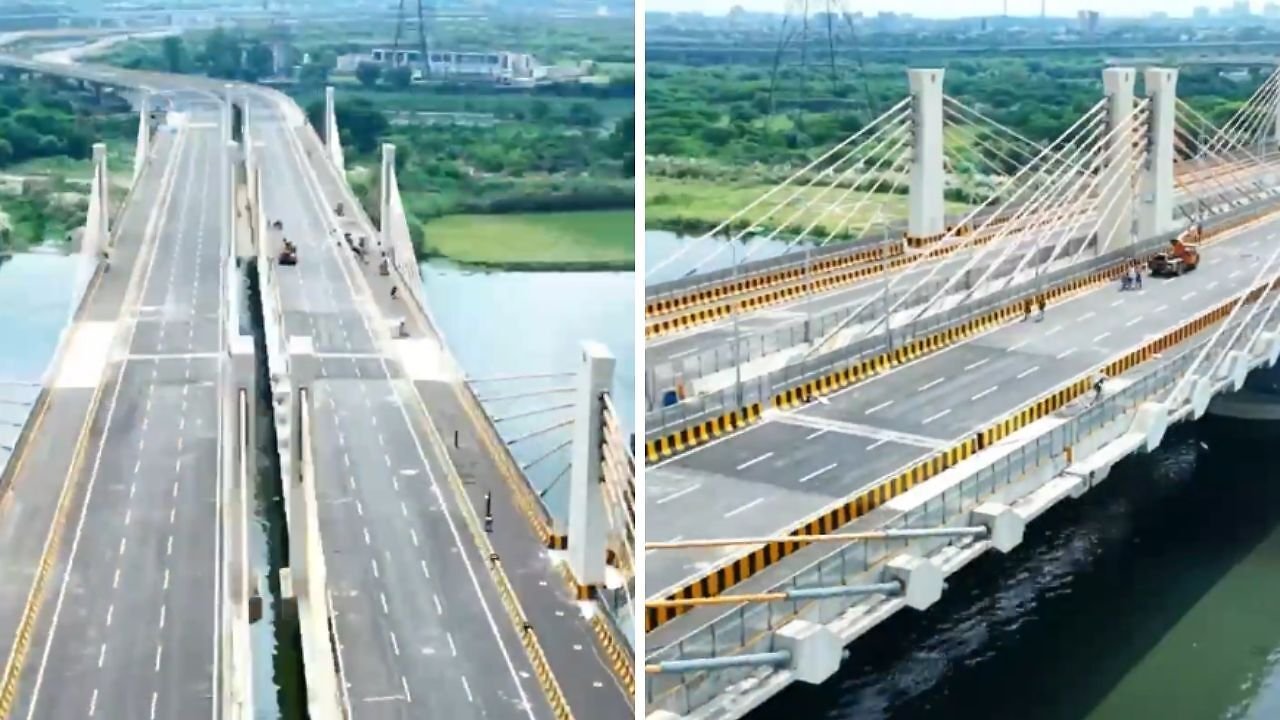
The ambitious scheme is designed to provide signal-free movement and reduce travel time between South and East Delhi in the national capital. Barapullah Elevated Corridor Today itself has become the biggest center of daily headache and traffic jam for millions of drivers. When the first phase of this elevated road was started during the 2010 Commonwealth Games, it was claimed that the journey from Sarai Kale Khan to Jawaharlal Nehru (JLN) Stadium and INA would be completed in just 10 to 12 minutes. Initially, it also reduced the pressure on Ring Road and Mathura Road to a great extent, but over time, as the traffic volume increased and there were delays in the expansion of further phases, the exit and entry points of this corridor turned into ‘bottlenecks’ (choke points). Today the situation is such that during peak hours, drivers are forced to crawl for 30 to 45 minutes while getting on and off Barapula.
According to traffic and urban planning experts, some fundamental flaws in the engineering design and traffic circulation are behind the current plight of the Barapula flyover.
-
Choke point of INA and Ring Road exit: When the elevated deck of Barapula descends near INA Market and Aurobindo Marg, traffic coming from multiple directions suddenly merges onto a narrow 2-lane road (Traffic Merging Conflict). There is not enough dispersal space for vehicles turning towards AIIMS, Safdarjung Hospital, Dilli Haat and South Delhi from here.
-
Back-up jam towards Sarai Kale Khan and Ashram: When vehicles coming from East Delhi and Noida board Barapula from Sarai Kale Khan, there is already a rush of vehicles from Ashram Underpass and DND Connectors. During morning and evening peak hours, this jam spreads several kilometers back.
-
Heavy pressure of incomplete Phase-3: Due to years of delay in the construction of Phase-3 connecting Mayur Vihar Phase-1 to Sarai Kale Khan and land acquisition issues, the additional traffic load which should have gone directly towards Trans-Yamuna, is getting stuck midway.
Considering the seriousness of the problem and the daily complaints, the Public Works Department (PWD) of Delhi Government in collaboration with Delhi Traffic Police and Unified Traffic and Transportation Infrastructure Center (UTTIPEC) has taken a major decision to re-engineer the existing design of Barapula. The following changes have mainly been proposed under the new masterplan:
-
New Loops and Dispersal Ramps (Dedicated Exit Loops): Additional diversion loops and elevated ramps will be built to direct the landing traffic near INA and Aurobindo Marg without stopping, so that vehicles going towards AIIMS and Ring Road do not have to face ground traffic signals.
-
Lane widening of merging points: Wherever the elevated corridor lands, additional lane space will be created by realigning the dividing grilles and footpaths between the service road and the main carriageway. This will eliminate the problem of sudden braking and slowing down of vehicles.
-
Smart Signals and Lane Segregation: Separate lanes will be created for heavy vehicles, buses and private cars by installing physical dividers at the Sarai Kale Khan entry point, so that vehicles do not get entangled with each other during the climb. Along with this, the timing of signals will be automatically adjusted based on the pressure of vehicles through ITMS (Intelligent Traffic Management System).
The Barapula corridor handles a daily load of more than 1.5 lakh vehicles. When its design is modified and fully implemented, it will directly benefit the daily commuters going from Noida, Ghaziabad, East Delhi towards AIIMS, Safdarjung Hospital, Chanakyapuri, IGI Airport and Gurugram.
-
Reduction in travel time by up to 60%: The distance which today takes 40 minutes during peak hours to cover will be reduced to just 12 to 15 minutes after streamlined design.
-
Saving fuel and environment: This will effectively curb air pollution and fuel wastage caused by vehicles idling for hours in traffic jams.
-
Pressure will reduce on Ring Road and Mathura Road: By ensuring smooth flow on Barapula, the vehicular pressure on the main ring road (Ashram-Lajpat Nagar-Moolchand stretch) will automatically reduce by 25%.
According to PWD officials, feasibility study and soil testing work for design modifications is being progressed rapidly. After approval of the Detailed Project Report (DPR), the construction work will be started in a phased manner, so that the installation of girders and loops can be completed during night hours without completely stopping the existing traffic. The government has given strict instructions to the construction agencies to strictly adhere to the timelines for the remaining work of Phase-3 and construction of these corrective loops. If this redesign plan gets off the ground on time, Barapula will truly fulfill its core purpose of providing a jam-free and high-speed travel experience to Delhiites.