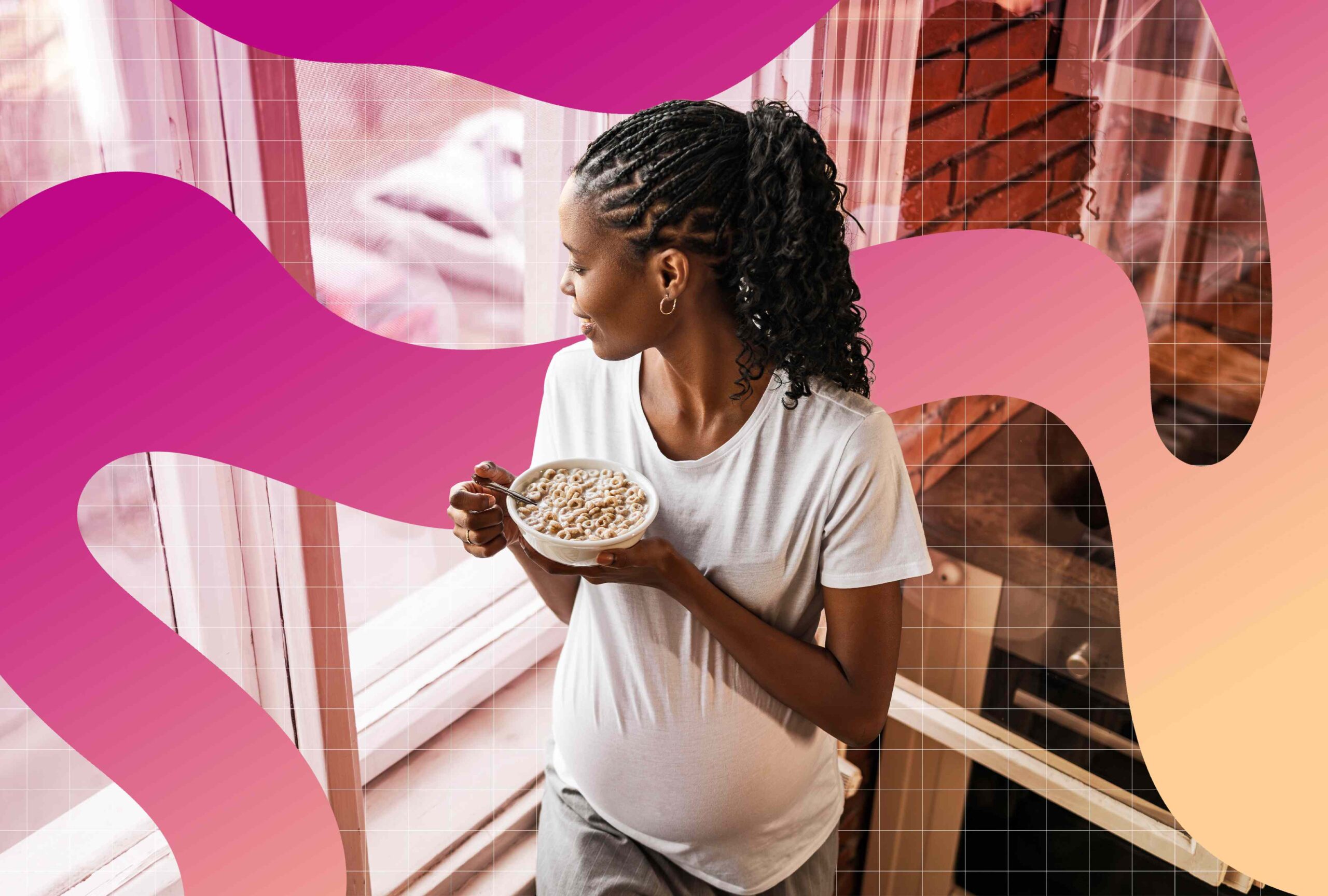
These often-questioned foods provide nutrients you need during pregnancy. Dietitians explain their benefits and how to enjoy them safely.
Reviewed by Dietitian Katey Davidson, M.Sc.FN, RD, CPT
Key Points
- Fruit, fish, fortified cereal and eggs can all support a healthy pregnancy.
- Choose lower-mercury fish and cook fish and eggs thoroughly.
- Check food labels to find options that provide nutrients like iron, folate and choline.
Pregnancy can make you second-guess foods you’ve eaten for years. Between warnings about mercury, foodborne illness and sugar, figuring out what to eat while pregnant can feel complicated. Meanwhile, your needs for nutrients like iron, folate and choline increase during pregnancy to support both your health and your baby’s development.
Some food precautions are necessary, but a blanket warning can leave out useful details about the type of food or how it’s prepared. Other foods have gotten an unfair reputation because of their sugar content or processing. We spoke with dietitians about four “bad” foods that can be nourishing additions to your pregnancy diet.
1. Fruit
Fruit’s natural sugar content sometimes makes people worry about gestational diabetes, says Lisa Spriet, M.Sc., RD. But, she says, “I would be much more concerned about someone unnecessarily cutting out fruit [during pregnancy] than I would about them eating a peach or an apple.”
And the current research seems to agree. One meta-analysis examining fruit intake found that people who ate more fruit before or during pregnancy had a modestly lower risk of developing gestational diabetes than those who ate less.
Fruit also helps meet your body’s increasing nutrient needs. Strawberries, oranges and kiwi provide vitamin C, which helps your body make collagen to support your baby’s developing skin, bones and other connective tissues. Vitamin C also helps you absorb iron from plant foods, supporting your increased need for iron during pregnancy.
2. Fish
The warnings about consuming too much mercury during pregnancy may lead you to stop eating fish altogether. Spriet sees how that advice can get misunderstood. “This is one where the concern has some validity, but the message often gets taken too far.”
Choosing lower-mercury fish allows you to get the nutritional benefits while limiting exposure. Salmon and sardines, for example, provide docosahexaenoic acid (DHA), an omega-3 fatty acid your baby uses to build brain and eye tissue. DHA accumulates rapidly in those tissues during the third trimester, so eating fish can help provide it during a period of substantial growth.
The Food and Drug Administration and the Environmental Protection Agency recommend two to three 4-ounce servings a week from their “Best Choices” list during pregnancy. Along with salmon and sardines, that includes freshwater trout, shrimp and canned light tuna. Fish to avoid include bigeye tuna, swordfish, marlin, shark, orange roughy, tilefish and king mackerel.
Preparation should also be taken into consideration. Even a lower-mercury fish should be cooked to 145°F (63°C) to reduce the risk of foodborne illness. Raw fish remains among the foods to avoid during pregnancy, so choose cooked options like salmon or canned fish for your meals.
3. Fortified Breakfast Cereal
A bowl of cereal may not match your idea of an “ideal” pregnancy breakfast, but Spriet says its packaged-food reputation can obscure its nutritional value. “I often encourage clients to look at the nutrition information rather than judging a food based on whether it comes in a box,” she says. In fact, fortified cereals can be an excellent way to support your iron and folic acid needs.
Pregnancy increases your iron requirement to 27 milligrams daily because blood volume expands during pregnancy. That iron helps make hemoglobin, the protein in red blood cells that carries oxygen to your tissues and your growing baby. Shannon O’Meara, M.S., RD, LDNrecommends adding strawberries to fortified cereal because their vitamin C helps you absorb more of the iron added to the cereal.
Folic acid is also an important nutrient to prioritize, especially in early pregnancy. Before conception and in early pregnancy, consuming enough folic acid is essential for preventing neural tube defects that affect the brain and spine.
Both dietitians recommend comparing labels for higher-fiber cereals with less added sugar. Look at the iron and folate amounts per serving, too, since fortification varies by product. Choosing a cereal that provides these nutrients can give you another way to meet your increased needs during pregnancy.
4. Whole Eggs
Spriet hears from clients who avoid egg yolks because of cholesterol. “For most people, there’s no reason to avoid whole eggs during pregnancy,” she says. Keeping the yolk also gives you choline, a nutrient your baby needs to build cell membranes and produce acetylcholine, a chemical that allows nerve cells to communicate.
Eggs may provide a way to work toward the recommended 450 mg of choline a day during pregnancy. Two large hard-boiled eggs provide around 294 mg, about two-thirds of that amount. Keep in mind that many prenatal vitamins contain little or no choline, which makes getting it through food especially useful.
O’Meara recommends cooking eggs thoroughly to reduce the risk of Salmonella. Cook them until the whites and yolks are firm, and heat egg dishes without meat or poultry, such as a vegetable frittata, to 160°F (71°C).
Our Expert Take
An unnecessarily restrictive pregnancy diet can leave out foods that may help you meet your changing nutrient needs. Fruit, lower-mercury fish, fortified cereal and fully cooked eggs all have something useful to offer during pregnancy. A food’s sugar content or the fact that it comes in a box doesn’t necessarily make it unhealthy.
Before giving up a food, get specific about the concern. With fish, the species and preparation determine the advice. With cereal, the label tells you how much iron and folic acid you’re getting. Those details can help you keep familiar foods in your meals and feel more confident about feeding yourself during pregnancy.