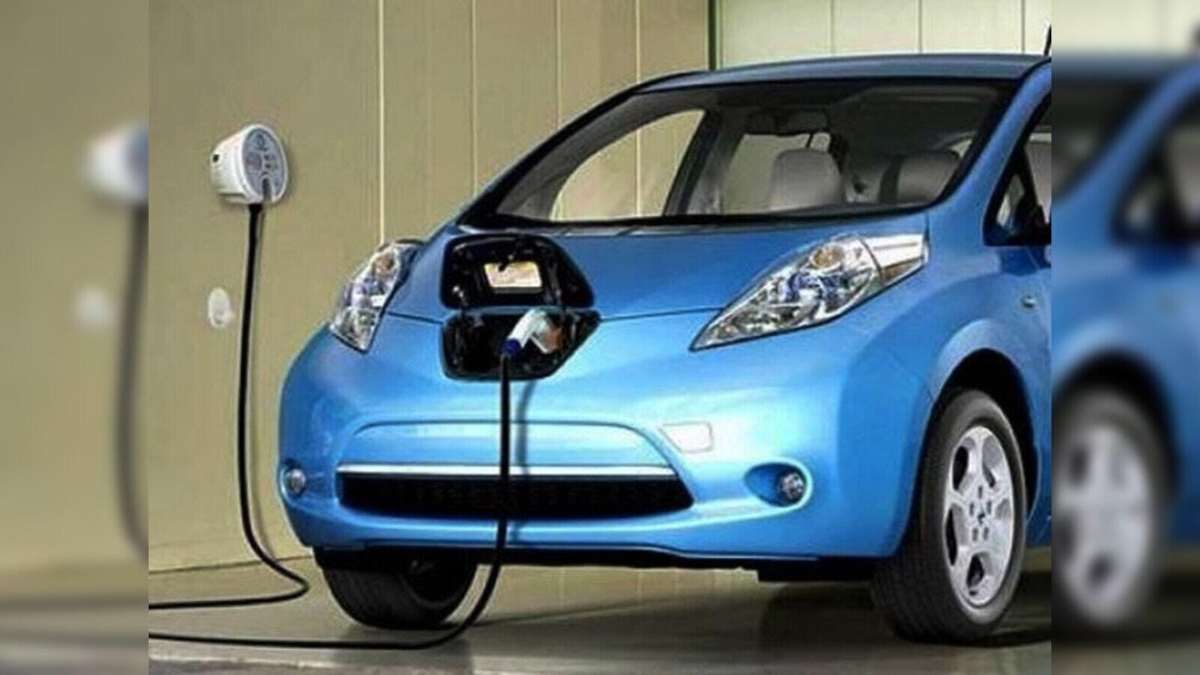
Automobile Desk: While buying electric vehicles, one fear often remains in the minds of the customers – if the battery of the car gets damaged after a few years, then how much will be left in the pocket to get a new battery pack installed? Since the battery is considered to be the most expensive part of any electric vehicle (EV), this concern is natural. But now some relief news is coming out from the Indian auto market. New technology, increasing production in the country and better battery chemistry are indicating that the cost of battery replacement may reduce to a great extent in the coming days.
The biggest reason behind this entire change is the improvement in cell chemistry and structural design. Battery manufacturing companies are now working on such advanced technology, through which more energy can be stored in less weight and less material. The heavy extra components used in the old battery pack are now being replaced with a new simpler design. Just like the batteries and processors of smartphones used to be very expensive in the initial times, but with the improvement of technology and increase in demand, their prices became accessible to ordinary customers.
One of the main aspects of reducing the prices of EV batteries in India is 'large-scale manufacturing'. When factories produce thousands of cells day and night, the per unit manufacturing cost automatically reduces. Also, due to increasing competition in the market, component supply is becoming cheaper.
If we look at the level of chemistry, LFP (Lithium Iron Phosphate) technology has played a big role in this field. Compared to NMC (Nickel Manganese Cobalt) batteries, LFP batteries are cheaper to manufacture, considered safer and last longer. Many EV manufacturers in India are now preferring LFP batteries for budget and daily use vehicles.
However, the question arises whether every customer using an old EV will immediately get the benefit of cheap replacement? So the answer is a bit mixed. It is important for a new technology battery to be compatible with your old car's software, electrical architecture and physical size. If the match is not correct, fitting the new pack in the old car will not be as easy.
But it is a matter of relief that now the compulsion to change the entire battery pack in case of vehicle problems is gradually ending. Service centers and repairing networks are now becoming so advanced that if there is a fault in any one cell or module of the battery, then the work can be done by replacing only that part. This directly reduces the huge replacement cost to half or even less.
From the Indian market perspective, the government's Production-Linked Incentive (PLI) scheme is also incentivizing companies to build advanced chemistry cells within the country. With the creation of local supply chain and strengthening of the battery recycling industry, the dependence on imports will reduce in the future. Fluctuations in international raw material prices may impact costs from time to time, but in the long run, battery maintenance and replacement is going to become much more affordable and easier for Indian EV buyers.