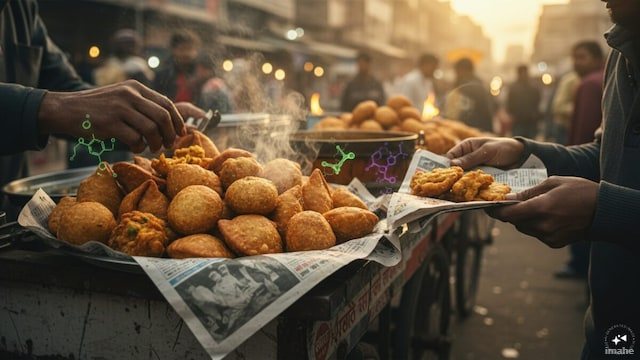
In Indian culture and eating habits, eating fried foods like samosas, kachoris, pakodas and bread-pakodas along with hot evening tea is very close to everyone's heart. When we stand at a corner shop, a cart or a local stall and enjoy crunchy and spicy samosas, the shopkeepers often serve them on torn pages of an old newspaper or magazine for convenience. Most of us, without thinking a moment, pick up samosa or kachori from the newspaper and start eating it with great gusto, because for us it is just a piece of paper. But have you ever noticed how dangerous this small and common habit of yours can prove to be for your health? The newspaper on which you are happily eating spicy snacks is directly acting like a slow poison in your body. In today's modern and busy era, where people are becoming so conscious about health and fitness, this small carelessness while eating street food can lead to a big health crisis.
Dangerous chemicals hidden in newspaper ink and their harmful effects on the body.
The printing ink used to print newspapers and magazines contains large amounts of dangerous chemicals, petrochemicals, pigments and even toxic elements like lead. When any hot, oily or fatty food item like samosa or kachori comes in direct contact with the newspaper, the toxic ink and chemicals present in the paper melt and get absorbed directly into the food through that oil. Scientists and food safety experts clearly say that these chemicals used in newspaper printing contain cancer-causing elements, which damage the cells after entering the body. Apart from this, the papers used to print these advertisements and news are made by recycling, which may also contain many types of harmful bacteria, fungus and dangerous germs. When food kept on such contaminated paper goes inside our stomach, it completely ruins our digestive system and gives rise to serious internal diseases.
The risk increases from serious stomach diseases to hormonal imbalance.
Constantly eating fried and hot food wrapped in newspaper has long-term and extremely bad effects on our body, which gradually manifests itself in the form of many serious diseases. First of all, it affects our digestive system, due to which problems like stomach infection, ulcer, constipation, acidity and severe food poisoning start troubling us day in and day out. Lead and other heavy metals present in ink mix with our blood and weaken the nervous system, which can also have an adverse effect on mental development and concentration in children and youth. Apart from this, entry of these toxic chemicals into the body leads to hormonal imbalance, drastic decline in immunity and the risk of lung and stomach cancer increases manifold. People who regularly eat outside street food and ignore this newspaper wrapper are unknowingly playing with their lives. The Ministry of Health and Food Safety Authority (FSSAI) has also issued a strong warning several times that food items should never be given packed in newspaper or old paper, as this is directly against the rules of public health.
Be aware and bring these important changes in your eating habits today itself.
To keep ourselves and our families safe from this serious and hidden threat, it is very important that we improve our small habits and spread awareness. Whenever you go to any shop or stall in the market to eat samosa, kachori or any other food item, clearly tell the shopkeeper not to serve you food on the pages of newspaper or magazine. Instead, you can request vendors to serve food only in food-grade wrappers, clean disposable wraps, or leaves, which are considered safe for health. It would be better that if possible, you bring your own clean utensils or tiffin from home or go to the shop to ensure that the standards of cleanliness are being completely followed. A little caution and wisdom can save you and your loved ones from falling prey to many serious diseases, because health is the biggest asset of a human being. Let us take a pledge today that we will not compromise with our health for the sake of taste and will give up this dangerous habit of eating street food wrapped in newspaper.